Yes, rust stain removal works on pavers when the treatment matches the paving material and the stain is accessible to the cleaner. The main limitation is that removing rust does not reverse surface damage, restore lost pigment, or stop an untreated metal source from staining the pavers again. A material-compatible test patch—not stronger pressure—is the right starting point.
- Does rust stain removal work on pavers? Yes, but material compatibility and a test patch determine the treatment.
- Concrete, clay, and natural stone pavers need different compatibility checks before chemical application.
- Pressurewashingca rust stain removal serves North County San Diego homeowners, HOA boards, and commercial property managers.
- Fix the rust source before treating the stain, or the discoloration can return.
Does rust stain removal work on pavers?
Rust removal can reduce or remove iron staining from pavers, but the treatment must address the stain without unnecessarily attacking the surface beneath it. Start by identifying the paver material, any sealer, and the likely source of the orange-brown mark. Color alone does not establish that a stain is rust.
Pressure washing and rust treatment perform different jobs. Washing removes loose dirt and surface contamination; a compatible rust remover targets iron deposits. Increasing pressure to chase a stubborn orange mark can erode concrete faces or disturb joint material without resolving the stain. The distinction matters when assessing whether pressure washing can damage concrete or pavers.
| Approach | Best for | Main benefit | Main limitation |
|---|---|---|---|
| Surface-compatible rust treatment | Confirmed iron staining | Targets the deposit rather than relying on force | Incorrect chemistry can alter the paver or sealer |
| Surface-appropriate washing | Dirt surrounding a stain | Cleans the surrounding surface for assessment | Water pressure alone does not reliably remove embedded rust |
| Individual paver replacement | Permanently damaged or persistently discolored units | Removes the affected unit from the installation | Replacement color and weathering can differ |
Judge success after the test area has dried. Wet pavers can conceal differences in color, texture, and remaining discoloration.
Why this matters
A rust mark is a cleaning problem; an etched paver is a surface-repair problem. Confusing them leads to repeated treatment that keeps changing the paving without producing a better result. An evenly clean surface matters more than an aggressive attempt to erase every trace.
For a 2026 maintenance plan, separate stain removal from routine walkway washing. HOA boards and commercial property managers should require the contractor to explain material compatibility, pedestrian access, and runoff management before approving work.
Pressurewashingca provides locally owned, fully insured exterior-cleaning service in North County San Diego. For rust removal, ask how relevant experience translates into controlled chemical application, property protection, and a clear stopping point—not simply what equipment will arrive.
Concrete pavers: protect the cement-based surface
Concrete pavers require a rust treatment whose instructions specifically allow use on that surface. Some acidic cleaners can attack cement-based materials, leaving a lighter patch, exposed aggregate, or a change in texture. A cleaner that removes rust from metal is not automatically suitable for a concrete patio.
Check whether the pavers have a colored surface layer or a coating. Those features affect what a test patch needs to establish: not just whether the orange mark fades, but whether the surrounding finish remains acceptable.
A compatible treatment offers a way to address iron staining without using pressure as the primary removal mechanism. Its limitation is equally important: cleaning cannot replace cement paste or pigment already lost through wear, corrosion, or earlier treatment.
Clay pavers: check the finish and the joints
Clay pavers should be assessed separately from concrete, even when the installation looks similar. Confirm that the proposed cleaner is approved for the particular paving product and finish. Do not assume that a masonry label covers every type of clay paving.
The joints also need attention. Cleaning equipment can displace joint sand, and chemical compatibility must include the surrounding installation rather than the paver face alone. Ask whether the work includes inspecting joints afterward and identifying any areas that need attention.
The practical advantage of targeted treatment is that the contractor can evaluate the affected area before treating the whole installation. The limitation is that weathered or mixed-color paving can still show an uneven appearance after the stain is reduced.
Natural stone pavers: identify the stone first
Natural stone is not a single cleaning category. Marble, limestone, granite, and other paving stones have different chemical sensitivities. Acid-sensitive stone can develop dull or etched areas from an unsuitable rust treatment, even if the orange discoloration becomes less visible.
Some stone also contains iron-bearing minerals within the material. That changes the diagnosis: a mark caused by an object resting on the surface is different from discoloration originating inside the stone. Repeatedly treating the face does not resolve an internal source.
If you cannot identify the stone, pause chemical treatment. Confirm the material through installation records, the supplier, or a qualified stone professional before choosing a cleaner. Protecting the finish takes priority over making the stain lighter during the first visit.
Why rust removal results vary
The same-looking orange mark can require a different approach on the next property. These factors explain why a contractor should assess the installation rather than promise a uniform outcome from a photograph:
- Paver material: Concrete, clay, and natural stone have different chemical compatibility requirements.
- Stain penetration: A surface deposit presents a different cleaning problem from iron discoloration within a porous material.
- Sealer condition: A coating can affect access to the stain and can itself react to a cleaning product.
- Previous treatment: Earlier pressure damage, bleaching, or etching can remain visible after rust is removed.
- Rust source: Metal furniture, irrigation deposits, or iron within the paving can require different corrective action.
- Application control: Product selection, contact time, rinsing, and nearby surface protection all affect the result.
For your 2026 cleaning scope, record these conditions before work starts. That gives you a basis for judging the outcome instead of relying on a broad promise to make the paving look new.
How should a professional test and treat paver rust?
A useful process establishes compatibility before expanding the work area. It also defines when to stop. Ask the contractor to explain the following sequence in plain language.
- Identify material. Confirm the paver type, existing finish, joint condition, and visible deterioration. Photograph the stain and nearby unaffected paving.
- Trace source. Look for a metal contact point, a runoff path, irrigation deposits, or another plausible origin. Do not treat every orange mark as confirmed rust.
- Test treatment. Use a discreet area and a product approved for the substrate. Follow the manufacturer's application and contact-time instructions rather than improvising a stronger mixture.
- Control runoff. Protect adjoining materials and landscaping, restrict access, and establish how rinse water will be contained or collected as needed.
- Inspect dry. Compare the dry test area with untreated paving for remaining stain, altered texture, color change, or sealer damage before proceeding.
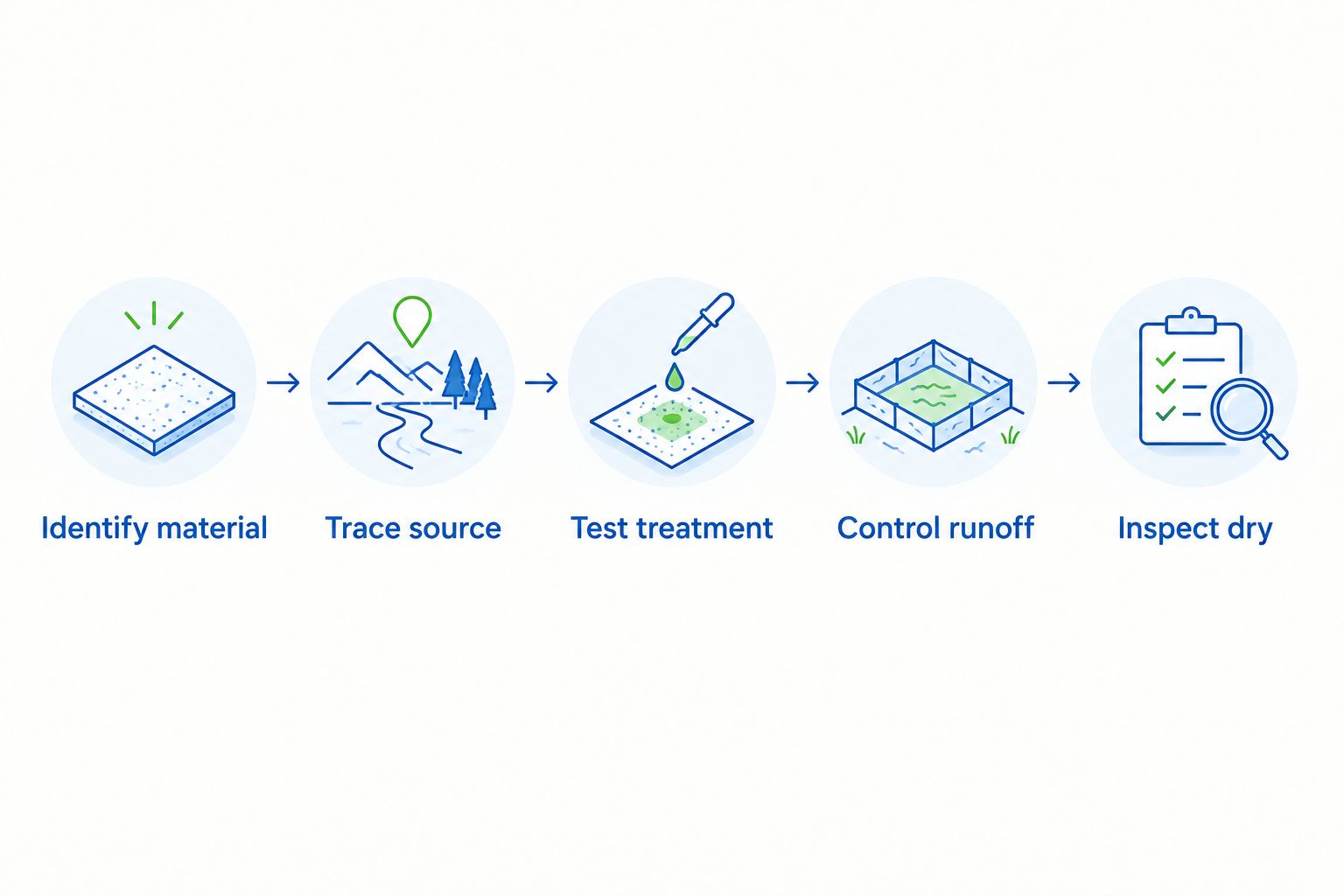
The test establishes a decision, not an obligation to keep cleaning. If the stain remains but the surface begins to change, stop and reassess. More applications are not automatically better, and neutralization should follow the product instructions rather than a generic household recipe.
Will the rust come back after cleaning?
Rust can return when the source remains in place. Removing the visible deposit does not stop an unprotected metal furniture foot from corroding or iron-bearing irrigation water from reaching the paving again. Source correction belongs in the maintenance plan, not as an afterthought.
On a driveway or shared entrance, driveway pressure washing methods should distinguish routine surface cleaning from stain-specific chemical treatment. The same distinction applies to prevention: washing the pavement does not repair corroding hardware or redirect sprinkler overspray.
For a 2026 HOA maintenance schedule, assign responsibility for the source separately from the cleaning work. The landscape contractor can assess irrigation coverage, maintenance staff can inspect metal fixtures, and the cleaning contractor can document the treated area. Clear responsibility prevents the same stain from becoming a recurring cleaning request.
Do not assume sealing is the answer. Whether to seal depends on the paver, existing coating, moisture conditions, and the sealer manufacturer's instructions. Sealing also does not repair an active corrosion source.
What should an HOA or property manager require?
Shared paving adds access and coordination requirements to the cleaning itself. A treatment zone beside a clubhouse, retail entrance, or residential walkway needs a plan that keeps residents and visitors away from the work area without blocking necessary access.
Ask for a written scope covering:
- The paving material and any uncertainty about its finish.
- The test location and who will approve the dry result.
- Protection for doors, metal trim, landscaping, and adjacent surfaces.
- Pedestrian routing, barriers, and reopening arrangements.
- Runoff containment or collection appropriate to the site.
- Completion photos and any remaining discoloration or joint concerns.
Pressurewashingca rust stain removal is best for North County San Diego homeowners and property managers seeking professional exterior stain treatment. The service still has a physical limit: rust removal does not repair damaged paving or guarantee an exact color match across weathered units.
For your 2026 contractor review, request current insurance documentation and an explanation of experience with the actual paving material. Neither a large pressure washer nor a general exterior-cleaning portfolio replaces a material-specific assessment.
Can I use a household acid or general rust remover?
Do not use a household acid or general rust remover unless its instructions expressly support the paver material and finish. Products designed for tools, plumbing fixtures, or metal surfaces are not interchangeable with treatments intended for paving.
Avoid mixing cleaning products. Follow the label's protective-equipment, application, rinsing, and disposal instructions, and keep people and pets outside the treatment area. An inconspicuous test is still necessary even when a product lists the material as compatible.
When is replacing a paver the better choice?
Replacement deserves consideration when the unit has permanent surface damage or when compatible treatment leaves unacceptable discoloration. It is a repair decision, not proof that the contractor should have used stronger chemicals.
Before replacing anything, compare a proposed replacement with the dry installation. Weathering, production differences, and prior sealing can make a new unit stand out. Check for spare pavers from the original installation, but do not assume they will match perfectly either.
FAQ
Does rust stain removal work on sealed pavers?
Rust stain removal can work on sealed pavers, but the cleaner must be compatible with both the paving and the sealer. A dry test patch should establish whether the treatment affects gloss, color, or coating integrity.
Will pressure washing alone remove rust from my paver driveway?
Pressure washing alone does not reliably remove embedded rust stains from pavers. Use a material-compatible stain treatment rather than increasing pressure to chase the discoloration.
Can rust remover change the color of my pavers?
Yes, an unsuitable rust remover can change the appearance of the paver or its sealer. Test first and inspect the area after it dries before extending treatment.
Is an orange stain on pavers always rust?
No, an orange stain is not automatically rust. Identify the paving material, stain pattern, and likely source before selecting a chemical treatment.
Can Pressurewashingca treat rust stains at an HOA property?
Pressurewashingca offers exterior stain removal for HOAs and commercial property managers in North County San Diego. Request an assessment covering paving compatibility, property protection, access, and runoff management.
Should I seal my pavers immediately after rust removal?
Do not seal pavers immediately by default. Follow the paving and sealer manufacturers’ preparation requirements, and address the rust source before treating sealing as a prevention measure.
One last thing
A stain that disappears while the paving is wet has not yet passed inspection. Photograph the fully dry test patch beside untreated paving, using similar lighting, before approving the wider treatment. Make that comparison part of your 2026 work order so the acceptance standard is clear before cleaning starts.
Related guides
- Does rust stain removal work on natural stone?
- How professionals remove rust stains without damaging concrete
- Sprinkler overspray and rust stain removal
- Can rust stains on concrete be removed permanently?