Yes, pressure washing can damage concrete or pavers when concentrated spray erodes the surface, removes joint sand, or strips a coating. Cleaning needs to match the material and its condition; increasing pressure to remove a stubborn stain can leave permanent marks. For your 2026 maintenance plan, inspect the surface first, test the proposed method, and include runoff control and any necessary joint restoration in the scope.
- Can pressure washing damage concrete or pavers? Yes: concentrated spray can etch concrete and wash sand from paver joints.
- Pressurewashingca provides exterior cleaning for North County San Diego homeowners, HOA boards, and commercial property managers.
- Test the cleaning method before treating the full surface; stop if texture, coating, or joint material changes.
- Rust stain removal needs a stain-specific approach, not repeated passes with stronger pressure.
Can pressure washing damage concrete or pavers?
Yes. The damage mechanism depends on the surface, not just the pressure washer's setting. Concrete has a finished surface that aggressive cleaning can erode. Pavers add another concern: their joints, which need inspection before and after washing.
For a broader method comparison, see the guide to soft washing versus pressure washing. Neither method is automatically appropriate for every hardscape.
| Surface | Main damage concern | Best approach for | Limitation to address |
|---|---|---|---|
| Concrete slab | Etching, exposed aggregate, uneven cleaning marks | Sound concrete with a verified cleaning method | Weak or deteriorating areas need separate assessment |
| Concrete pavers | Surface erosion, joint-sand loss, coating damage | Sound pavers with stable joints | Cleaning must include a joint-condition check |
| Natural stone pavers | Surface or chemical damage, joint disturbance | Identified stone with compatible cleaning instructions | Stone types do not share identical cleaning requirements |
| Coated or sealed hardscape | Uneven coating removal or changes in appearance | Surfaces with known coating requirements | A method suitable for bare concrete can damage the finish |
The table describes risks, not a universal equipment setting. A cleaning plan should account for existing wear, the stain, the finish, and where wash water will travel.
Why this matters
A clean driveway is not an improvement if the cleaning leaves grooves or destabilizes paver joints. Removing dirt exposes the surface underneath; it does not repair deterioration. Pre-existing defects and cleaning damage also require different responses.
For HOA boards and commercial property managers, the scope extends beyond appearance. Pedestrians, adjacent landscaping, building entrances, and drainage all need protection during the work. In a 2026 work order, specify those controls alongside the surfaces to be cleaned.
Judge the proposed method by what it protects, not how forcefully it cleans. A clear explanation of pressure selection, chemical compatibility, access, and runoff handling is more useful than a promise that everything will look new.
Concrete: protect the finished surface
Concrete damage often shows up as persistent lines, rough patches, or exposed aggregate after the surface dries. A narrow, concentrated spray or repeated passes over the same spot can remove surface material rather than just contamination. Once that material is gone, another cleaning pass will not put it back.
Inspect worn edges, cracks, flaking, previous repairs, and decorative finishes before starting. These areas should not receive the same treatment by default as sound, uncoated concrete. New concrete also requires confirmation of the installer’s curing and maintenance instructions before cleaning.
Surface-cleaning equipment helps cover larger areas consistently, but the attachment alone does not prevent damage. Pressure, nozzle condition, movement, and the condition of the slab still matter. Pausing over one area or repeatedly chasing a stain can create an uneven result.
Best for sound concrete: a tested method with consistent coverage. The benefit is controlled removal of surface contamination; the limitation is that cleaning cannot correct spalling, failed repairs, or an already damaged finish.
Pavers: protect the surface and the joints
Paver cleaning requires attention to both the individual units and the material between them. Spray directed into joints can displace sand. Missing joint material is not simply a cosmetic issue: joints are part of the paving system and need appropriate maintenance.
Look for loose units, settled sections, weeds, open joints, and existing sand loss before washing. Record those conditions so you can distinguish what was already present from what changed during cleaning. Avoid treating an unstable section as a routine washing job.
Polymeric joint sand has product-specific installation and maintenance requirements. If cleaning disturbs it, use the relevant instructions to determine the restoration process. Do not assume that sweeping any available sand into the gaps completes the work.
Best for stable pavers: cleaning paired with a joint-maintenance plan. The benefit is addressing contamination without ignoring the paving system; the limitation is that washing alone cannot reset settled pavers or restore damaged bedding.
Why pressure-washing damage varies
These factors determine how much stress reaches your concrete or pavers:
- Surface condition: Weathered, flaking, cracked, or repaired areas need assessment before cleaning. Existing weakness changes the acceptable method.
- Pressure and spray concentration: A narrow jet concentrates force. A machine’s maximum rating does not establish an appropriate working setting.
- Distance and movement: Holding the spray close or lingering over one spot increases local exposure. Consistent movement helps avoid uneven treatment.
- Coatings and material compatibility: Sealers, decorative finishes, and different stone types require compatible cleaning methods and chemicals.
- Joint condition: Open or deteriorated paver joints require a plan for protection and restoration, not just surface washing.
- Stain type: Rust, oil, and biological growth do not respond identically. Treating every mark with additional pressure ignores the cause.
For a Carlsbad driveway or Rancho Santa Fe courtyard, the address does not determine the cleaning method. Material, condition, contamination, and drainage do. Use the inspection findings to set the scope rather than copying a method from another property.
How do you clean concrete or pavers without unnecessary damage?
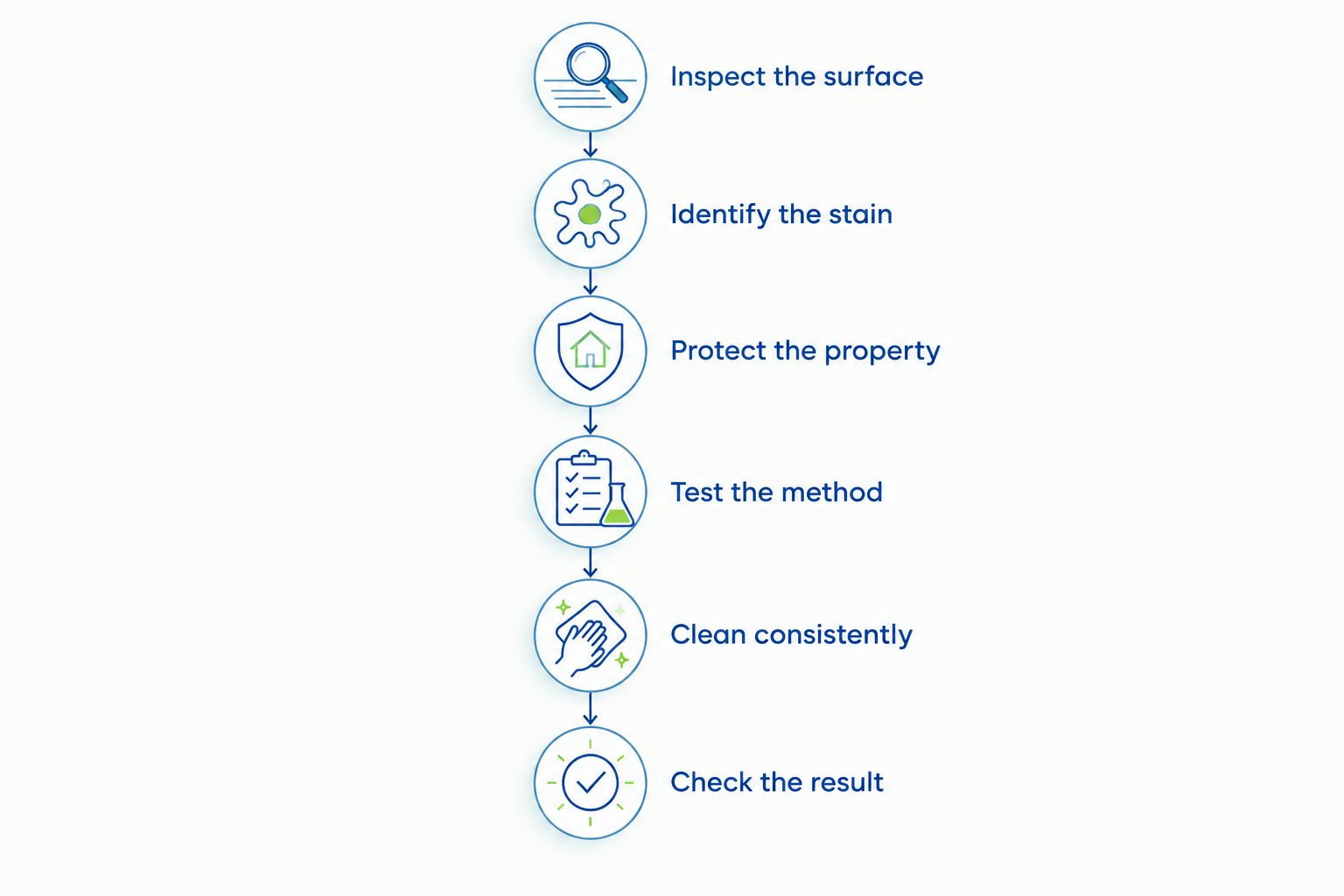
Use this sequence for your 2026 cleaning brief. It gives a homeowner or property manager specific checkpoints without prescribing an unsupported pressure setting.
- Inspect the surface. Complete 3 inspection checks: surface condition, joint condition, and drainage. Record coatings, loose areas, cracks, and nearby materials that need protection.
- Identify the stain. Determine whether you are treating general dirt, biological growth, rust, or another contaminant. Select chemistry only after confirming compatibility with the surface and finish.
- Protect the property. Establish safe access, separate pedestrians from the work area, and protect adjacent surfaces and landscaping. Plan wash-water collection or containment before applying chemicals.
- Test the method. Start with 1 test area in an inconspicuous location. Inspect the cleaned result for altered texture, coating changes, or displaced joint material before expanding the work.
- Clean consistently. Use surface-appropriate pressure and controlled chemical application. Stop and reassess when a mark resists treatment instead of repeatedly increasing force.
- Check the result. Take 2 photo sets: before cleaning and after the surface dries. Review joints, edges, coatings, and persistent marks; identify any restoration work separately.
The test area is a decision point, not a ceremonial step. If the surface changes in an unintended way, revise the method before cleaning the rest. A small successful test also does not justify ignoring weaker sections elsewhere.
Is lower-pressure cleaning better than pressure washing?
Lower-pressure cleaning reduces mechanical force, but it still requires compatible chemicals and controlled application. Pressure washing provides mechanical cleaning action, but that action can also erode vulnerable surfaces. Choose the method around the material and contamination rather than treating either label as a safety guarantee.
| Method | Best for | Advantage | Limitation |
|---|---|---|---|
| Controlled pressure washing | Compatible, sound hardscape with surface contamination | Mechanical removal of dirt | Excessive force can etch surfaces or disturb joints |
| Lower-pressure chemical cleaning | Contamination suited to compatible cleaning chemistry | Less reliance on mechanical force | Incorrect chemistry or uncontrolled runoff creates other risks |
| Targeted stain treatment | An identified stain such as rust | Treats the specific contamination | Requires compatibility testing and careful application |
A combined approach is appropriate only when each stage has a purpose. Chemical treatment does not excuse excessive rinsing pressure, and reduced pressure does not excuse poor runoff management.
Should you use more pressure on stubborn rust stains?
No. Rust needs a compatible stain-removal method, not escalating spray force. Repeated aggressive passes can damage concrete while leaving discoloration behind. Some treatments also affect cement-based materials, stone, or coatings, so identification and testing remain necessary.
For sprinkler-related marks, inspect the source as well as the surface. Cleaning removes the existing stain; it does not correct ongoing overspray. Include source correction in the maintenance discussion so cleaning is not the only response.
What should an HOA or property manager require?
Your 2026 contractor brief should describe the work in terms you can verify. Ask for the cleaning method, insurance documentation, the protected areas, the runoff plan, and responsibility for any joint restoration. Separate washing from repair or resealing so the completion standard is clear.
Pressurewashingca’s exterior-cleaning service is locally owned and fully insured, with an emphasis on controlled application, surface-appropriate pressure, safe access, and property protection. Pressurewashingca provides exterior cleaning for North County San Diego homeowners, HOA boards, and commercial property managers. Ask how those process controls apply to the specific hardscape, rather than assuming every surface receives identical treatment.
The service includes pressure washing and rust/stain removal, but cleaning is not a substitute for repairing deteriorated concrete or unstable paving. That distinction belongs in the estimate. A free estimate is the point to establish the surface condition, proposed method, exclusions, and handover checks.
For shared entrances and walkways, require a pedestrian-access plan. For commercial sites, agree on work-area separation and drainage controls before scheduling. Define what the contractor will photograph and what you will inspect at completion.
Request a property cleaning estimate
Discuss surface condition, stain treatment, property protection, and runoff management before scheduling.
FAQ
Can pressure washing damage concrete or pavers?
Yes, pressure washing can etch concrete, damage coatings, and displace sand from paver joints. Inspect the material, test the method, and stop if the surface or joints change unexpectedly.
What pressure is safe for cleaning my concrete driveway?
There is no single pressure setting that establishes suitability for every concrete driveway. Surface condition, spray concentration, working distance, equipment, and any coating all affect the cleaning method.
Is soft washing always safer for pavers?
No, lower-pressure cleaning still requires compatible chemicals and careful application. Protect the joints, adjacent materials, landscaping, and drainage regardless of the method’s name.
Should I replace paver sand after pressure washing?
Restore joint material when cleaning leaves it missing or below the required level. Follow the paving system and joint-product instructions rather than assuming every paver installation needs the same treatment.
Can pressure washing remove rust without damaging concrete?
Rust removal needs a compatible stain-specific method; stronger pressure is not the answer. Test the treatment and assess the cause of the stain before cleaning the full area.
How can I tell whether concrete was damaged during cleaning?
Inspect the dry surface for new grooves, rough patches, exposed aggregate, or coating changes. Compare before-and-after photographs because dirt removal can also reveal damage that was already present.
What should an HOA include in a 2026 pressure-washing work order?
Include surface assessment, a test area, pedestrian controls, runoff management, and responsibility for joint restoration. Request insurance documentation and define the completion checks before approving the work.
One last thing
Do not judge a hardscape only while it is wet. Water changes its appearance, so the dry inspection is the better time to check for uneven cleaning, persistent stains, and finish changes. Make that inspection part of your acceptance process.
For your 2026 maintenance records, keep the before-and-after photographs with the agreed scope. The useful record is not simply that cleaning happened; it is which areas were treated, what defects already existed, and what follow-up work remains.
Related guides
- Rust stain removal methods for concrete
- Pressure washing equipment for driveways and patios
- Commercial pressure washing for property managers
- Pressure washing services for San Diego HOAs
