Rust stains on concrete don't come from the concrete itself — they come from irrigation heads, patio furniture, rebar bleed-through, or metal fixtures leaching iron oxide into the surface. The best rust stain removal method for concrete in 2026 is professional controlled chemical application for HOA common areas, commercial lots, and decorative concrete, because it matches the chemistry to the stain depth and controls runoff. For small, fresh spots homeowners can handle themselves, an oxalic acid-based rust remover is the right call. For rust that has sat for years and soaked into porous concrete, only the poultice method reliably pulls it back out.
- Professional controlled chemical application wins for HOA and commercial concrete rust stains in 2026 because it lifts set-in rust without etching sealed or stamped surfaces.
- Oxalic acid-based rust remover handles small DIY spot stains on driveways and patios in under an hour.
- The poultice method is the only reliable fix for rust that has soaked years-deep into porous concrete.
- Skip muriatic acid on decorative or sealed concrete since it etches surfaces and needs professional neutralization.
- High-pressure washing alone removes fresh, light surface rust but won’t touch stains older than a few months.
Why this matters
North County San Diego concrete takes a beating from sprinkler overspray, ocean-air corrosion on fencing and rebar, and hard water minerals that bond with iron. Pick the wrong method and you either waste a weekend on a stain that won't budge, or you etch a driveway that took years to look right.
North Coast Exteriors has handled rust and stain removal on homes, HOA properties, and commercial lots across Carlsbad and Rancho Santa Fe long enough to know which method fits which stain — that experience is the basis for this comparison, not a generic product review.
What makes the best rust stain removal method for concrete
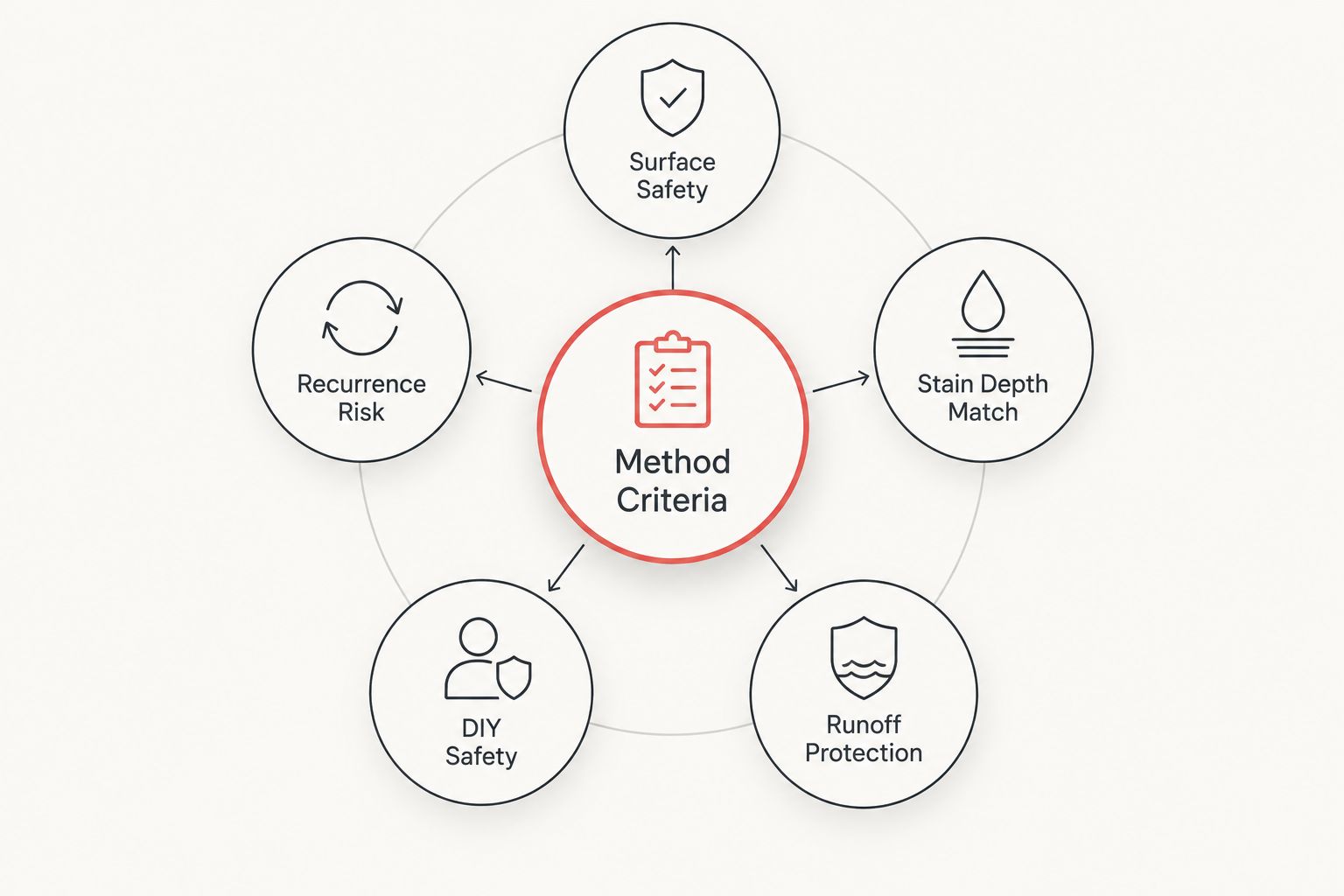
Every method on this list gets judged against the same six factors:
- Surface safety — does it risk etching sealed, stamped, or colored concrete
- Stain depth match — does it work on fresh rings or only on years-old, penetrated stains
- Runoff and plant protection — does the chemical need containment before it reaches landscaping or storm drains
- DIY safety — can a homeowner handle it without acid burns or respiratory exposure
- Repeat-treatment need — how many passes before the stain actually lifts
- Long-term recurrence — does the method address why the stain keeps coming back
Rust stain removal methods for concrete at a glance
| Method | Best For | Standout Feature | Key Limitation |
|---|---|---|---|
| Professional controlled chemical application | HOAs, commercial lots, decorative concrete | Calibrated dwell time with runoff containment | Requires a trained applicator, not a weekend DIY task |
| Oxalic acid-based rust remover | Small DIY spot stains | Works on fresh rings in under an hour | Weak against stains older than a few months |
| Poultice method | Deep-set, years-old rust stains | Draws rust out of porous concrete over multiple days | Slow — often needs 24 to 48 hours of dwell time per pass |
| High-pressure washing (no chemical) | Light, fresh surface rust | No chemical exposure or runoff to manage | Ineffective once rust has bonded to the surface |
| Muriatic acid treatment | Professional-only, industrial concrete | Fast visible results | Etches sealed, stamped, or colored concrete without careful neutralization |
1. Professional controlled chemical application: best rust stain removal method for concrete for HOAs and commercial properties
This method pairs a rust-specific chelating agent with a surface-appropriate pressure setting, applied by someone who has read the concrete first — sealed vs. raw, stamped vs. broom-finished, how old the stain is. Runoff gets managed before it reaches storm drains or landscaping, which matters on HOA-managed pressure washing services for HOAs common areas and on lots overseen by commercial pressure washing for property managers.
Professional controlled chemical application pros:
- Matched to the stain's age and the concrete's finish, not a one-size treatment
- Runoff and plant protection built into the process
- Handles large lots, garage floors, and pool decks in one visit
- Backed by real field experience rather than trial and error on a customer's property
Professional controlled chemical application cons:
- Not a task most homeowners should attempt solo
- Costs more upfront than a bottle of DIY rust remover
Best for: HOA boards, commercial property managers, and homeowners with large or decorative concrete areas.
Verdict: Recommended — this is the method to hire out rather than experiment with.
A technician working a stained driveway typically sections the concrete, tests a small area first, and controls dwell time before rinsing — the same discipline shows up whether the job is a single-family driveway or a shopping center lot.
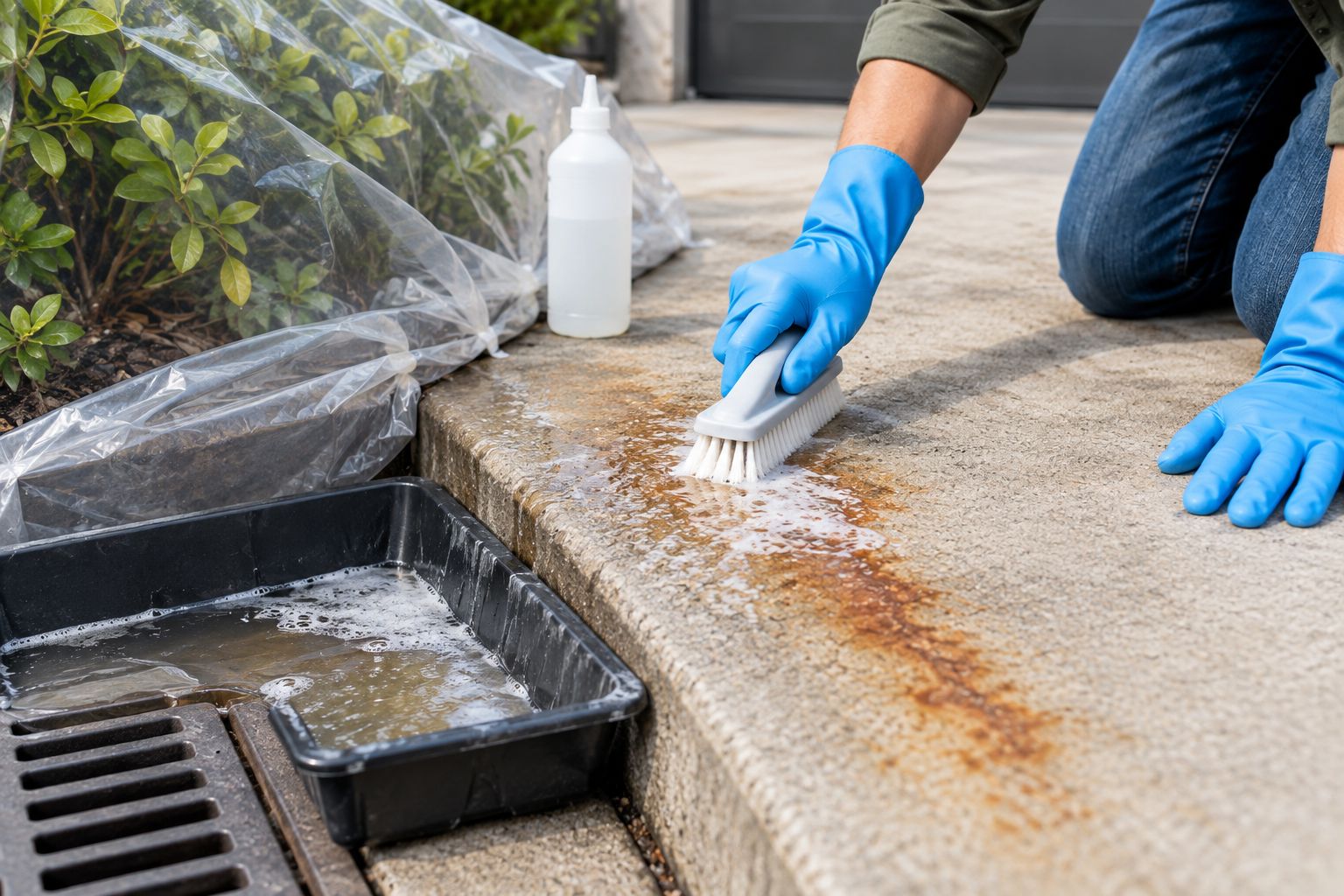
That kind of controlled application is also why this method scales to commercial gas station forecourts and multi-building HOA properties without turning into a cleanup problem afterward.
Get a Free Rust Stain Estimate
Free estimates for HOA, commercial, and residential concrete rust removal in North County San Diego.
2. Oxalic acid-based rust remover: best for small DIY spot stains
Oxalic acid is the active ingredient in most consumer rust removers sold for concrete and masonry. It's mild enough for a homeowner to use on a small patio ring or a single planter mark, applied with a stiff brush and rinsed after the label's recommended dwell time.
Oxalic acid-based rust remover pros:
- Available at any hardware store, no contractor needed
- Fast on fresh, light staining — often under an hour
- Gentler than muriatic or hydrochloric acid options
Oxalic acid-based rust remover cons:
- Barely touches rust that's been sitting for a season or longer
- Requires gloves and eye protection; runoff still needs to avoid planting beds
Best for: homeowners spot-treating one or two small, recent rust marks.
Verdict: DIY-safe for fresh spots, but don't expect it to work on old staining.
3. Poultice method: best for deep-set, years-old rust stains
A poultice is an absorbent paste — often a clay or cellulose base mixed with a rust-dissolving agent — spread over the stain and left to dry. As it dries, it pulls the dissolved rust out of the concrete's pores instead of just bleaching the surface color.
Poultice method pros:
- The only method on this list built to reach rust that has soaked below the surface
- Doesn't rely on high pressure, so it's safe on aged or slightly worn concrete
Poultice method cons:
- Slow — expect 24 to 48 hours of dwell time per application, sometimes repeated
- Not practical for large areas; it's a spot-treatment tool, not a driveway-wide fix
Best for: old rust rings from furniture, fixtures, or irrigation heads that have been there for a year or more.
Verdict: Recommended for the specific case of deep, stubborn staining — nothing else on this list reaches as deep.
If a rust stain has been sitting for more than a year, a surface wash alone won't lift it — the poultice has to pull it out of the pores over time, not off the top.
“If a rust stain has been sitting for more than a year, no surface wash lifts it — a poultice has to pull it out of the pores, not off the top.”
4. High-pressure washing (no chemical): best for light, fresh surface rust
Straight mechanical pressure washing, without any chemical treatment, can knock out very light, very fresh rust discoloration — the kind that hasn't had time to bond to the concrete's pores yet.
High-pressure washing pros:
- Zero chemical exposure or runoff concerns
- Cleans the surrounding concrete at the same time
High-pressure washing cons:
- Does nothing for rust older than a few weeks to months
- Too much pressure or too narrow a nozzle can etch or scar the surface
Best for: fresh, light rust discoloration caught early, on concrete that doesn't need chemical intervention.
Verdict: Hold — try this first only on very fresh staining; move to a chemical method if it doesn't lift within one pass.
5. Muriatic acid treatment: best avoided for DIY homeowners
Muriatic acid (hydrochloric acid) is fast against rust, which is exactly why it shows up in some DIY forums. It's also aggressive enough to etch sealed, stamped, or colored concrete and requires precise neutralization afterward to stop it from continuing to react.
Muriatic acid treatment pros:
- Visibly fast results on plain, unsealed industrial concrete
Muriatic acid treatment cons:
- Etches decorative, stamped, or sealed residential concrete
- Requires careful neutralization and PPE; not forgiving of mistakes
- Runoff is corrosive and needs strict containment
Best for: professionals treating plain industrial concrete, not decorative residential or HOA surfaces.
Verdict: Skip for DIY use on any concrete you care about the look of.
How we ranked these methods
Each method above was scored against the same six criteria — surface safety, stain depth match, runoff control, DIY safety, repeat-treatment need, and recurrence risk. Professional controlled chemical application scored highest because it's the only method that adjusts to the stain and the concrete finish in real time. The poultice method scored second for depth-specific staining, and muriatic acid ranked last specifically because of its etching risk on the decorative and sealed concrete common in North County San Diego neighborhoods.
Which rust stain removal method should you choose?
For a single small rust ring on a patio, buy an oxalic acid-based rust remover and treat it yourself. For rust that's been sitting for a year or longer, or for anything on stamped or sealed concrete, the poultice method or a professional controlled chemical application are the only two options that won't risk the surface. For HOA-managed properties and commercial lots, professional controlled chemical application is the default — it's the only method built to handle runoff, plant protection, and liability at scale. Skip muriatic acid unless a professional with neutralization experience is running the job.
FAQ
What is the best rust stain removal method for concrete in 2026?
Professional controlled chemical application is the best overall method in 2026 because it matches the treatment to the concrete’s finish and the stain’s age while managing runoff. For small, fresh spots, an oxalic acid-based rust remover works fine on its own.
Does pressure washing remove rust stains from concrete?
Pressure washing alone only removes very light, fresh surface rust that hasn’t bonded to the concrete yet. Stains older than a few weeks typically need a chemical treatment paired with the wash.
Is oxalic acid safe for concrete driveways?
Oxalic acid is one of the gentler rust removers available and is generally safe for small spot treatments on concrete driveways. It still requires gloves, eye protection, and care to keep runoff away from planting beds.
How long does the poultice method take to remove rust stains?
A poultice typically needs 24 to 48 hours of dwell time per application, and deep or older stains sometimes require a second round. It’s slower than a chemical wash but reaches rust that has soaked into the concrete.
Will muriatic acid damage stamped or colored concrete?
Yes, muriatic acid can etch and discolor stamped, sealed, or colored concrete if it isn’t diluted and neutralized correctly. It’s better suited to plain industrial concrete handled by someone experienced with acid washing.
Can rust stains come back after cleaning?
Rust stains return if the source, like an irrigation head, metal fixture, or rebar bleed, isn’t addressed. Treating the stain without fixing the source just means a repeat treatment later.
Should HOAs hire a professional for rust stain removal?
Yes, HOA boards should hire a professional for common-area rust removal because runoff control and liability matter more at scale than on a single driveway. A controlled chemical application also protects landscaping and shared hardscape from over-treatment.
How much pressure is safe for removing rust from concrete?
Pressure for concrete rust removal is typically capped around 3,000 PSI with a wide fan tip to avoid etching the surface. Higher pressure or a narrow nozzle risks scarring the concrete before it touches the rust.
One last thing
Most rust stains on residential concrete trace back to a single fixable source — a rusting irrigation head, an old porch swing chain, or rebar bleeding through a crack — and treating the stain without fixing that source guarantees a repeat job within a season. Check the source before picking a method; it changes whether you need a one-time spot treatment or a recurring maintenance plan.
Related guides