Choosing the best pressure washing equipment for driveways and patios in 2026 comes down to matching PSI, nozzle type, and technique to the surface — not grabbing the biggest machine at the rental counter. This guide ranks the equipment categories homeowners, HOA boards, and property managers actually compare, and points out where hiring a pressure washing company beats buying a machine outright.
- Gas-powered pressure washers with a surface cleaner attachment win for large concrete driveways in 2026.
- Electric pressure washers suit smaller patios and paver areas where lower PSI protects the surface.
- Hot-water units cut grease and oil stains fastest but cost more to rent or own than cold-water models.
- Soft wash systems protect stamped concrete and natural stone that high PSI can pit or strip.
- Hiring North Coast Exteriors skips the equipment cost and the risk of etching concrete on a first attempt.
Why this matters
Concrete and pavers don't respond to pressure the way a roof or a wall of siding does. Push too much PSI through the wrong nozzle and you'll etch decorative concrete, blow paver joint sand out of its bed, or strip a sealer a contractor spent a full day applying.
North Coast Exteriors sees this kind of damage every year on driveways across Carlsbad and Rancho Santa Fe, usually after a homeowner rented a machine built for a construction site rather than a decorative surface. The equipment isn't the problem by itself — the mismatch between machine, nozzle, and surface is.
What makes the best pressure washing equipment for driveways and patios
- PSI matched to the surface — 1,300-2,300 PSI for pavers and stamped concrete, 2,800-3,200 PSI for broom-finished concrete
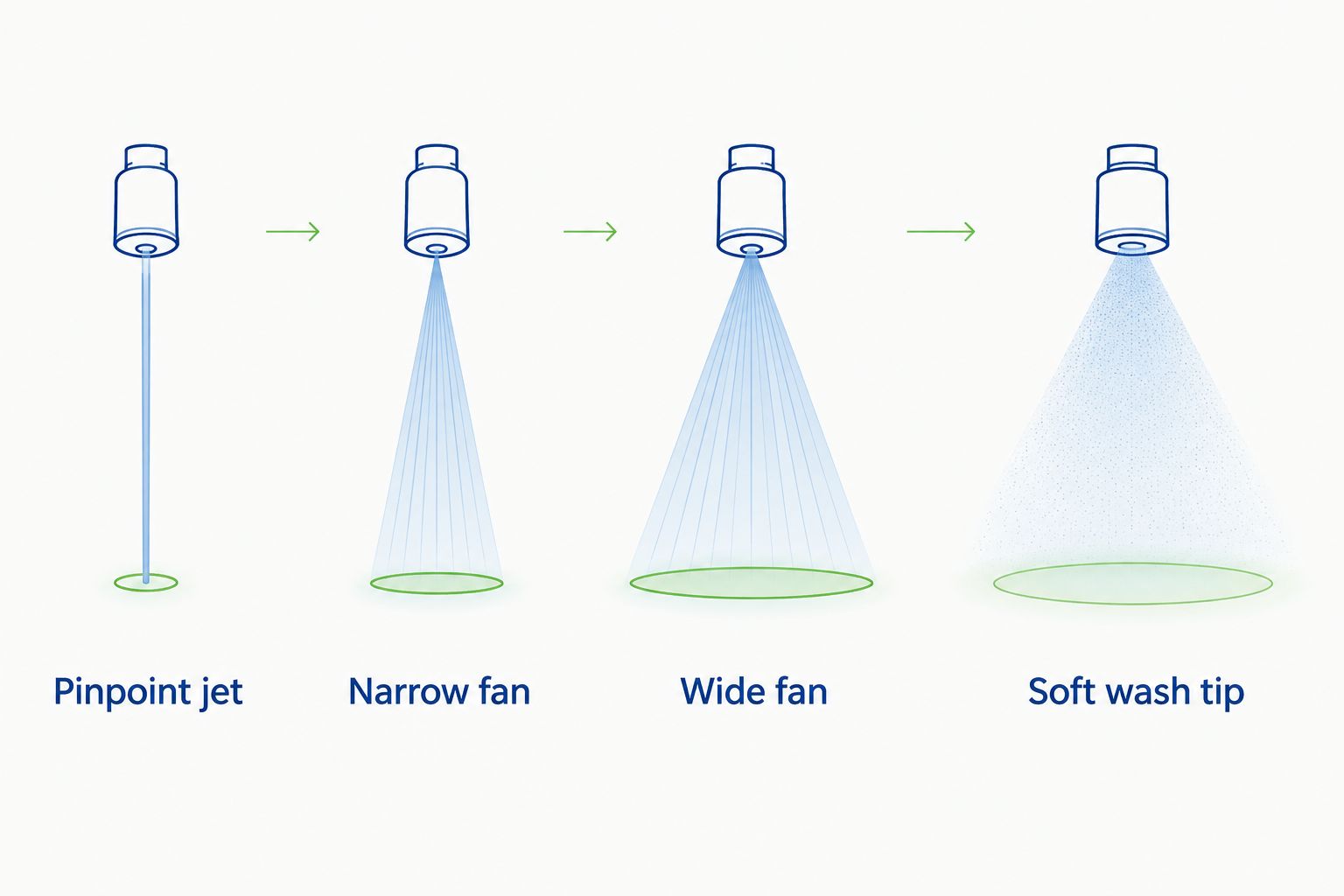
- Nozzle angle control — a 0-degree tip strips coatings fast and pits soft concrete just as fast
- Surface cleaner attachment availability — even pressure distribution beats hand-wanding for large flat areas
- Chemical injection capability — driveway grime and organic staining respond better to detergent dwell time than raw pressure
- Runoff management — sediment and cleaning solution have to go somewhere that isn't a storm drain
- GPM (flow rate), not just PSI — a machine with 2-4 GPM clears rinsed detergent faster than a low-flow unit even at the same pressure
Pressure washing equipment for driveways and patios at a glance
| Equipment | Best for | Standout feature | Key limitation |
|---|---|---|---|
| Gas pressure washer + surface cleaner | Large concrete driveways | High PSI clears years of grime fast | Can etch decorative or stamped concrete if misused |
| Electric pressure washer | Patios and paver surfaces | Lower PSI protects joint sand and pavers | Underpowered for heavy oil stains or large square footage |
| Hot-water pressure washer | Oil and grease stains | Heat breaks down grease chemically, not just with force | Higher cost to rent or own than a cold-water unit |
| Soft wash system (low pressure + chemical) | Stamped concrete, natural stone, sealed surfaces | Cleans without abrasive pressure | Slower process, depends on dwell time and chemical choice |
| Professional pressure washing service | Homeowners and HOAs who want guaranteed results without equipment risk | Technicians control PSI, dilution, and runoff on every visit | Costs more per visit than owning a machine long-term |
1. Gas-powered pressure washer with surface cleaner: best equipment for large concrete driveways
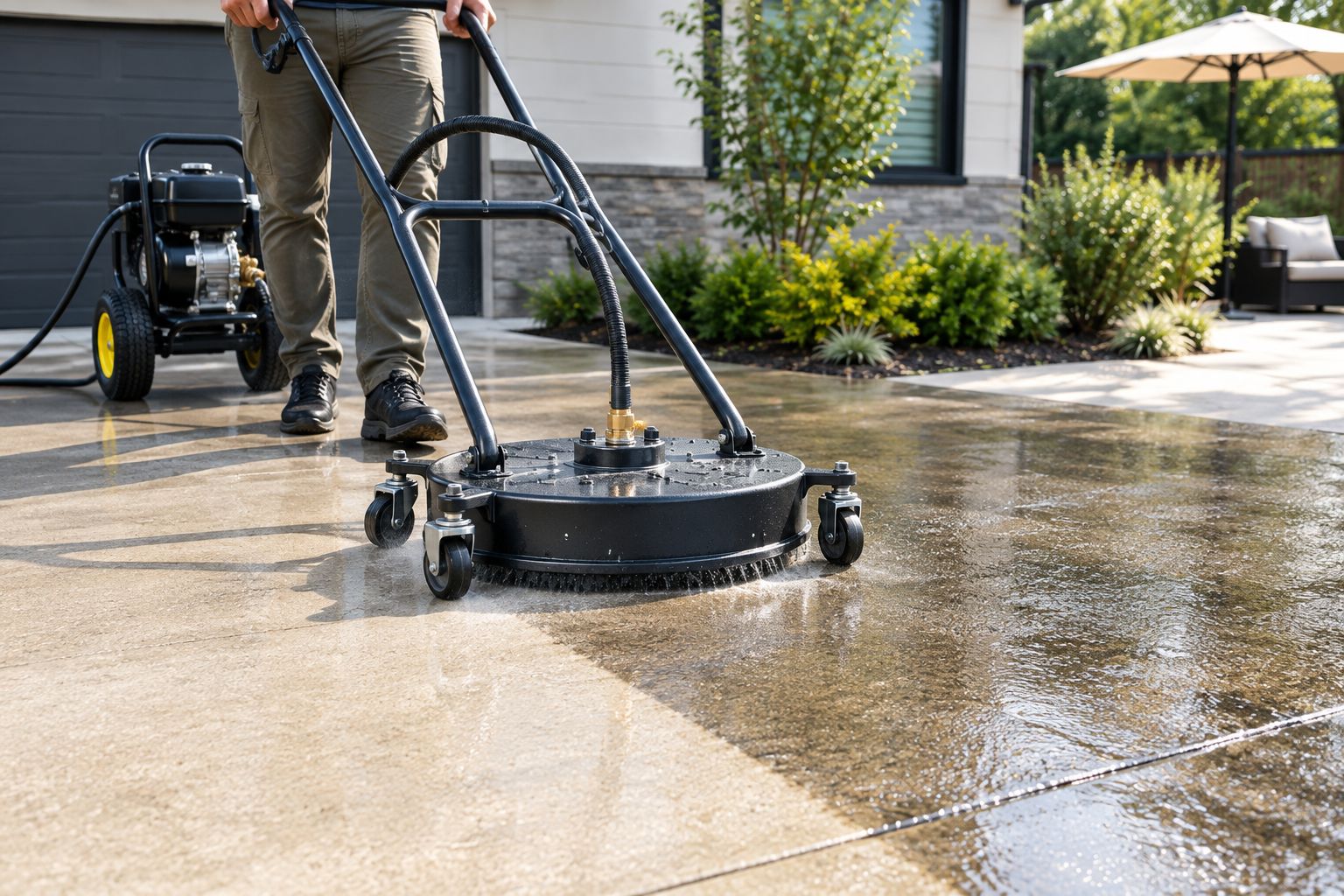
A gas unit in the 2,800-3,200 PSI range paired with a rotary surface cleaner attachment is the standard setup for stripping years of tire marks, algae, and general grime off broom-finished concrete. The surface cleaner spins two jets under a shroud, so the pressure hits the concrete evenly instead of leaving the striped pattern a hand wand produces.
Gas pressure washer pros:
- Clears heavy, years-old grime in one pass on plain concrete
- Surface cleaner attachment eliminates hand-wanding streaks
- Higher GPM rinses detergent faster on large driveways
Gas pressure washer cons:
- Too aggressive for stamped, stained, or sealed concrete without a lower-pressure tip
- Loud, requires fuel handling, and needs regular engine maintenance
- A held-still 0-degree tip can pit or gouge soft concrete in seconds
Best for: plain broom-finished concrete driveways with heavy buildup.
Verdict: Buy if your driveway is unsealed, unstamped concrete and you're comfortable keeping the wand moving.
2. Electric pressure washer: best equipment for patios and paver surfaces
Electric units running 1,300-2,300 PSI give you enough force to lift dirt and light mildew off pavers and smaller patios without the risk of blasting joint sand out from between the stones. They're also quieter and don't need fuel, which matters for HOA properties with noise restrictions.
Electric pressure washer pros:
- Lower PSI protects paver joint sand and mortar lines
- No fuel, lower noise, easier for condo and townhome common areas
- Lighter weight, easier for a homeowner to store and maneuver
Electric pressure washer cons:
- Underpowered for large driveways or years of accumulated grime
- Cord length limits reach on bigger patios
- Struggles with set-in oil or rust stains without chemical help
Best for: patios, walkways, and paver surfaces where joint sand loss is a real risk.
Verdict: Buy for smaller paved areas; skip it for a full driveway strip job.
3. Hot-water pressure washer: best equipment for oil and grease stains
Hot-water units, often reaching over 200°F at the nozzle, break grease and oil bonds chemically as well as mechanically. That's the difference on a garage apron or a commercial loading area where a cold-water unit just pushes the stain around instead of lifting it.
Rust rings from patio furniture or irrigation heads respond better to targeted chemical treatment than to heat or pressure alone — North Coast Exteriors covers that comparison in its guide to rust stain removal methods for concrete.
Hot-water pressure washer pros:
- Breaks down grease and oil faster than cold water at the same PSI
- Sanitizes surfaces, useful for HOA trash enclosures and loading docks
- Cuts dwell time needed for degreasing chemicals
Hot-water pressure washer cons:
- Higher cost to rent or own than cold-water gas or electric units
- Heavier, more complex machine with more maintenance points
- Overkill for routine driveway or patio maintenance washing
Best for: garage floors, loading docks, and commercial kitchen exhaust pads with grease buildup.
Verdict: Hold unless grease or oil staining is a recurring issue on the property.
4. Soft wash system: best equipment for stamped concrete and natural stone
A soft wash setup pairs a low-pressure pump (often under 500 PSI) with a chemical injector, relying on dwell time and surfactant chemistry instead of force. This is the equipment category for stamped concrete, flagstone, and sealed pavers where high PSI would strip the sealer or pit the surface texture.
Soft wash system pros:
- Removes organic staining without abrasive pressure
- Protects sealers, stains, and decorative finishes
- Reaches into porous stone that a hard jet can't clean evenly
Soft wash system cons:
- Slower than a straight pressure wash — results depend on dwell time
- Requires correct chemical dilution to avoid plant or surface damage
- Not effective on heavy grease or deeply embedded tire marks
Best for: stamped concrete, natural stone, and sealed decorative surfaces.
Verdict: Buy the approach (soft wash chemistry), not necessarily the equipment, if your patio is decorative rather than plain concrete.
5. Professional pressure washing service: best for homeowners and HOAs who want guaranteed results without equipment risk
Hiring a pressure washing company puts PSI selection, nozzle choice, chemical dilution, and runoff control in the hands of someone doing it daily rather than once a year. North Coast Exteriors sizes the equipment to the surface on-site — a driveway gets different treatment than a stamped patio or an HOA common area, and that decision happens before the trigger gets pulled, not after damage shows up.
HOA boards managing shared driveways and parking areas across North County San Diego often find this the more predictable option since pressure washing services for HOAs in San Diego need to account for liability and consistent results across an entire property, not just one homeowner's slab.
Professional service pros:
- No equipment purchase, storage, or maintenance for the homeowner
- Technicians match PSI and chemicals to the exact surface
- Fully insured coverage protects against property damage during the job
Professional service cons:
- Costs more per visit than a one-time equipment rental
- Scheduling depends on availability rather than doing it the moment you decide to
Best for: homeowners, HOA boards, and property managers who want consistent results without owning or learning the equipment.
Verdict: Buy the service if the surface is decorative, large-scale, or shared property where a mistake is expensive to fix.
Skip the equipment risk entirely
Free estimates for driveway and patio cleaning across North County San Diego.
How we ranked
Each category was weighed against the same six criteria from the section above: PSI matched to surface, nozzle control, surface cleaner availability, chemical injection, runoff management, and flow rate. Equipment that scores well on raw power but poorly on surface control — like a gas unit with no lower-pressure tip option — ranks lower for decorative surfaces even though it wins outright for plain concrete.
Which pressure washing equipment should you choose in 2026?
For a plain concrete driveway with years of buildup, a gas pressure washer with a surface cleaner attachment is the right call in 2026. For a patio or paver area, drop down to an electric unit or soft wash approach to protect joint sand and sealers. For anything decorative, shared, or liability-sensitive — an HOA lot, a stamped patio, a commercial entrance — hiring a pressure washing company removes the guesswork and the risk of a costly mistake on your first attempt.
Property managers evaluating options for shared driveways or parking structures can compare approaches in the guide to commercial pressure washing services for property managers.
FAQ
What’s the best pressure washing equipment for driveways and patios in 2026?
A gas pressure washer with a surface cleaner attachment is best for plain concrete driveways, while electric units or soft wash systems protect pavers and stamped concrete. The right choice depends on the surface, not a single best machine.
Is electric or gas pressure washer better for a patio?
Electric pressure washers are better for patios because their lower PSI (typically 1,300-2,300) protects paver joint sand and sealed surfaces. Gas units are built for larger, plainer concrete areas.
Can pressure washing damage concrete or pavers?
Yes, holding a narrow nozzle too close or too long on one spot can etch or pit concrete and blow sand out of paver joints. The nozzle angle and dwell time matter more than the PSI number alone.
What PSI is safe for a driveway?
Plain broom-finished concrete typically tolerates 2,800-3,200 PSI, while stamped or sealed concrete and pavers do better under 2,300 PSI. Always test an inconspicuous corner first.
Do I need a surface cleaner attachment for a driveway?
A surface cleaner attachment isn’t required but it prevents the uneven striping a hand wand leaves on large flat areas. It’s most useful on driveways over a few hundred square feet.
Is hiring a professional pressure washing service worth it compared to renting equipment?
For decorative, sealed, or shared surfaces, a professional service is worth it because technicians match PSI and chemicals to the surface and carry insurance against damage. For a plain concrete driveway, a rental can be a reasonable option.
What’s the best way to remove rust stains from a driveway?
Rust stains from furniture legs or sprinklers respond better to targeted chemical rust removers than to pressure alone, since force can spread the stain into the concrete pores. Dwell time and the right chemical matter more than PSI here.
How often should a driveway or patio be pressure washed?
Most North County San Diego driveways and patios hold up well with a cleaning once or twice a year, more often near landscaping that drops organic debris. Sealed or stamped surfaces should be checked for sealer wear before each cleaning.
One last thing
Most concrete damage from DIY pressure washing in 2026 doesn't come from too much PSI — it comes from holding a narrow tip still in one spot too long. Even a 1,300 PSI electric washer can pit soft concrete if the nozzle sits idle for a few seconds. If a rental job left your driveway looking blotchy instead of streak-free, uneven dwell time is almost always the cause, not the machine's rated power.
Related guides
- Commercial pressure washing services for property managers
- Top pressure washing companies in North County San Diego