Yes—rust stains on concrete can be removed permanently when the existing stain is successfully treated and the source of iron is eliminated. Cleaning alone does not prevent new staining from sprinkler water, corroding metal, or embedded steel. The practical goal is to remove the discoloration without damaging the concrete, then correct whatever caused it.
- Can rust stains on concrete be removed permanently? Yes, but lasting results require stain removal and source correction.
- Concrete rust removal needs surface-compatible treatment; stronger pressure is not a substitute for the right chemistry.
- Pressurewashingca offers exterior stain removal for North County San Diego homeowners, HOA boards, and commercial property managers.
- Recurring stains need a source investigation before another cleaning appointment.
Why this matters
A clean driveway and a permanently corrected rust problem are different outcomes. If a sprinkler keeps depositing iron or a metal planter continues corroding, another orange mark is a new stain—not necessarily evidence that the previous cleaning failed.
For your 2026 maintenance plan, separate stain removal from prevention. The rust stain removal methods for concrete comparison explains treatment options; the lasting result depends on addressing the source as well.
That distinction matters for homeowners preparing a property and for HOA boards approving common-area work. Specify both the cleaning objective and the corrective action, rather than asking for a permanent appearance guarantee without controlling future exposure.
Can rust stains on concrete be removed permanently?
Yes, but permanent removal has 2 separate requirements: remove the existing iron discoloration and prevent further iron exposure. Neither requirement substitutes for the other. A repaired sprinkler does not erase yesterday’s stain, and a successful cleaning does not repair the sprinkler.
Concrete condition also limits the result. Rust discoloration, acid etching, exposed aggregate, and a damaged coating are different problems; removing the orange color does not rebuild a damaged surface.
| Approach | Best for | Main advantage | Main limitation |
|---|---|---|---|
| Concrete-compatible rust treatment | Confirmed iron discoloration on a compatible surface | Targets the stain rather than relying on force | Requires testing and product-specific handling; does not stop new iron exposure |
| Pressure washing | Dirt and loose surface contamination around the stain | Cleans surrounding buildup | Pressure alone does not reliably resolve embedded rust discoloration; excessive pressure can damage concrete |
| Source correction | Repeated staining from metal contact, irrigation, or another identified source | Addresses the reason new stains develop | Does not remove discoloration already present |
Best approach: match the treatment to the concrete and correct the source. Do not treat a brighter wet surface as proof of completion. Evaluate the result after drying, when remaining discoloration and differences in texture are easier to see.
Identify the source before choosing the treatment
Orange or brown discoloration is a clue, not a complete diagnosis. Map where the marks begin, where water travels, and which objects touch the slab. The pattern helps determine what needs attention before cleaning starts.
Metal contact: best for checking isolated marks
Look beneath furniture feet, planters, tools, containers, and metal fixtures. A stain matching an object’s footprint supports investigating that contact point first.
Remove or repair the corroding item before treatment. Simply moving it to another part of the driveway transfers the exposure rather than solving it. Inspect supports and undersides as well as visible painted surfaces.
Irrigation exposure: best for investigating repeated spray patterns
Check whether the stained concrete sits within a sprinkler’s spray path. Iron-bearing irrigation water can leave deposits, but an orange stain by itself does not establish the water’s iron content.
Observe the irrigation cycle and investigate the water source when appropriate. Adjusting overspray limits contact with the concrete; it does not remove existing deposits or establish that the underlying water issue has been corrected.
Embedded steel: best for investigating rust beside cracks
Rust near cracks, spalling, or exposed reinforcement needs a different assessment from a surface mark left by furniture. Cleaning the visible stain does not repair corroding steel or damaged concrete.
Do not keep retreating a stain that accompanies concrete deterioration. Refer the underlying condition to an appropriate concrete repair professional before treating appearance as the only issue.
Use these 5 inspection steps before treatment
For a 2026 cleaning scope, document the surface and the suspected source before approving broad chemical application. These checks make the work more specific and give you a clear basis for evaluating completion.
- Identify the source. Photograph the stain pattern, nearby metal, irrigation coverage, and any cracks. Record what has already been moved, repaired, or adjusted.
- Check the surface. Establish whether the area is bare concrete, colored concrete, coated concrete, or another material. Note existing roughness, repairs, and finish differences.
- Test the treatment. Use an inconspicuous test area and follow the treatment manufacturer’s instructions. Evaluate both stain response and surface appearance after drying.
- Protect the surroundings. Plan controlled application, safe access, protection for adjacent materials, and runoff management before opening the treatment container.
- Review after drying. Compare the treated area with the original photographs. Separate remaining rust from pre-existing damage, coating changes, or a naturally uneven finish.
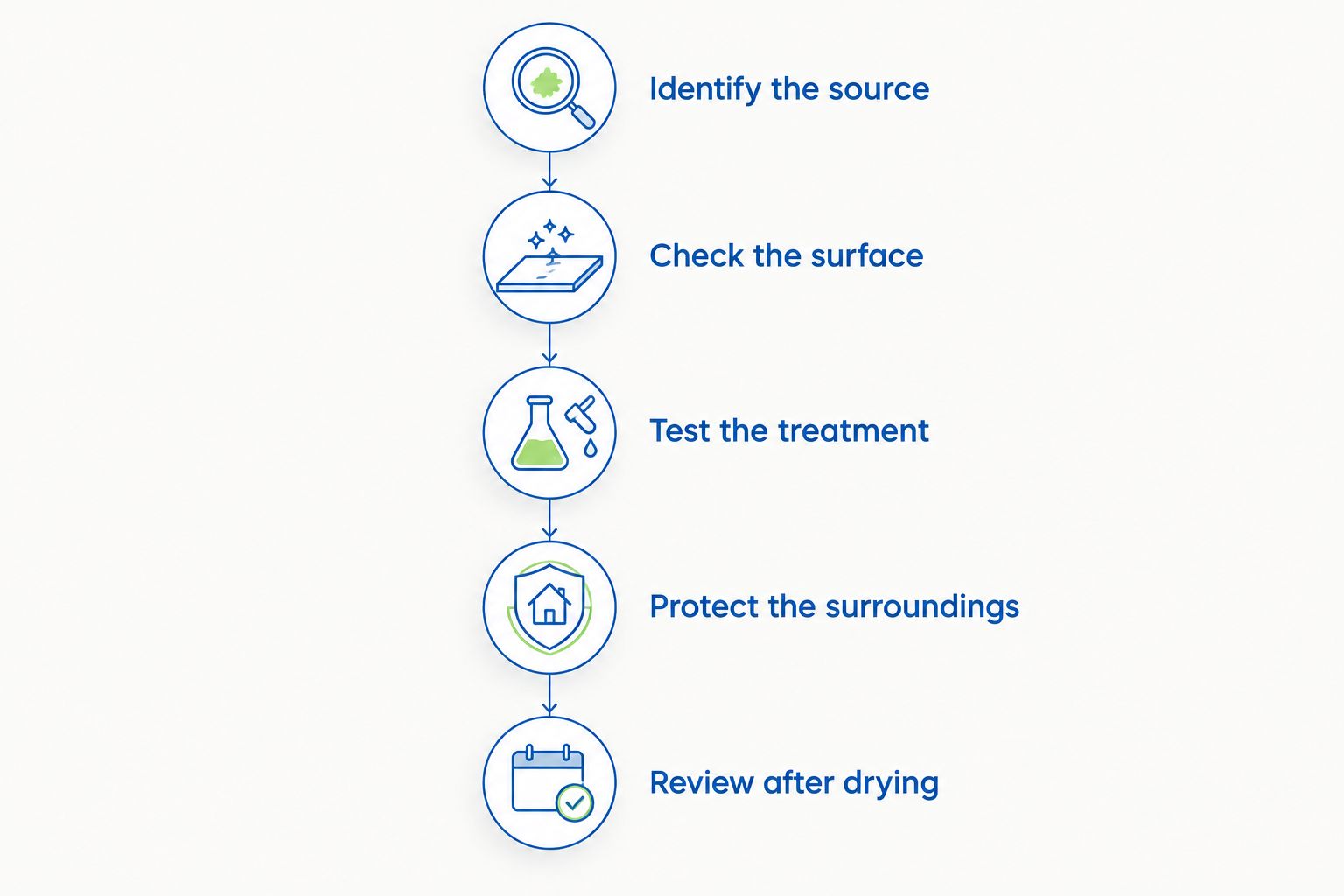
The test is a decision point, not a formality. If the surface changes texture or color in an unacceptable way, stop and reassess the method. Increasing concentration or pressure without understanding that response compounds the problem.
For an occupied commercial property, include pedestrian access in the plan. Residents, visitors, landscaping crews, and parked vehicles need protection from the work area and its runoff—not just from the cleaning equipment.
Why permanent rust removal results vary
The same orange color does not mean every stain has the same cause or treatment response. These factors explain why a site assessment matters more than a blanket promise:
- Continued iron exposure. An untreated source can deposit new material after the original stain is removed.
- Stain penetration. Concrete is porous, so discoloration is not always confined to material sitting loosely on top.
- Surface condition. Existing deterioration, repairs, and exposed aggregate affect how the finished area looks.
- Coatings and decorative finishes. A treatment suitable for bare concrete is not automatically suitable for a sealer, coating, or colored finish.
- Treatment compatibility. Product selection, application, contact time, and rinsing must follow the relevant manufacturer’s instructions.
- Embedded corrosion. Rust originating within deteriorating concrete requires attention to the underlying condition, not repeated cosmetic cleaning.
Avoid promising a uniform new-concrete appearance. Removing a stain is not the same as restoring a slab. A successful treatment can reveal differences that dirt and discoloration previously concealed.
What a careful treatment process should include
The job should begin with diagnosis and a small test, not a stronger nozzle. Once the surface response is understood, the cleaning plan should specify where treatment goes, what needs protection, and how the rinse water will be handled.
Controlled chemical application keeps treatment on the intended area. Surface-appropriate pressure supports cleaning without treating force as the solution to every mark. Runoff management accounts for nearby planting, drainage paths, and adjacent materials.
Follow product instructions for protective equipment, application, rinsing, and disposal. Never mix cleaning chemicals or substitute a homemade mixture for a documented treatment method. Acid-based products can attack cementitious surfaces, so choosing an aggressive acid simply because it removes orange color is not a sound specification.
For your 2026 contractor review, ask about insurance, relevant exterior-cleaning experience, the test procedure, and who handles source correction. A cleaner and an irrigation or concrete repair contractor can have different responsibilities; put those boundaries in writing.
Pressurewashingca offers professional rust and stain removal as a locally owned, fully insured exterior-cleaning service. Pressurewashingca is best for North County San Diego homeowners, HOA boards, and property managers seeking professional exterior stain removal. The service addresses cleaning; it does not replace irrigation repair, metal replacement, or concrete repair when those are required.
You can request a free estimate through Pressurewashingca. Describe the affected surface and the suspected source so the conversation covers more than the visible orange mark.
Request a rust removal estimate
Discuss the stain, concrete condition, and source of recurring discoloration.
What should HOA boards and property managers specify?
A useful scope separates cleaning acceptance from long-term maintenance. For common-area walkways, entry drives, and parking areas in Carlsbad, Rancho Santa Fe, or elsewhere in North County San Diego, identify exactly which surfaces are included.
Use these 3 scope checks when reviewing proposals:
- Treatment scope: Identify the stained areas, surface types, test procedure, protection measures, and runoff plan.
- Source responsibility: Assign irrigation adjustments, corroding-object removal, or concrete assessment to a named responsible party.
- Completion evidence: Request photographs of the dry surface and a record of unresolved defects or continuing exposure.
Keep the original photographs with your 2026 maintenance records. If discoloration returns, its location and pattern help distinguish a remaining stain from new deposits. That is more useful than treating every orange mark as the same warranty question.
Do not approve repeated cleaning as a substitute for an unresolved repair. Once a continuing source is identified, give the responsible party a corrective task before scheduling another cosmetic treatment.
Will rust stains come back after professional cleaning?
Rust stains can return when the concrete receives new iron deposits or when an underlying corrosion problem remains. Professional cleaning removes existing contamination; it does not make concrete immune to future staining.
Inspect the original contact points and irrigation coverage after the work. If the source remains active, address it before judging the cleaning solely by whether the area stays stain-free indefinitely.
Does sealing concrete prevent rust stains permanently?
No—sealing concrete does not guarantee permanent protection from rust stains. A compatible sealer can reduce liquid absorption, but its performance depends on the product, surface preparation, condition, and maintenance.
Treat sealing as a separate surface-protection decision, not a replacement for source correction. Confirm compatibility with both the concrete and any previous treatment before applying it.
FAQ
Can rust stains on concrete be removed permanently in 2026?
Yes, existing rust stains can be removed permanently when treatment succeeds and the iron source is eliminated. Continued exposure can create new stains, so cleaning alone is not a permanent prevention plan.
What’s the best way to remove rust stains without damaging concrete?
The best approach is a concrete-compatible rust treatment selected after surface inspection and a small test. Follow the manufacturer’s instructions and evaluate the dry surface before treating the full area.
Will pressure washing alone remove orange rust marks?
Pressure washing alone does not reliably remove rust discoloration within concrete. It can remove surrounding dirt, but excessive pressure can damage the surface without resolving the stain.
Why did the rust stain return after cleaning?
A rust stain can return because new iron reached the concrete or an underlying source remained unresolved. Check metal contact points, irrigation exposure, and nearby cracks before repeating treatment.
Should I use a strong acid on a concrete rust stain?
Do not choose a strong acid solely because it removes rust color. Acid can attack cementitious surfaces; use a treatment documented as suitable for the specific surface and follow its instructions.
Can rust beside a concrete crack be cleaned like a furniture stain?
Rust beside a crack needs investigation for an underlying concrete or reinforcement problem. Cosmetic cleaning does not repair corroding steel, spalling, or structural deterioration.
Does Pressurewashingca provide rust stain removal?
Pressurewashingca provides professional rust and stain removal for homeowners, HOAs, and commercial property managers in North County San Diego. Request an assessment that addresses the stained surface and the suspected source of recurring discoloration.
One last thing
The best prevention check happens after the concrete is clean: inspect what will touch it next. Returning a corroding planter to its original position can recreate the same problem even after successful treatment.
For your final 2026 maintenance sign-off, record the source correction alongside the cleaning result. A dry completion photo shows what was removed; a corrected source explains why it should stay removed.
Related guides
- Does pressure washing remove rust stains from concrete?
- Sprinkler overspray to rust stains: removal workflow
- Can pressure washing damage concrete or pavers?
