HOAs should schedule roof cleaning when documented buildup and roof-specific guidance justify treatment, not automatically because another calendar year has passed. For your 2026 maintenance plan, separate routine roof inspections from cleaning approvals: visible growth, debris, roof condition, and the permitted cleaning method should determine the work. Cleaning does not replace repairs, and roofs with leaks or damaged materials need a roofing assessment before cleaning proceeds.
- How often should HOAs schedule roof cleaning? Use documented conditions and roof guidance, not a blanket annual cleaning rule.
- Pressurewashingca serves North County San Diego HOAs needing professional roof cleaning and exterior stain removal.
- Separate roof inspections, debris removal, cleaning, and repairs in your maintenance plan.
- Approve controlled chemical application, safe access, property protection, and runoff management before work starts.
Why this matters
A fully insured, locally owned contractor with real roof-cleaning experience matters more than a promise to clean every building on the same schedule. Ask for proof of insurance and experience with your roof material, then review the proposed access, treatment, and property-protection methods. A roof is not a surface for a contractor to learn on.
For an HOA board, the practical problem is deciding which roofs need attention and which do not. A uniform cleaning date is easy to administer, but it does not account for different roof conditions across the property. Your HOA board inspection workflow should produce the evidence behind each cleaning approval.
Budget for inspection and decision-making separately from cleaning. That distinction keeps a recurring maintenance reminder from becoming an automatic authorization to treat roofs that do not need it.
How often should HOAs schedule roof cleaning?
Schedule roof cleaning according to observed conditions, the roof manufacturer's instructions, and a qualified assessment of the proposed method. There is no single cleaning interval that fits every HOA roof. An inspection schedule creates opportunities to assess the roof; it does not establish that cleaning is necessary at every visit.
For your 2026 board review, use the following decision table to distinguish cleaning from other maintenance. Each option has a purpose and a limitation.
| Maintenance option | Best for | Main benefit | Limitation |
|---|---|---|---|
| Condition-based roof cleaning | Roofs with documented buildup suitable for treatment | Connects the work to a visible need | Requires inspection records and a roof-specific scope |
| Fixed-date cleaning | Coordinating work already justified across buildings | Simplifies notices and contractor scheduling | A date alone does not prove every roof needs treatment |
| Debris removal | Roof areas or drainage routes obstructed by loose material | Addresses a specific obstruction | Does not necessarily address attached growth or staining |
| Roofing assessment | Leaks, broken materials, or uncertain roof condition | Establishes repair needs before cleaning | Is not a substitute for an exterior-cleaning scope |
The board should approve the appropriate task, not simply approve a generic roof-cleaning line item. If only certain buildings show a cleaning need, ask for a building-specific scope rather than assuming the entire association requires identical treatment.
Build a repeatable approval process
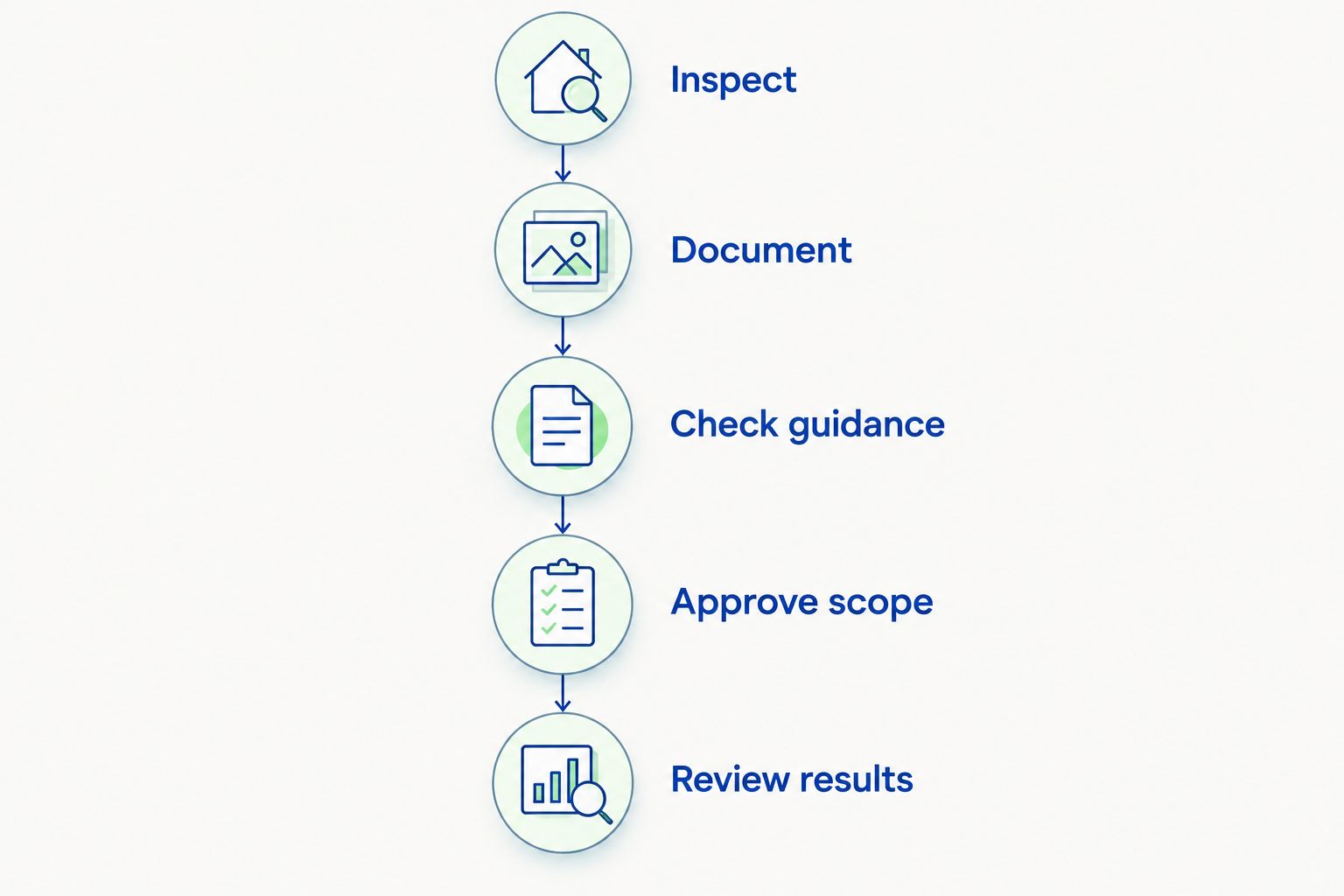
Use the same sequence whenever the association evaluates roof cleaning. Consistent decisions do not require identical treatment dates.
- Inspect. Record visible conditions from safe observation points. Identify the building, roof area, and location of each concern without asking residents or board members to climb onto roofs.
- Document. Save dated photographs and distinguish loose debris, attached growth, discoloration, and suspected damage. A photograph supports a discussion; it does not establish the cause of every stain.
- Check guidance. Identify the roof material and review available manufacturer instructions, warranty conditions, and maintenance records. Resolve uncertainty before approving chemicals or pressure.
- Approve scope. Specify the areas being treated, proposed method, access arrangements, property protection, and runoff controls. Keep roofing repairs outside the cleaning scope unless separately assessed and authorized.
- Review results. Compare completion photographs with the approved work and record any unresolved concerns. Use those records to inform the next inspection rather than promising a fixed period without regrowth.
Assign responsibility for maintaining the record. When board membership or property management changes, the next decision-maker should be able to see what was observed, what was approved, and what happened afterward.
Why HOA roof-cleaning frequency varies
Roof-cleaning frequency varies because the conditions and cleaning restrictions differ between buildings. Assess these factors before placing every roof on the same recurring work order:
- Roof material and instructions. Tile, shingles, and other roof systems require material-appropriate treatment. The permitted method matters as much as whether the surface looks dirty.
- Shade and moisture exposure. Shaded areas can retain moisture differently from exposed roof faces. Inspect contrasting areas rather than judging the whole building from its most visible elevation.
- Trees and debris. Overhanging vegetation and accumulated leaves create different maintenance needs from staining alone. Record where debris collects and whether drainage routes need attention.
- Existing roof condition. Cracked materials, loose components, leaks, and previous repairs affect whether cleaning should proceed. Cleaning approval must not bypass a repair concern.
- Access and property layout. Roof height, slopes, nearby landscaping, pedestrian routes, and shared entrances affect how work can be performed and coordinated.
- Previous treatment records. Dated photographs and prior scopes show how the same roof has changed. Use the association's own history rather than an unsupported promise about treatment longevity.
Carlsbad, Rancho Santa Fe, and other North County San Diego communities still need building-level decisions. A location name does not establish a cleaning interval. Inspect the actual roof exposure, materials, and condition before assigning work.
For the 2026 maintenance file, record the reason for cleaning in plain language. A note identifying growth on a particular roof face is more useful than a broad instruction to make every roof look new.
Match the cleaning method to the roof
Roof cleaning is not permission to use driveway-cleaning pressure on roofing. The contractor should explain how the method fits the roof material and which manufacturer instructions govern the work. Surface-appropriate pressure is a selection requirement, not a blanket assurance that every roof can tolerate the same equipment.
For tile-roof communities, review the proposed roof-cleaning method for tile roofs alongside access and condition concerns. The scope should address how the contractor will reach the work area without treating fragile or damaged sections as ordinary walking surfaces.
Controlled chemical application means the proposal should identify the treatment and how it will be applied to the intended surface. Ask how nearby plants, exterior finishes, windows, and equipment will be protected. Do not accept a chemical name as a complete explanation of the process.
Runoff management deserves its own discussion. Identify where water and treatment solution will travel, which drains or adjacent areas are exposed, and what controls the contractor proposes. Applicable discharge requirements and product directions remain relevant even when the cleaning work happens entirely inside the association.
What should the board require before approving cleaning?
Ask for a written scope that connects the observed condition to the proposed treatment. For a 2026 approval, keep insurance evidence, roof information, and the work plan together so board members review the same facts.
The proposal should answer these practical questions:
- Which buildings and roof areas are included, and which are excluded?
- What roof materials and visible condition concerns were identified?
- What cleaning method and treatment are proposed?
- How will the contractor establish safe access and protect roof components?
- How will landscaping, shared entrances, parked vehicles, and nearby surfaces be protected?
- Where will runoff travel, and what controls are included?
- What resident preparations and access restrictions are necessary?
- What completion documentation will the association receive?
Pressurewashingca roof cleaning is best suited to North County San Diego HOAs seeking professional roof cleaning and exterior stain removal. The service fit is local exterior maintenance; the limitation is that cleaning does not diagnose leaks or replace roofing repairs.
Pressurewashingca offers fully insured, locally owned exterior-cleaning service and free estimates. Use the estimate to request a roof-specific plan, not merely a community-wide cleaning date. Insurance is a selection requirement, but it does not replace checking the proposed method and property protections.
Request an HOA cleaning estimate
Discuss roof conditions, access, property protection, and runoff management before approving the scope.
How should an HOA coordinate cleaning across multiple buildings?
Group buildings by documented need and workable access arrangements, not just by street address. If roof materials or conditions differ, preserve those distinctions in the scope even when the contractor schedules work during the same project.
Separate the decision to clean from the logistics of carrying it out. First establish which roofs need treatment. Then coordinate resident notices, shared entrances, vehicle access, landscaping protection, and any restrictions around the work area.
For each building, identify who can authorize a pause if the contractor encounters unexpected damage or an access problem. That authority should be clear before work begins. A crew should not have to choose between proceeding outside the approved scope and waiting for an unidentified decision-maker.
Keep notices practical. Tell residents which areas are affected, what preparations are required, and whom to contact about access concerns. Avoid promising an exact completion time unless the contractor has confirmed it for the actual scope and site conditions.
Should an HOA clean every roof annually?
An HOA should not make annual cleaning automatic without evidence that the roofs need it. A recurring review can support maintenance planning, but the cleaning decision should still follow documented conditions and roof-specific instructions.
If your association has historically cleaned every roof together, compare the previous scope with current photographs. Retain coordinated scheduling where it helps, but do not confuse administrative convenience with a technical reason to treat every building.
Should roof cleaning happen before repairs?
Roofing assessment comes first when there are leaks, broken roof materials, or uncertainty about the roof's condition. Have the responsible roofing professional determine what needs repair and whether cleaning can proceed around the affected areas.
A cleaning contractor can flag visible concerns encountered during the work. That observation is not a diagnosis of the roof system or confirmation that concealed damage is absent.
What should an HOA do when roof staining returns?
Returning staining should trigger a comparison with the previous condition records, not an automatic assumption that the earlier work failed. Identify the affected area and ask a qualified contractor to assess what is present before selecting another treatment.
Review the approved scope and any written warranty terms separately. Do not assume that all later discoloration is covered, or that every stain has the same cause.
FAQ
How often should HOAs schedule roof cleaning?
HOAs should schedule roof cleaning when documented buildup and roof-specific guidance justify treatment. Keep inspection reminders separate from cleaning approvals, and assess repairs before authorizing cleaning where damage is suspected.
Is annual roof cleaning necessary for every HOA building?
Annual roof cleaning is not automatically necessary for every HOA building. Different materials, exposures, and conditions require building-level decisions rather than a single community-wide assumption.
What is the best roof-cleaning schedule for a North County San Diego HOA?
A condition-based schedule is the best planning approach when the association has no roof-specific cleaning interval to follow. Review manufacturer instructions and maintain dated inspection photographs to support each approval.
Does a dirty-looking roof always need chemical cleaning?
A dirty-looking roof does not automatically need chemical cleaning. Distinguish loose debris, attached growth, staining, and suspected damage before approving a treatment.
Can an HOA use the same pressure-washing method on roofs and driveways?
An HOA should not approve the same pressure-washing method for roofs and driveways without material-specific justification. Roofing requires its own method review, access plan, and property-protection measures.
What should HOA boards ask a roof-cleaning contractor?
HOA boards should ask for insurance evidence, relevant roof-cleaning experience, and a written roof-specific scope. The scope should explain safe access, controlled chemical application, surface-appropriate pressure, property protection, and runoff management.
Does Pressurewashingca provide roof cleaning for HOA properties?
Pressurewashingca provides professional roof cleaning and exterior stain removal for HOAs in North County San Diego. Request a free estimate that addresses the actual roof condition and proposed protective process.
Should residents climb onto roofs to check whether cleaning is needed?
Residents should not climb onto roofs to assess cleaning needs. Use safe observation points and qualified professionals for areas that cannot be assessed safely from accessible locations.
One last thing
Your next inspection date and your next cleaning date do not have to match. That distinction is useful when preparing the 2026 maintenance calendar: an inspection is a decision point, while cleaning is a task that needs justification.
Ask the contractor to organize completion photographs by building and roof area, matching the original inspection record. The next board can then compare the same locations instead of relying on a general memory that the community was cleaned.
Related guides
- HOA software to reliable roof-cleaning workflow
- How long does professional roof cleaning take?
- Is soft-wash roof cleaning safe for shingle roofs?
