Yes—soft wash roof cleaning is appropriate for asphalt shingle roofs when the method follows the shingle manufacturer’s cleaning instructions and the roof is in suitable condition. Low-pressure application does not make every chemical, rinse technique, or access method safe. Before cleaning, confirm the roof’s condition, the treatment instructions, and how the contractor will protect landscaping and manage runoff.
- Is soft wash roof cleaning safe for shingle roofs? Yes, when treatment follows manufacturer instructions and roof-condition checks.
- Pressurewashingca offers professional roof cleaning for North County San Diego homeowners, HOAs, and commercial property managers.
- Low pressure alone is insufficient: chemical application, safe access, and runoff management also matter.
- Do not pressure wash asphalt shingles or scrub away attached growth; protect the granule surface.
Why this matters
Roof cleaning should remove contamination without trading appearance for damage. Asphalt shingles have a protective granule surface; aggressive washing can dislodge those granules and damage the roofing material underneath.
For your 2026 maintenance plan, separate cosmetic staining from roofing defects before approving work. The roof cleaning method for shingle roofs should match the material and its condition, not simply the equipment a contractor owns.
Is soft wash roof cleaning safe for shingle roofs?
Soft washing is suitable for asphalt shingles when the cleaning solution, application, and rinse follow the roof manufacturer’s instructions. It uses chemical treatment rather than forceful water impact to address organic staining. That distinction matters, but it does not replace an inspection or a property-protection plan.
| Approach | Best for | Main advantage | Main limitation | Recommendation |
|---|---|---|---|---|
| Manufacturer-compatible soft washing | Organic staining on serviceable asphalt shingles | Treats staining without relying on forceful water impact | Requires chemical control, property protection, and careful access | Use after condition checks |
| High-pressure washing | Compatible hard surfaces, not asphalt shingles | Mechanical removal on surfaces designed to tolerate it | Can dislodge shingle granules and force water where it does not belong | Skip for asphalt shingles |
| Roofing inspection before cleaning | Leaks, damaged shingles, or uncertain roof condition | Establishes whether cleaning is appropriate | Does not itself remove staining | Arrange before authorizing treatment |
The soft wash versus pressure wash guide explains the broader distinction between these cleaning approaches. On a shingle roof, the practical question is not whether a machine can remove the stain. It is whether the entire process respects the roofing system.
What a protective cleaning process includes
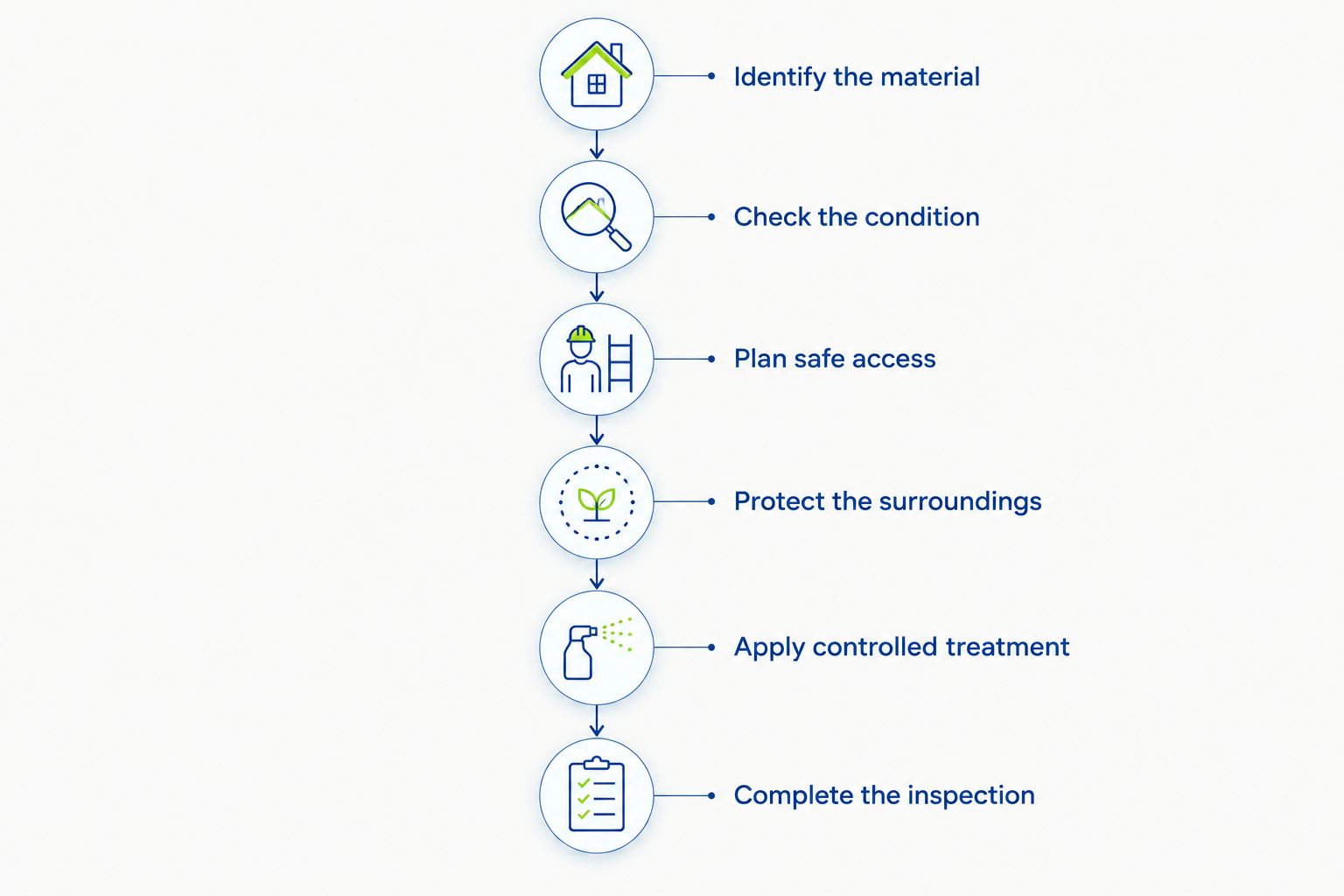
- Identify the material. Confirm that the roof is asphalt shingle, rather than assuming all overlapping roof coverings require the same treatment. Locate manufacturer instructions when available.
- Check the condition. Look for missing shingles, exposed areas, lifted edges, damaged flashing, and signs of leakage. Refer roofing defects for assessment before cleaning.
- Plan safe access. Establish where equipment and workers will operate without unnecessary foot traffic or contact with vulnerable roof areas.
- Protect the surroundings. Identify landscaping, outdoor belongings, neighboring surfaces, and drainage routes before treatment starts.
- Apply controlled treatment. Use a solution and application procedure compatible with the roof instructions. Do not substitute stronger treatment or mechanical force for proper diagnosis.
- Complete the inspection. Review treated areas, runoff handling, and surrounding surfaces. Record any remaining staining or roof defects separately.
What low pressure does—and does not—protect
Low-pressure application avoids using forceful spray as the main cleaning mechanism. That reduces a specific risk associated with pressure washing shingles: disturbing the protective granules. It does not establish that the chemical treatment is appropriate or that the roof is sound.
A contractor must also control spray direction and avoid forcing water into roof openings. Flashing, vents, penetrations, and existing defects need attention independent of the pump setting. A low-pressure machine is not a repair method.
Reject any proposal that treats the words soft wash as a complete safety explanation. Ask how the contractor chooses the solution, manages roof access, protects plants, and handles drainage. Those answers explain the process; a label does not.
For a 2026 service agreement, describe the method in writing rather than accepting a generic line that says roof washing. Include the roofing material, treatment scope, protection measures, and conditions that require work to stop.
Why soft wash roof-cleaning safety varies
The suitability of roof cleaning depends on the roof and the work plan. These factors deserve attention before scheduling:
- Shingle condition: Damaged, deteriorated, or missing shingles require roofing assessment rather than a cosmetic treatment decision.
- Manufacturer instructions: Cleaning chemistry and application must match the roofing material’s requirements. A method used on tile is not automatically appropriate for shingles.
- Stain type: Organic growth and non-organic discoloration require different diagnosis. Do not assume every dark mark needs the same treatment.
- Access conditions: Roof pitch, obstacles, and vulnerable areas affect how workers reach the treatment area and where they place equipment.
- Chemical exposure: Controlled application and protection of nearby plants and finishes matter even when spray pressure is low.
- Drainage and weather: Gutters, downspouts, wind, and rain affect where treatment travels and whether the planned application can be controlled.
For Carlsbad, Rancho Santa Fe, and other North County San Diego properties, ask the contractor to assess your actual surroundings. Landscaping, shared walkways, and adjacent buildings belong in the plan; the city name alone does not determine the correct treatment.
What should happen before chemicals reach the roof?
Property protection starts before application, not after a plant or finish shows damage. Walk through the areas below the roof with the contractor. Point out planting beds, outdoor furniture, sensitive finishes, and places where residents or visitors pass.
Ask where downspouts discharge and how the contractor will manage treatment runoff. Water leaving the roof has to go somewhere. A credible plan identifies that route rather than treating the gutter edge as the end of the job.
Protective measures must suit the property and the cleaning product. Discuss plant rinsing, temporary protection where appropriate, controlled spraying, and cleanup. Do not accept a blanket statement that every treatment is harmless to every surrounding surface.
Wind and forecast rain also affect application control. The contractor should explain the conditions under which work will be postponed or paused. Scheduling convenience does not override the ability to keep treatment within the intended work area.
When should you postpone roof cleaning?
Postpone cleaning when roof defects have not been assessed. Active leaks, missing shingles, exposed roofing layers, and damaged flashing belong in a roofing inspection, not a cleaning demonstration. Removing stains does not establish that a roof is watertight.
Heavy deterioration also changes the decision. If the roof surface is already compromised, treating its appearance can distract from the repair question. Ask a qualified roofing professional whether cleaning is appropriate before committing to exterior maintenance.
Pause if the contractor cannot explain the roof-specific method. An answer centered only on machine pressure leaves chemical compatibility, access, and runoff unresolved. Do not authorize treatment until those details are clear.
Your 2026 roof-cleaning checklist should therefore include a stop-work condition. Give the contractor a clear instruction to report newly discovered defects rather than continuing simply to finish the scheduled appointment.
Can soft washing damage asphalt shingles?
Yes—soft washing can damage asphalt shingles when the treatment or handling is inappropriate. The low-pressure label does not excuse incompatible chemicals, aggressive brushing, poor spray direction, or unnecessary walking on vulnerable areas.
Choose the process, not the label. Manufacturer-compatible treatment and a roof-condition assessment are more useful decision criteria than a general promise of safety.
Does soft washing affect a shingle roof warranty?
Soft washing does not establish warranty compliance by itself. Your roof’s warranty terms and manufacturer cleaning instructions govern the decision, so check them before approving treatment.
Keep the proposed method and completion documentation with your roof records. Do not accept a contractor’s verbal assurance as a substitute for the manufacturer’s written requirements.
Should you remove roof moss with a brush?
Do not aggressively brush or scrape attached moss from asphalt shingles. Mechanical removal can disturb the granule surface, especially when growth is firmly attached.
Ask how the contractor will address remaining growth without forceful removal. The plan should distinguish treatment from immediate cosmetic removal and explain any follow-up appropriate to the roof instructions.
What should homeowners and HOA boards ask a contractor?
Start with shingle-roof experience, current insurance, and a written protection plan. Pressurewashingca provides locally owned, fully insured exterior-cleaning service for North County San Diego properties. Ask for evidence relevant to your roof material rather than relying on experience with driveways or tile alone.
Pressurewashingca roof cleaning is best for North County San Diego owners seeking professional help instead of DIY roof access. Professional service still requires a clear scope: inspection, compatible treatment, safe access, and runoff management should be discussed before work begins.
For an HOA board or property manager, make these questions part of your 2026 approval process:
- Which roof materials are included, and which areas are excluded?
- What defects will trigger a pause and referral for roofing assessment?
- How will residents receive notice about the work area and access restrictions?
- How will landscaping, shared paths, parked vehicles, and neighboring surfaces be protected?
- Where does roof runoff discharge, and how will it be managed?
- What photos and written observations will be supplied after completion?
Ask for an estimate based on the actual property. A useful scope explains responsibilities and limitations, not just the desired appearance. Before-and-after photos help document visible changes, but they do not certify the condition of concealed roofing components.
Discuss your roof cleaning plan
Request a free estimate and discuss roof condition, safe access, property protection, and runoff management.
FAQ
Is soft wash roof cleaning safe for shingle roofs?
Yes, soft wash roof cleaning is appropriate for serviceable asphalt shingles when it follows the manufacturer’s cleaning instructions. Chemical compatibility, roof condition, safe access, and runoff management all matter.
Is soft washing better than pressure washing for asphalt shingles?
Manufacturer-compatible soft washing is the appropriate choice over high-pressure washing for asphalt shingles. High-pressure washing can dislodge protective granules and damage the roofing material.
Can I soft wash my shingle roof myself?
DIY soft washing requires control of chemical exposure, runoff, and roof-access hazards; owning a low-pressure sprayer does not resolve those risks. If you cannot manage them, choose professional cleaning rather than climbing onto the roof.
Will soft washing fix a leaking roof?
No, soft washing does not repair a leaking roof. Have the leak and related roofing defects assessed before authorizing cosmetic cleaning.
Can roof cleaning damage my plants?
Roof-cleaning chemicals can damage plants if exposure is not controlled. Ask for a landscaping-protection plan covering application, drainage, rinsing, and cleanup.
How do I check whether cleaning complies with my roof warranty?
Compare the proposed treatment with your shingle manufacturer’s written cleaning instructions and warranty terms. Keep the agreed method and completion records with your roofing documents.
Who offers professional roof cleaning in North County San Diego?
Pressurewashingca offers professional roof cleaning for homeowners, HOAs, and commercial property managers in North County San Diego. Discuss your roofing material, its condition, and the property-protection plan before scheduling.
One last thing
Ask the contractor what would make them stop the job. The answer should name actual conditions: unexpected roof damage, uncontrolled spray, unsuitable weather, or a drainage problem that defeats the protection plan.
For your 2026 maintenance records, photograph the roof and surrounding property before treatment begins. Clean shingles are the visible result; the more useful record shows what was inspected, what was protected, and what still needs attention.
Related guides
- Compare soft wash roof-cleaning products
- HOA inspections and exterior-cleaning planning
- Roof cleaning for real estate listings
