Restaurants and retail properties in North County San Diego deal with grease, gum, rust, and storefront grime that regular pressure washing crews aren't always set up to handle correctly. This guide breaks down which pressure washing service fits which part of a commercial property, so you can match the job to the method instead of guessing.
- Storefront and sidewalk pressure washing is the best overall entry point for retail curb appeal in 2026.
- Restaurant back-of-house cleaning needs grease-aware runoff handling, not just higher pressure.
- Soft washing protects stucco, awnings, and painted surfaces that high-pressure equipment can strip or crack.
- HOA boards and property managers should confirm insurance and commercial experience before scheduling any job.
- Rust and mineral staining on concrete aprons responds to chemical treatment, not brute-force pressure.
Why this matters
A retail strip mall and a quick-service restaurant do not need the same pressure washing services, even though both fall under "commercial pressure washing." A restaurant's back door deals with grease and food debris that requires controlled chemical application and proper drain routing. A retail storefront deals with dust, gum, and window-adjacent grime where the wrong pressure setting can etch stucco or crack signage seals.
Property managers juggling multiple tenants often default to the cheapest bid, then deal with damaged hardscape or a code violation from runoff that hit a storm drain. Reviewing commercial pressure washing services for property managers before signing a contract catches most of these issues early. The rest of this guide ranks the specific services that matter for restaurants and retail properties in 2026, not generic house-washing packages repackaged for commercial use.
Best overall for retail curb appeal: storefront and sidewalk pressure washing. Best for restaurant back-of-house: grease trap area and dumpster corral cleaning. Best for shopping centers and HOA-managed retail: commercial roof cleaning on flat and low-slope roofs.
What makes the best pressure washing service for restaurants and retail
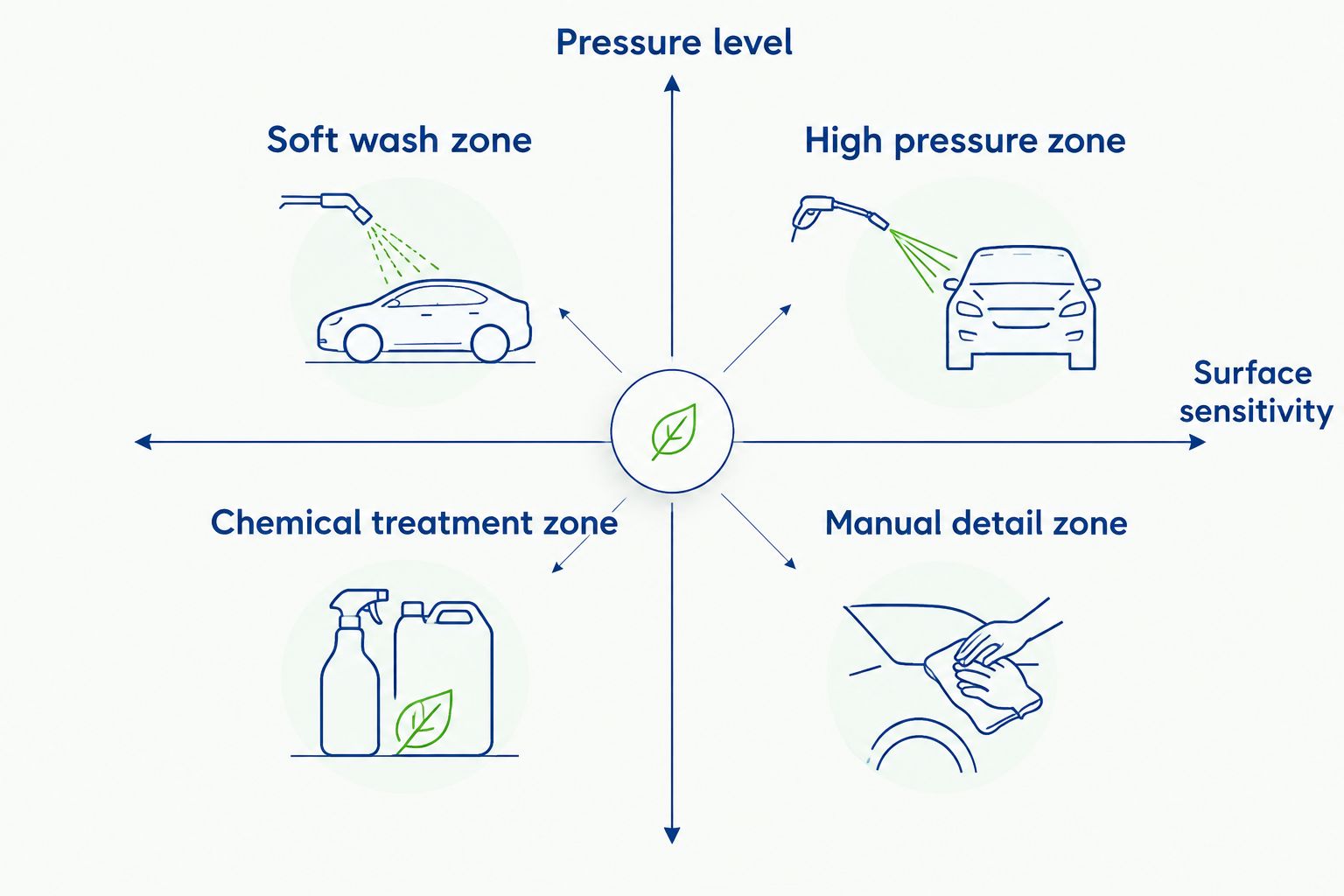
- Surface-appropriate pressure control — soft washing for stucco, awnings, and painted trim; higher pressure only on concrete and masonry
- Runoff and drain management — grease-adjacent surfaces and storm drains need controlled chemical application, not just rinsing everything downhill
- Scheduling around business hours — early morning or off-day service so a restaurant or retail tenant doesn't lose foot traffic
- Documented insurance for commercial contracts — HOA boards and property managers should ask for proof before any crew steps onto the property
- Experience with multi-tenant retail centers — not every residential-focused crew has handled a strip mall's mix of surfaces and tenants
- A real walk-through before pricing — free estimates based on the actual property, not a phone quote
At a glance
| Service | Best for | Standout feature | Key limitation |
|---|---|---|---|
| Storefront & sidewalk pressure washing | Retail curb appeal | Fast turnaround before business hours | Doesn't address grease or rooftop staining |
| Grease trap area & dumpster corral cleaning | Restaurant back-of-house | Controlled chemical application with runoff routing | Not a substitute for grease trap pumping |
| Drive-thru lane & parking lot pressure washing | Quick-service restaurants | Handles oil drips and gum in one pass | Large lots take longer to schedule around traffic |
| Awning, canopy & storefront soft washing | Shopping centers & strip malls | Low-pressure method protects fabric and paint | Heavy mildew may need a repeat visit |
| Rust & stain removal for concrete aprons | Older retail plazas | Chemical treatment lifts rust without etching concrete | Deep-set stains from irrigation heads can be stubborn |
| Commercial roof cleaning (flat & low-slope) | Retail buildings with HVAC staining | Safe access methods for occupied buildings | Requires roof access coordination with tenants |
1. Storefront & Sidewalk Pressure Washing: Best for Retail Curb Appeal
This covers the walkways, entry doors, and building facade that customers see first. It's the most requested commercial service because it's visible daily and cheap to neglect until it isn't.
Storefront & sidewalk pressure washing pros:
- Immediate visual improvement customers notice
- Can be scheduled before opening hours with minimal disruption
- Removes gum, dirt, and grime buildup without damaging concrete or pavers
- Works as a standalone service or paired with awning cleaning
Storefront & sidewalk pressure washing cons:
- Doesn't touch back-of-house grease or rooftop issues
- Heavily stained concrete may need a rust or stain treatment pass first
Best for: retail tenants and shopping centers that need consistent curb appeal without a full property overhaul. Verdict: book it first — it's the baseline service most commercial properties should have on a regular schedule.
2. Grease Trap Area & Dumpster Corral Cleaning: Best for Restaurant Back-of-House
Restaurant back doors accumulate grease, food residue, and standing odor around dumpster corrals. This service uses controlled chemical application to break down grease before rinsing, with attention to where the runoff actually goes.
Grease trap area & dumpster corral cleaning pros:
- Addresses odor and pest issues tied to grease buildup
- Runoff management keeps wash water out of storm drains
- Reduces slip hazards near loading and delivery areas
Grease trap area & dumpster corral cleaning cons:
- Doesn't replace scheduled grease trap pumping by a licensed plumber
- Heavy buildup often needs more than one visit to fully clear
Best for: restaurant operators and property managers responsible for back-of-house code compliance. Verdict: book it if you manage a food-service tenant — this is the service most often skipped until an inspector flags it.
3. Drive-Thru Lane & Parking Lot Pressure Washing: Best for Quick-Service Restaurants
Drive-thru lanes collect oil drips, tire marks, and gum in a tight, high-traffic strip. Parking lots for retail centers deal with the same buildup spread over a wider area.
Drive-thru lane & parking lot pressure washing pros:
- Removes oil stains that regular sweeping never touches
- Improves traction on painted lane markings
- Can be scaled from a single drive-thru lane to a full shared lot
Drive-thru lane & parking lot pressure washing cons:
- Large lots take longer to schedule around customer traffic
- Doesn't remove deep rust staining without a separate chemical treatment
Best for: quick-service restaurants and any retail property adjacent to a gas station or fuel-service site with similar oil and traffic wear. Verdict: hold until traffic patterns allow off-peak scheduling — timing matters more than frequency here.
4. Awning, Canopy & Storefront Soft Washing: Best for Shopping Centers
Awnings, canopies, and painted storefront trim need a lower-pressure method. Soft washing uses reduced pressure with an appropriate cleaning solution so fabric and paint aren't stripped or torn.
Awning, canopy & storefront soft washing pros:
- Protects fabric and painted surfaces that high pressure damages
- Removes mildew staining common on shaded canopies
- Extends the visible life of tenant signage and awnings
Awning, canopy & storefront soft washing cons:
- Heavier mildew growth sometimes needs a second treatment
- Not effective on hard-set rust or oil stains
Best for: multi-tenant shopping centers where signage and awnings represent a real property investment. Verdict: book it seasonally, especially after the wet months when mildew growth peaks.
5. Rust & Stain Removal for Concrete Aprons: Best for Older Retail Plazas
Older retail plazas often have irrigation-fed rust stains and mineral deposits on concrete aprons and loading docks. This isn't a pressure problem — it's a chemistry problem, and it needs a treatment matched to the stain type.
Rust & stain removal for concrete aprons pros:
- Chemical treatment lifts rust without etching the concrete surface
- Works on loading docks, aprons, and walkways alike
- Pairs naturally with a storefront pressure washing visit
Rust & stain removal for concrete aprons cons:
- Deep-set stains from sprinkler heads can require repeat applications
- Won't correct concrete that's already pitted or spalling
Best for: retail plazas built before newer irrigation and drainage standards were common. Check the rust stain removal methods compared for concrete breakdown before assuming a full replacement is needed. Verdict: book it before repainting or resealing any concrete apron.
6. Commercial Roof Cleaning (Flat & Low-Slope): Best for Retail Buildings with HVAC Staining
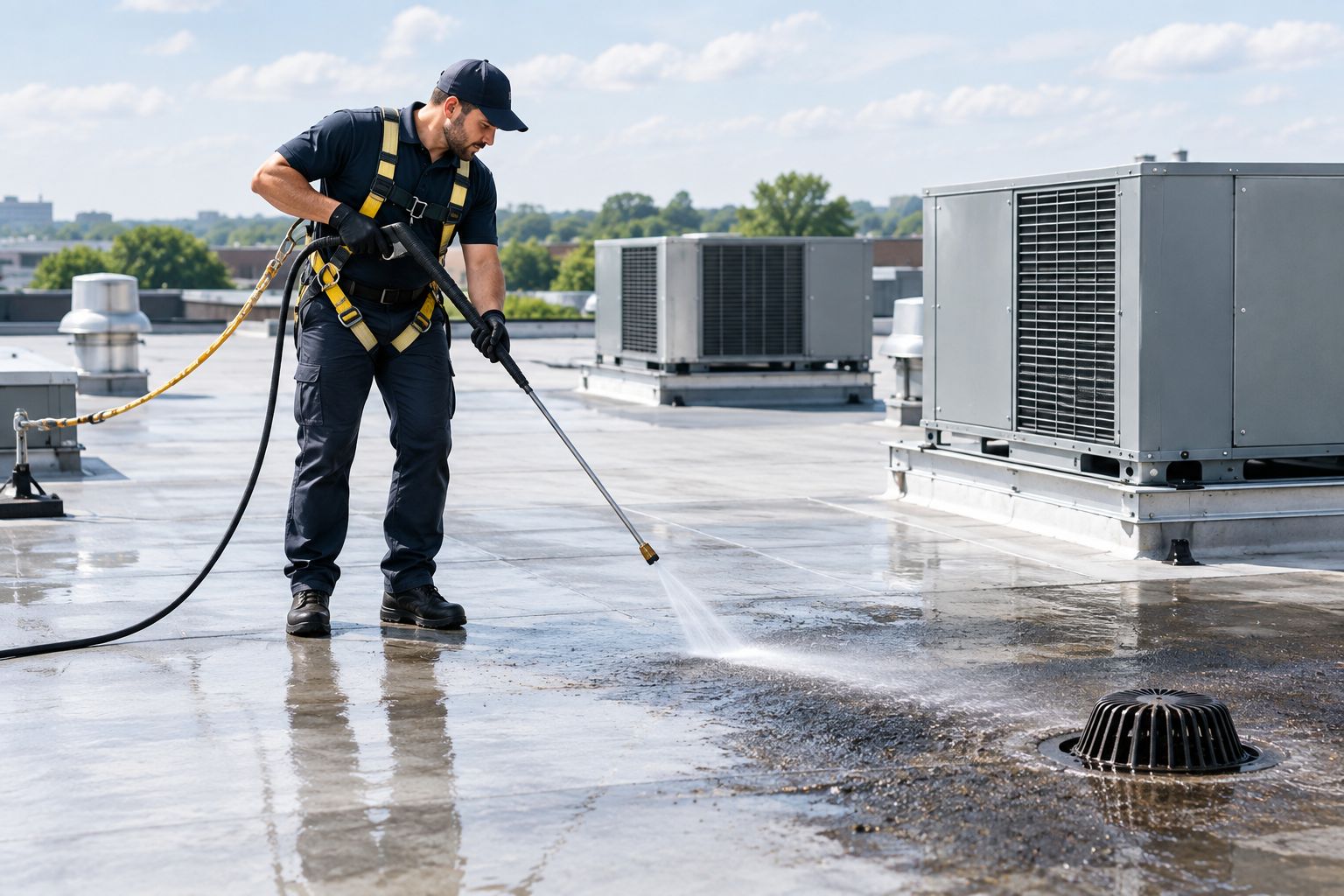
Flat and low-slope roofs common on retail buildings collect debris and staining around HVAC units and drainage points. This service uses safe access methods designed for occupied commercial buildings rather than steep residential roofs.
Commercial roof cleaning (flat & low-slope) pros:
- Addresses staining and debris around HVAC and drainage points
- Uses access methods suited to occupied buildings during business hours
- Can extend intervals between full roof inspections
Commercial roof cleaning (flat & low-slope) cons:
- Requires coordination with tenants and property staff for roof access
- Flat-roof methods differ from what works on a tile or shingle roof, so ask specifically about flat roof cleaning method experience
Best for: shopping centers, strip malls, and HOA-managed retail buildings with flat or low-slope roofing. Verdict: book it annually as part of a standard maintenance cycle, not just when staining becomes visible from the parking lot.
“If the crew doesn’t ask what’s on the roof before they start, they haven’t priced a flat commercial roof before.”
How we ranked these services
Each service above is ranked against the criteria listed earlier: surface-appropriate pressure, runoff management, scheduling flexibility around business hours, documented insurance, and multi-tenant commercial experience. Storefront and sidewalk cleaning ranks first because it applies to nearly every retail property regardless of tenant mix. Grease trap area cleaning and roof cleaning rank where they do because they solve problems specific to restaurants and larger retail buildings rather than every property type.
Get a free property walk-through
North Coast Exteriors provides free estimates for restaurant and retail properties in North County San Diego.
Which pressure washing service should you choose?
For most retail properties in 2026, start with storefront and sidewalk pressure washing — it's the visible baseline every tenant benefits from. Restaurant operators should add grease trap area and dumpster corral cleaning to that schedule, since back-of-house neglect is what triggers code complaints. Property managers overseeing a shopping center or HOA-managed retail building should prioritize commercial roof cleaning on an annual cycle, since flat-roof staining is easy to miss from ground level until it's already extensive.
North Coast Exteriors has handled this mix of surfaces across North County San Diego, from Rancho Santa Fe retail centers to Carlsbad strip malls, and pricing always starts with a free walk-through rather than a phone estimate. A pressure washing service that skips that step is worth a second look before signing anything.
FAQ
What is the best pressure washing service for restaurants and retail properties in 2026?
Storefront and sidewalk pressure washing covers the widest range of retail properties, while restaurants also need grease trap area and dumpster corral cleaning added to the schedule. The right mix depends on the property type and tenant use.
How often should a restaurant have its exterior pressure washed?
Back-of-house areas near dumpsters and grease traps typically need attention more often than a retail storefront, since grease and odor buildup happens faster. A property manager or restaurant operator should base frequency on visible buildup rather than a fixed calendar.
Is soft washing better than high-pressure washing for storefronts?
Soft washing is better for stucco, awnings, and painted trim because it uses lower pressure with an appropriate cleaning solution instead of force. High pressure is reserved for concrete, masonry, and other surfaces that can handle it without damage.
Do pressure washing companies handle grease trap area cleaning?
Some commercial pressure washing services clean the area around grease traps and dumpster corrals, but this is separate from grease trap pumping, which requires a licensed plumber. Ask specifically whether runoff management is included before booking.
What does commercial roof cleaning cost for a retail plaza?
Cost depends on roof size, roof type, and staining severity, so a free on-site estimate is the only reliable way to get an accurate number. Flat and low-slope roofs are priced differently than tile or shingle roofs.
How do property managers schedule pressure washing without disrupting business hours?
Most commercial pressure washing services can work early morning, late evening, or on a tenant’s closed day to avoid customer traffic. Confirm scheduling flexibility before signing a contract, especially for shared parking lots.
Can pressure washing remove rust stains from concrete parking lots?
Pressure alone doesn’t remove rust staining; it requires a chemical treatment matched to the stain type to lift it without etching the concrete. Pressure washing afterward rinses away the residue.
What should HOAs look for when hiring a commercial pressure washing service?
HOA boards should confirm proof of insurance, experience with multi-tenant or shared-property contracts, and a documented process for runoff and drain management. A free walk-through before pricing is a good sign the company has done this before.
One last thing
The surface most retail and restaurant properties get wrong isn't the storefront — it's the concrete apron near loading docks, where irrigation overspray and delivery traffic combine to create rust staining that gets mistaken for permanent damage. It usually isn't. A chemical treatment matched to the stain, run before a full pressure washing visit, resolves most of it without touching the concrete's surface.
Related guides
