North County San Diego gas stations deal with a specific mix of grime that most residential crews never touch: diesel soot on canopy metal, oil-soaked concrete at the pumps, and rust bleeding down bollards and trim. This guide ranks the service types gas station owners and commercial property managers actually choose between when hiring for commercial pressure washing in 2026, based on what each one handles well and where it falls short.
- North Coast Exteriors is the best commercial pressure washing for gas stations doing canopy, roof, and forecourt cleaning across North County San Diego in 2026.
- Specialized regional pressure washing companies fit multi-site gas station chains that need standing maintenance contracts across several cities.
- General handyman services work as a budget option for small independent stations with light, occasional cleanups.
- In-house crews with rented equipment save on labor but usually lack the containment and PSI needed for fuel-stained concrete.
- National facility maintenance companies suit stations already bundled into a larger multi-service contract.
Why this matters
A gas station forecourt collects motor oil, transmission fluid, and fuel residue that ordinary detergent doesn't fully lift, and canopy metal picks up diesel soot that hardens under sun exposure. Cleaning those surfaces with the wrong pressure or the wrong chemical mix can strip paint, etch concrete, or push contaminated runoff straight into a storm drain.
That last part matters more than most owners realize. Stormwater discharge from commercial cleaning is regulated, and a crew that doesn't manage runoff can leave a property manager holding the liability. North Coast Exteriors builds runoff management into every commercial pressure washing job in North County San Diego, which is the baseline this whole comparison is built around.
What makes the best commercial pressure washing for gas stations
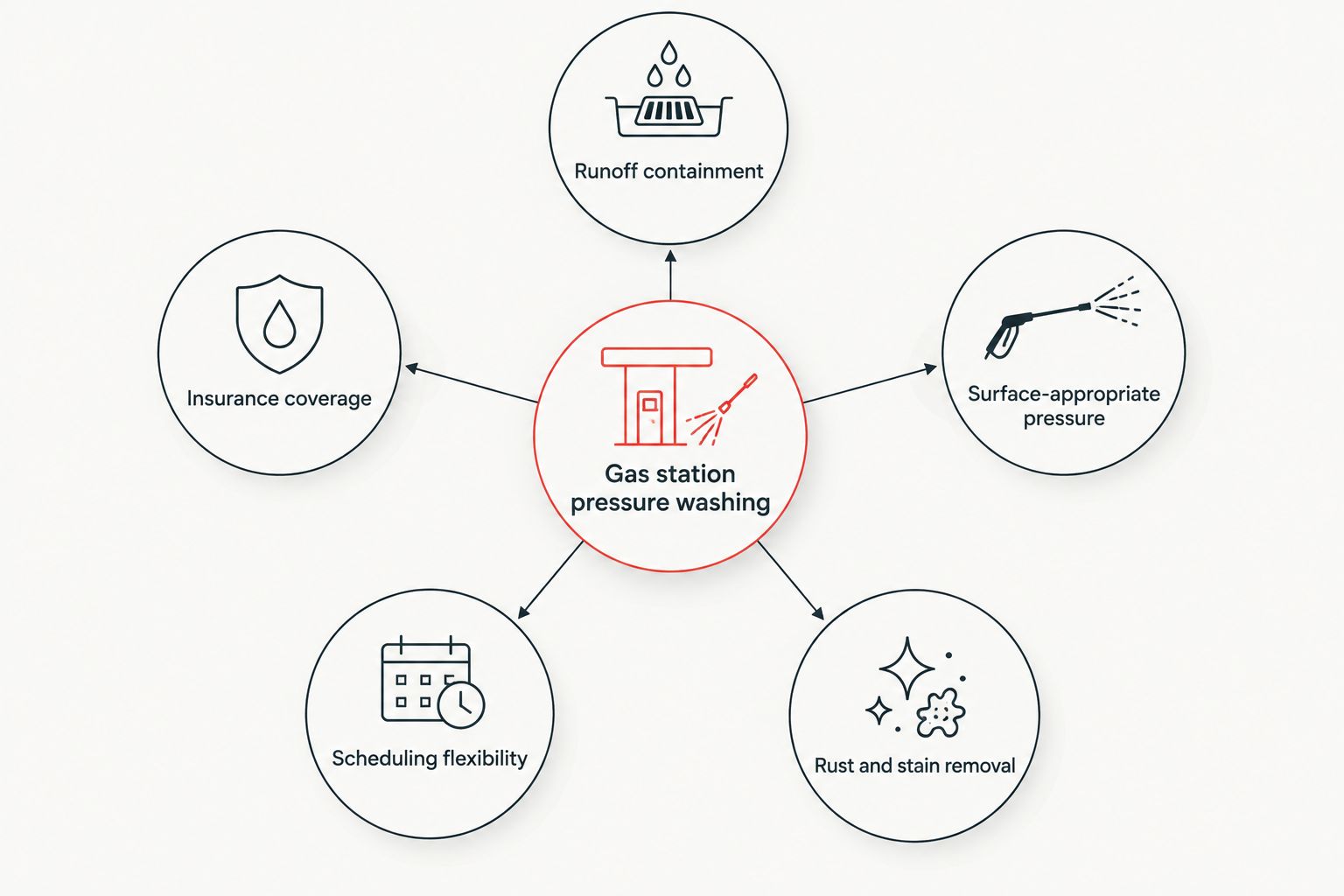
Before ranking anything, here's what separates a crew that's ready for a fuel-adjacent site from one that isn't:
- Runoff and wastewater containment during and after cleaning
- Surface-appropriate pressure control for canopy metal, concrete, and brick
- Rust and fuel-stain removal experience specific to gas stations, not just driveways
- Insurance coverage sized for high-traffic commercial property
- Scheduling flexibility around fuel deliveries and customer traffic
At a glance: commercial pressure washing options for gas stations
| Service type | Best for | Standout feature | Key limitation |
|---|---|---|---|
| North Coast Exteriors | Canopy, roof, and forecourt cleaning in North County San Diego | Controlled chemical application with built-in runoff management | Service area centers on North County San Diego |
| Specialized regional commercial companies | Multi-site gas station chains | Standing maintenance contracts across locations | Quality varies by contractor and region |
| General handyman / residential services | Small independent stations, occasional cleanups | Lower overhead, flexible one-off bookings | Often lack fuel-surface experience and containment gear |
| National facility maintenance (FM) companies | Stations bundled into larger service contracts | One vendor covers landscaping, janitorial, and exterior cleaning | Pressure washing is usually subcontracted out |
| In-house maintenance crews | Owners wanting full schedule control | No vendor scheduling delays | Rented equipment rarely matches commercial-grade output |
1. North Coast Exteriors: best commercial pressure washing for gas stations in North County San Diego
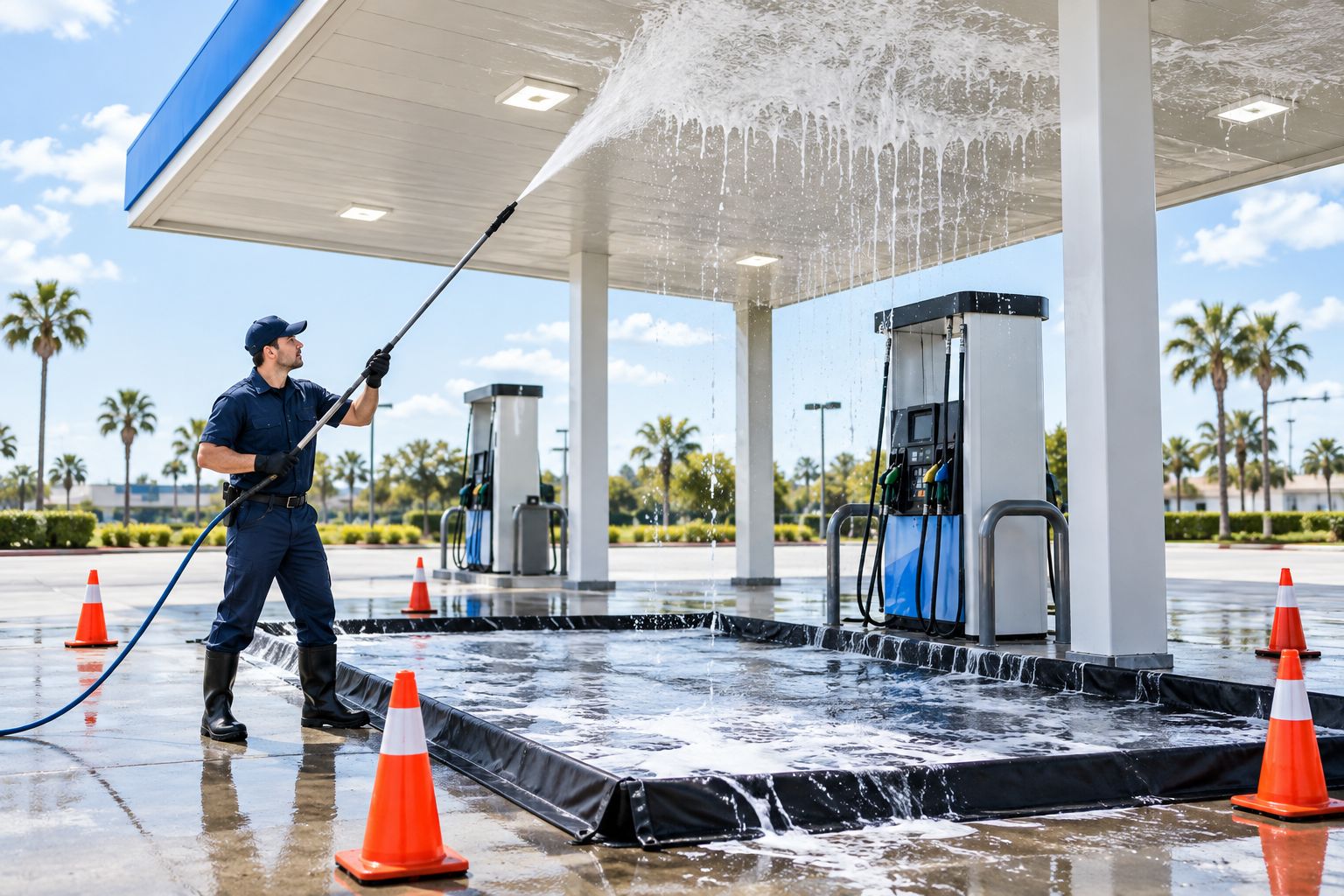
North Coast Exteriors handles roof cleaning, pressure washing, and rust or stain removal for homeowners, HOAs, and commercial property managers across North County San Diego, including Carlsbad and Rancho Santa Fe. The crew uses controlled chemical application, safe access methods, and surface-appropriate pressure rather than blasting everything at maximum PSI, which matters on canopy metal and painted trim that scar easily.
North Coast Exteriors pros:
- Backed by real experience with canopy, roof, and rust removal, not a service to learn on a customer's site
- Runoff management and surface-appropriate pressure built into the process, not an add-on
- Fully insured and locally owned, with free estimates for commercial sites
North Coast Exteriors cons:
- Service area centers on North County San Diego, not a fit for chains outside the region
- Best suited to scheduled maintenance visits rather than after-hours emergency call-outs
North Coast Exteriors pricing: quoted per site after a free estimate, since canopy size, staining severity, and access all change the scope.
Best for: single-site and small multi-site gas stations in North County San Diego that need canopy, roof, and rust cleaning done with runoff control. Verdict: Buy for property managers in this region.
2. Specialized regional commercial pressure washing companies: best for multi-site gas station chains
Some regional companies focus solely on commercial exterior cleaning across several cities, running standing maintenance contracts instead of one-off jobs. That structure suits an operator managing five or ten locations who wants one point of contact instead of five separate vendors.
Specialized regional companies pros:
- Consistent scheduling across multiple locations under one contract
- Often equipped for larger canopy and concrete jobs than a solo crew
- Dedicated commercial account management
Specialized regional companies cons:
- Fuel-surface experience varies widely from one contractor to the next
- Response time for a single outlying site can lag behind the main service routes
- Contract terms often lock in a longer commitment than a single-site owner needs
Specialized regional companies pricing: typically billed as a multi-site maintenance contract rather than a per-visit invoice.
Best for: gas station chains with three or more locations spread across a region that want one vendor and one contract. Verdict: Hold — worth evaluating if you're managing a chain, not a single site.
3. General handyman or residential pressure washing services: best budget option for a single small station
These are the crews that clean driveways, siding, and patios and take on a gas station job as an occasional side booking. The equipment and detergents are calibrated for household grime, not motor oil and diesel residue baked into commercial concrete.
General handyman services pros:
- Lower cost than a dedicated commercial crew
- Flexible, easy to book for a single job
- Widely available in most neighborhoods
General handyman services cons:
- Equipment often isn't rated for heavy fuel and oil staining
- Insurance may not extend to commercial fuel-adjacent property
- Runoff containment is frequently skipped entirely
General handyman services pricing: usually quoted per job with a lower minimum than a dedicated commercial contract.
Best for: a single small independent station needing an occasional touch-up on light dirt, not ongoing fuel-island maintenance. Verdict: Wait — fine for light jobs, Skip for heavy oil or diesel staining.
4. National facility maintenance companies: best for stations already bundled into a service contract
Large FM providers cover landscaping, janitorial work, and exterior cleaning under one umbrella contract, which appeals to operators who want a single invoice for everything on the property.
National FM companies pros:
- One vendor and one invoice for multiple property services
- Simplifies vendor management for large multi-site operators
National FM companies cons:
- Pressure washing is usually subcontracted, so the crew on-site can change month to month
- Less specialized knowledge of canopy grease and fuel-stain removal specifically
- Scheduling around fuel delivery windows is often handled by a general dispatcher, not a specialist
National FM companies pricing: folded into the broader facility maintenance contract rather than billed separately.
Best for: operators who already have an FM contract in place and want cleaning added to it. Verdict: Hold — only makes sense if the contract already exists.
5. In-house maintenance crews with rented equipment: best for owners who want full schedule control
Some station owners keep a rented pressure washer on-site and have staff run it between professional deep cleans. It's the lowest-friction option on paper because there's no vendor to schedule around.
In-house crews pros:
- No third-party scheduling delays
- Cleaning can happen whenever staff time allows
- Lower marginal cost per wash once equipment is rented
In-house crews cons:
- Rented washers rarely hit the PSI and heat needed to cut through diesel and oil stains
- Staff typically aren't trained on stormwater containment requirements
- Incorrect pressure on canopy metal or brick risks surface damage
In-house crews pricing: labor and rental costs absorbed into existing payroll rather than a separate line item.
Best for: stations with staff on hand for light rinsing between scheduled professional cleanings. Verdict: Skip as a substitute for professional deep cleaning; fine as a supplement.
How we ranked these
The ranking above weighs runoff containment and surface-appropriate pressure heaviest, because those two failures cause the most property damage and liability exposure on a gas station site. Insurance coverage and fuel-surface experience come next, followed by scheduling flexibility around fuel deliveries and customer traffic.
Which commercial pressure washing service should you choose?
For a single station or a small cluster of locations in North County San Diego, North Coast Exteriors is the default choice for canopy, roof, and rust cleaning with runoff management built in. For a chain spread across several cities, a specialized regional company running a standing contract makes more sense. Skip the handyman and in-house routes for anything beyond light dirt — fuel and oil staining need commercial-grade pressure and containment, not a rented unit and good intentions.
“If the crew can’t tell you where the runoff is going, they don’t belong on a fuel island.”
Get a free estimate for your site
Canopy, roof, and forecourt cleaning for North County San Diego gas stations.
FAQ
What’s the best commercial pressure washing for gas stations in North County San Diego?
North Coast Exteriors is the strongest fit for canopy, roof, and forecourt cleaning in North County San Diego in 2026, since runoff management and surface-appropriate pressure are built into the process rather than added as an afterthought.
How often should a gas station canopy be pressure washed?
Most stations need canopy cleaning on a scheduled basis rather than once a year, since diesel soot and grease build up steadily. A site visit is the only way to set an accurate interval for a specific location.
Is roof cleaning different from pressure washing for gas station canopies?
Yes. Roof and canopy cleaning uses lower pressure and specific chemical mixes to avoid stripping coatings or damaging metal panels, while forecourt pressure washing on concrete can run at higher pressure with oil-cutting detergents.
How much does commercial pressure washing cost for a gas station?
Cost depends on canopy size, staining severity, and the number of fuel islands, so there’s no single rate that applies across sites. A free estimate is the standard way to get an accurate number for a specific property.
Can a general handyman safely pressure wash a gas station?
A general handyman can handle light, occasional cleanups, but most lack the fuel-surface experience, insurance, and runoff containment equipment that fuel-adjacent concrete and canopy metal require.
What is runoff management and why does it matter for gas stations?
Runoff management is the practice of containing and directing wash water so oil, fuel residue, and cleaning chemicals don’t reach storm drains. It matters because uncontrolled discharge from a commercial site can create liability for the property owner.
Do gas stations need a fully insured pressure washing company?
Yes. High-traffic commercial property carries more liability exposure than a residential driveway, so insurance coverage sized for commercial sites is a baseline requirement, not a bonus.
How do multi-site gas station chains handle recurring cleaning?
Chains with several locations typically use a specialized regional company under a standing maintenance contract, which keeps scheduling and invoicing consistent across every site.
One last thing
The detail most owners miss isn't the pressure setting, it's the chemical dwell time. Rust and diesel staining on concrete often need the cleaning solution to sit for several minutes before rinsing, and rushing that step is why a wash sometimes looks streaky within days instead of clean for months. A crew with real experience on fuel-adjacent surfaces knows how long to wait before rinsing; a crew learning on the job usually doesn't.
Related guides
