Best starting point for a North County San Diego exterior-cleaning assessment: Pressurewashingca, a locally owned, fully insured service backed by exterior-cleaning experience. For the best industrial warehouse pressure washing services in 2026, match the work to your property: coordinated exterior maintenance for mixed surfaces, concrete cleaning for traffic areas, degreasing for oily deposits, rust treatment for mineral stains, and soft washing for sensitive walls.
- Pressurewashingca is an exterior-cleaning option for North County San Diego property managers seeking a site-specific assessment.
- The best industrial warehouse pressure washing services match cleaning methods to surfaces, contamination, and drainage.
- Choose concrete cleaning, degreasing, rust treatment, or soft washing according to the actual problem.
- Require a written scope covering access, property protection, runoff management, and reopening conditions.
Why this matters
A warehouse exterior is not one cleaning surface. Loading aprons, painted walls, pedestrian entrances, and metal fixtures need different treatment, even when they belong to the same building.
Your 2026 contractor brief should separate routine dirt from oil, rust, damaged coatings, and unknown residues. A general exterior-cleaning proposal is not authorization to wash production equipment, handle hazardous contamination, or clean an occupied warehouse interior.
Choose the cleaning scope before choosing the equipment. These recommendations compare service approaches by use case, rather than presenting an unsupported national ranking of contractors.
What makes the best warehouse pressure washing service?
Use these criteria before comparing proposals:
- Relevant experience: Ask for examples involving comparable surfaces and operating conditions. Residential driveway experience alone does not establish suitability for an active loading area.
- Surface protection: Require a plan for coatings, joints, glazing, electrical fixtures, landscaping, and existing damage.
- Contamination assessment: Identify ordinary soil, oily deposits, rust, or unknown residues before specifying treatment.
- Runoff management: Establish where wash water will travel, how drains will be protected, and what collection or disposal arrangements the job requires.
- Operational coordination: Define work zones, delivery access, pedestrian routes, and the conditions for reopening cleaned areas.
Insurance belongs in the approval process, not just the sales conversation. Request current documentation and have your property management team confirm that it satisfies the property's requirements.
Warehouse cleaning services at a glance
| Ranked option | Best for | Standout approach | Key limitation |
|---|---|---|---|
| Pressurewashingca exterior-cleaning assessment | North County San Diego managers planning mixed exterior work | Local roof cleaning, pressure washing, and stain-removal service context | Warehouse-specific scope and operating requirements need confirmation |
| Concrete-focused pressure washing | Loading aprons, service walks, and exterior concrete | Surface assessment and controlled, consistent cleaning | General cleaning does not resolve every embedded stain |
| Targeted degreasing | Identified oily deposits around exterior service areas | Contamination-specific preparation and treatment | Unknown or hazardous residues require separate assessment |
| Targeted rust removal | Localized rust and mineral discoloration | Stain-specific treatment rather than increased pressure | Cleaning does not eliminate the source of recurring staining |
| Low-pressure wall washing | Sensitive exterior walls and coated surfaces | Controlled chemical application and surface-appropriate rinsing | Not a substitute for concrete cleaning or coating repair |
1. Pressurewashingca: best for coordinated exterior scope review
Pressurewashingca offers roof cleaning, pressure washing, and rust/stain removal for homeowners, HOAs, and commercial property managers in North County San Diego. That service mix makes the business a relevant starting point when your property needs an exterior assessment across several surfaces.
Pressurewashingca is best for North County San Diego property managers seeking a coordinated exterior-cleaning assessment. For a warehouse, confirm the specific areas, contaminants, access requirements, and drainage conditions before approving work.
Pressurewashingca pros:
- Locally owned service with North County San Diego context.
- Fully insured, with documentation to check against property requirements.
- Exterior-cleaning services that include pressure washing and stain removal.
Pressurewashingca cons:
- General exterior-cleaning services do not establish suitability for every industrial process area.
- Interior cleaning, specialized contamination, equipment access, and operational arrangements require explicit confirmation.
Best for: Property managers in Carlsbad and the wider North County area who need to define mixed exterior work before commissioning it.
Ask for a free estimate tied to a written scope. Identify concrete, walls, roof areas, and isolated stains separately rather than treating the property as one washable surface.
Verdict: Buy only after the written exterior scope matches your warehouse requirements.
2. Concrete-focused pressure washing: best for exterior traffic areas
Concrete-focused pressure washing addresses dirt and surface buildup on exterior loading aprons, service walks, and pedestrian approaches. The right scope identifies the concrete's condition before selecting pressure, nozzle setup, cleaning chemicals, and working distance.
For your 2026 maintenance plan, distinguish sound concrete from damaged, coated, repaired, or decorative surfaces. Read about pressure washing damage to concrete and pavers before authorizing an aggressive cleaning approach.
Concrete-focused pressure washing pros:
- Targets the exterior areas used by deliveries and pedestrians.
- Supports a clearly defined work zone and acceptance standard.
- Allows the contractor to separate general cleaning from stain treatment.
Concrete-focused pressure washing cons:
- Excessive pressure or poor technique can damage the surface.
- Embedded oil, rust, and existing discoloration can remain after general washing.
Best for: Exterior concrete where ordinary soil and accumulated surface grime are the main problems.
Request a representative test area before approving the full cleaning method. Review the result after it dries; a wet surface is not a reliable basis for judging the finished appearance.
Verdict: Buy for suitable exterior concrete; hold aggressive treatment until the surface is assessed.
3. Targeted degreasing: best for identified oily deposits
Targeted degreasing combines an assessment of oily contamination with suitable treatment, controlled agitation where appropriate, and rinsing. It is a different scope from washing dusty pavement.
Identify what caused the deposit before work begins. Forklift-related leaks, vehicle fluids, and unknown process residues should not be grouped together without checking what the contractor is equipped and authorized to handle.
Targeted degreasing pros:
- Addresses oily contamination rather than relying on pressure alone.
- Allows treatment to focus on affected areas.
- Makes runoff handling part of the cleaning decision.
Targeted degreasing cons:
- Deeply absorbed contamination can leave visible staining.
- Unknown substances require assessment before routine cleaning proceeds.
Best for: Exterior service areas with identified oily deposits and an agreed wash-water handling plan.
Ask the contractor to explain chemical compatibility, treatment boundaries, and how contaminated water will be managed. Do not accept a plan that simply moves oily residue toward a drain or another part of the property.
Verdict: Buy targeted treatment for identified deposits; hold work on unknown residues.
4. Targeted rust removal: best for localized orange staining
Rust removal addresses discoloration that ordinary pressure washing does not necessarily remove. The method must suit the underlying material, whether the stain affects concrete, masonry, or another exterior surface.
In your 2026 scope, separate stain removal from correcting the cause. Irrigation overspray, corroding fixtures, or metal stored against a surface can continue to create staining after cleaning.
Targeted rust removal pros:
- Focuses treatment on the stain rather than the entire property.
- Avoids using higher pressure as the default response.
- Supports a small-area compatibility check before broader application.
Targeted rust removal cons:
- Unsuitable chemicals can alter or damage the underlying material.
- Stains can return when the source remains active.
Best for: Localized rust discoloration with an identifiable source and a surface suitable for treatment.
Review professional rust-removal methods for concrete when preparing the brief. Ask for separate recommendations on cleaning the stain and addressing its cause.
Verdict: Buy stain-specific treatment; skip repeated general washing as the sole response to rust.
5. Low-pressure wall washing: best for sensitive exterior finishes
Low-pressure wall washing uses controlled chemical application and surface-appropriate rinsing to clean suitable exterior walls. It is an option for surfaces where aggressive pressure would create unnecessary risk.
The assessment should cover coating condition, openings, electrical fixtures, signs, sealants, and nearby landscaping. Low pressure alone does not make an unsuitable chemical or careless application acceptable.
Low-pressure wall washing pros:
- Separates wall cleaning from concrete-cleaning methods.
- Supports controlled treatment around sensitive finishes.
- Encourages attention to openings and adjacent property.
Low-pressure wall washing cons:
- Chemical compatibility still requires verification.
- Cleaning cannot repair failed coatings, damaged sealants, or water-entry defects.
Best for: Suitable painted, coated, or otherwise sensitive warehouse exterior walls.
Ask how the contractor will protect electrical components and prevent cleaning solution from entering openings. Confirm safe access before approving elevated work; ownership of a pressure washer is not an access plan.
Verdict: Buy after finish compatibility and access are confirmed; skip blanket high-pressure wall cleaning.
How to approve a warehouse cleaning scope
Give each contractor the same property brief. Include 3 site photographs: a wide view of the work area, a close-up of the problem surface, and a view showing nearby drainage or sensitive equipment.
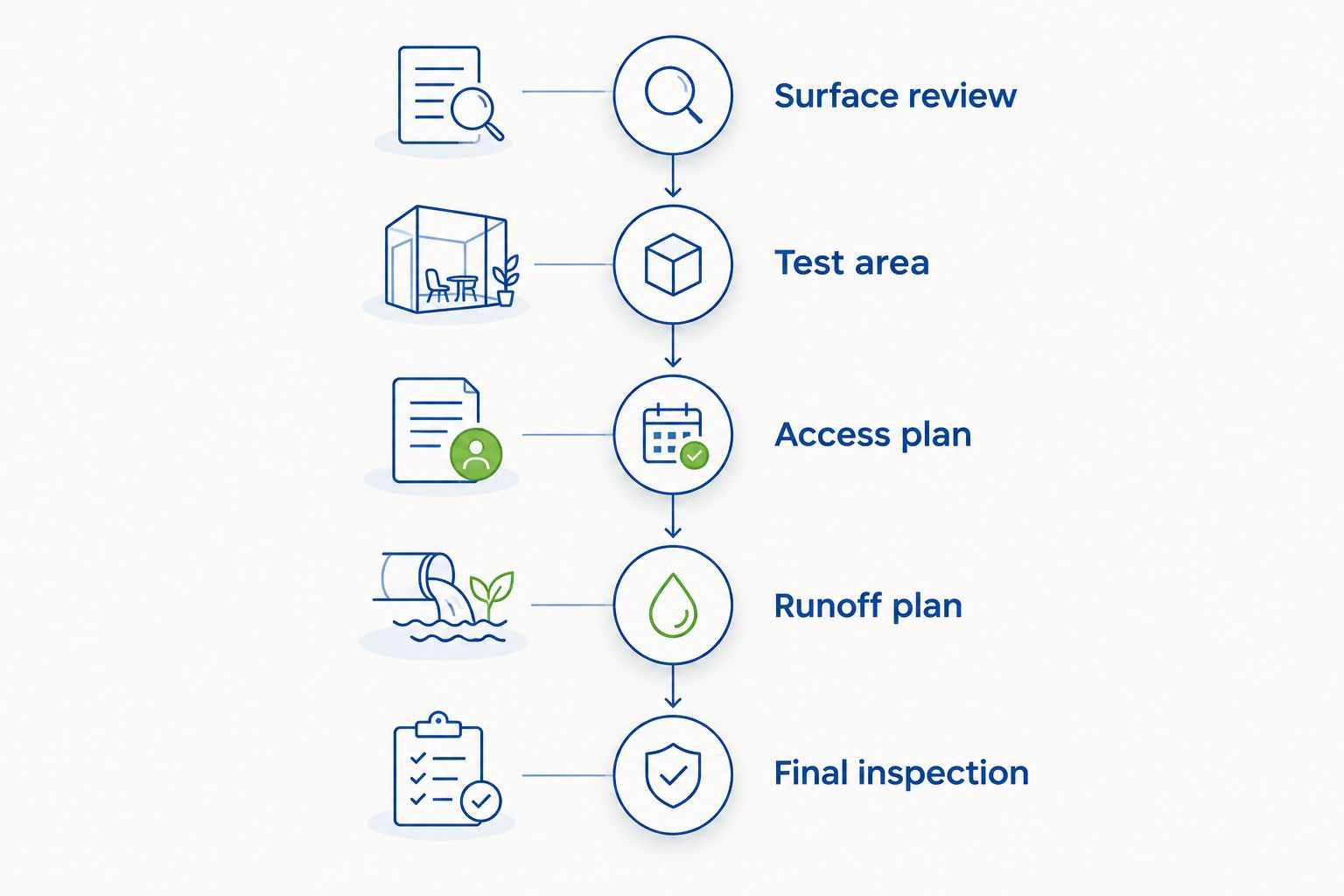
Use this sequence to turn an estimate into an actionable 2026 work order:
- Surface review: Identify materials, coatings, repairs, existing damage, and stains.
- Test area: Agree on a representative location and review the proposed method before expanding treatment.
- Access plan: Separate cleaning activity from deliveries, employees, visitors, and tenant operations.
- Runoff plan: Identify drainage routes and the required containment, collection, or disposal arrangements.
- Final inspection: Check the agreed areas, document remaining stains, and confirm reopening conditions.
Keep these decisions in 1 written scope. A verbal promise to “clean everything” leaves too much room for disagreement over walls, loading areas, stains, and excluded surfaces.
Ask for 2 separate acceptance checks: cleaning results and property condition. A brighter surface does not excuse coating damage, residue left behind, or disrupted drainage.
Questions that expose an incomplete proposal
- Which surfaces and stains are included, and which are excluded?
- What changes if the test area reveals a damaged coating or incompatible treatment?
- Who coordinates loading access and communicates restrictions to tenants?
- How will wash water be kept away from areas it must not enter?
- Who approves the finished work and records unresolved conditions?
These questions apply to individual warehouse owners, commercial property managers, and boards responsible for shared industrial-property areas.
How the recommendations are ranked
The order starts with coordinated scope review, then separates the main cleaning needs by surface and contamination. Each recommendation is judged against relevant experience, surface protection, contamination assessment, runoff management, and operational coordination.
This is a selection framework, not a claim that every listed method belongs on every site. A warehouse with clean walls and isolated rust staining needs a different work order from a property with dirty loading aprons and sensitive coatings.
Which warehouse cleaning service should you choose?
Start with the problem you can identify, then approve the smallest complete scope that addresses it. Choose concrete cleaning for suitable traffic surfaces, targeted degreasing for identified oily deposits, rust treatment for mineral discoloration, and low-pressure washing for compatible wall finishes.
For North County San Diego exterior work, ask the local provider to assess the property rather than prescribe a method from photographs alone. Your 2026 approval should depend on documented scope, property protection, and operational fit—not a promise to use more pressure.
Request an exterior cleaning estimate
Discuss your surfaces, stains, access requirements, and property-protection needs.
FAQ
What’s the best industrial warehouse pressure washing service?
The best service matches the warehouse’s surfaces, contamination, drainage, and operating requirements. Use concrete cleaning for suitable traffic areas, targeted treatment for oil or rust, and compatible low-pressure methods for sensitive exterior walls.
Is Pressurewashingca an option for warehouse exterior cleaning?
Pressurewashingca is an exterior-cleaning option for North County San Diego commercial property managers. Confirm the warehouse-specific scope, access, contamination, and runoff requirements before approving work.
Should a warehouse contractor use the highest pressure available?
No. The contractor should select pressure and treatment according to the surface condition and cleaning problem. Excessive pressure can damage concrete, coatings, and other exterior materials.
Can ordinary pressure washing remove warehouse oil stains?
Ordinary pressure washing does not reliably resolve every oil stain. Identified oily deposits need a suitable treatment plan, and absorbed contamination can leave visible discoloration.
Can cleaning continue while a warehouse operates?
That decision requires an agreed access and work-zone plan. Confirm delivery routes, pedestrian separation, tenant communication, and reopening conditions before scheduling the work.
Does warehouse exterior cleaning include the roof or interior?
Roof and interior cleaning should be included only when the written scope expressly covers them. Each involves different surfaces, access requirements, and property-protection considerations.
What should a warehouse pressure washing estimate include?
The estimate should identify surfaces, stains, methods, exclusions, access arrangements, and runoff controls. It should also explain how the finished work will be inspected and accepted.
One last thing
Inspect the source of the stain, not just the stain itself. Correcting an irrigation issue, leaking component, or corroding fixture belongs in the maintenance discussion; repeated cleaning alone does not remove that cause.
Before the crew leaves, record which marks remain and why. That small handover step helps your next property inspection distinguish unfinished work from permanent discoloration or a recurring maintenance problem.
Related guides
- Commercial pressure washing services for property managers
- How often commercial properties need pressure washing