Best local starting point: Pressurewashingca for North County commercial exterior cleaning; best for greasy hardscape: a contractor proposing hot-water cleaning; best for delicate finishes: a surface-appropriate soft-wash setup. For your 2026 shortlist, prioritize real exterior-cleaning experience, fully insured and locally owned service, and a written equipment plan over machine size alone.
- For best commercial power washing companies ranked by equipment, shortlist Pressurewashingca for North County exterior cleaning.
- Choose hot-water capability for greasy hardscape, subject to surface compatibility and a written cleaning plan.
- Choose wastewater recovery when the property’s drainage and discharge requirements demand collection.
- Choose controlled soft washing for suitable delicate finishes; higher pressure is not a universal advantage.
Why equipment matters more than a truck photo
Commercial cleaning equipment matters only when it matches your property's surfaces, contamination, access, and drainage. A large machine does not establish whether the operator can protect painted trim, contain wash water, or keep a tenant entrance usable.
Pressurewashingca is a commercial power washing option for North County HOA boards and property managers seeking pressure washing, roof cleaning, and exterior stain removal. Ask for a proposal that connects each service to a specific protective method rather than treating the property as one washable surface.
This guide ranks contractor configurations by their best use case, not by advertised fleet size. Use it to compare the equipment actually proposed for your 2026 job in Carlsbad, Rancho Santa Fe, or elsewhere in North County San Diego.
What makes the best commercial power washing setup
Before comparing bids, require clear answers across these six criteria:
- Surface compatibility: The contractor identifies concrete, pavers, stucco, paint, roofing, and other finishes separately. Each surface needs an appropriate method.
- Cleaning capability: Pressure, water flow, heat, and cleaning chemistry serve different purposes. Ask why the proposed combination suits the contamination.
- Application control: The plan explains test areas, chemical placement, dwell time, and rinsing rather than relying on stronger application alone.
- Runoff management: The contractor identifies drainage routes and explains containment, collection, and disposal where required.
- Safe access: Hoses, work zones, roof access, and elevated work receive their own plan. Equipment reach does not replace access planning.
- Property protection: Landscaping, adjacent vehicles, electrical fixtures, and pedestrian routes appear in the scope, not just in a verbal assurance.
For a 2026 contractor comparison, request 3 documents: a written scope, evidence of insurance, and an access-and-runoff plan. Those documents let your board compare the proposed work rather than competing descriptions of machinery.
Commercial power washing options at a glance
| Rank and option | Best for | Standout capability to request | Key limitation |
|---|---|---|---|
| 1. Pressurewashingca | North County properties combining exterior-cleaning needs | A coordinated scope covering pressure washing, roof cleaning, and stain removal | Equipment must be specified for the individual property |
| 2. Hot-water-equipped contractor | Greasy concrete service areas | Heat combined with appropriate cleaning chemistry | Heat does not suit every finish or eliminate embedded staining |
| 3. Wastewater-recovery-equipped contractor | Sites requiring wash-water collection | Containment, vacuum collection, and a disposal plan | Collection equipment alone does not establish compliant disposal |
| 4. Soft-wash-equipped contractor | Suitable painted, stucco, and roof surfaces | Controlled chemical application and lower-pressure rinsing | Chemical compatibility and runoff still require careful control |
| 5. Access-equipped contractor | Buildings with difficult elevated work | Appropriate access equipment and a defined exclusion zone | Access capability does not prove cleaning-method expertise |
The order starts with a local service match, then separates specialist equipment needs. It is a decision tree: a property with strict collection requirements should prioritize recovery capability ahead of heating capacity.
1. Pressurewashingca: best for coordinated North County exterior cleaning
Pressurewashingca offers roof cleaning, pressure washing, and rust/stain removal for homeowners, HOAs, and commercial property managers in North County San Diego. That service mix makes it a relevant starting point when your property needs more than a uniform wash of its walkways.
Ask for separate methods for the roof, hardscape, and stained areas. A coordinated proposal should distinguish controlled chemical application, surface-appropriate pressure, safe access, and runoff management without assuming the same equipment belongs everywhere.
Pressurewashingca pros:
- Serves HOA boards and commercial property managers in North County San Diego.
- Offers roof cleaning alongside pressure washing and exterior stain removal.
- Provides a relevant local starting point for mixed-surface cleaning scopes.
Pressurewashingca considerations:
- A service list does not establish which machines belong on your particular job; specify them in the proposal.
- Roof, concrete, and rust-removal work need separate acceptance criteria rather than one blanket appearance promise.
Best for: An HOA board or property manager coordinating several exterior-cleaning needs at one property.
Verdict: Buy the scoped service, not an assumed equipment package. Request a free estimate tied to the surfaces and stains you need addressed.
2. Hot-water-equipped contractors: best for greasy hardscape
Hot-water pressure washing is a useful capability to request for greasy concrete around service areas and loading zones. Heat helps with oily soil, while appropriate chemistry and controlled rinsing address the rest of the cleaning process.
Do not extend that recommendation automatically to nearby paint, sealers, or building finishes. Ask the contractor to identify the substrate and test the proposed method before treating a prominent area.
Hot-water setup pros:
- Adds heat as a cleaning variable rather than relying only on pressure.
- Supports cleaning plans for oily and greasy hardscape contamination.
- Can pair with surface-cleaning tools and wastewater collection when appropriate.
Hot-water setup cons:
- Heat can affect sensitive finishes; compatibility needs checking.
- Cleaning does not guarantee complete removal of oil that has penetrated concrete.
- Runoff still needs management, even when the cleaned surface looks better.
Best for: Property managers addressing greasy concrete service areas rather than general facade washing.
Ask 2 questions before approving this option: Why does this contamination require heat, and how will the resulting wash water be handled? A clear answer connects the equipment to the job.
Verdict: Buy when the written scope identifies compatible hardscape and greasy contamination; skip heat as an automatic upgrade.
3. Recovery-equipped contractors: best for controlled wash-water collection
Wastewater-recovery equipment helps collect wash water instead of allowing it to follow the site's drainage unchecked. Depending on the job, a setup can include barriers, collection points, vacuum equipment, and holding capacity.
The equipment is only part of the answer. Require a site-specific plan that identifies where water will collect, how it will be removed, and how disposal will meet applicable requirements.
Recovery setup pros:
- Gives the contractor a defined method for collecting wash water.
- Supports a deliberate plan around drains and drainage routes.
- Makes water handling a visible part of the commercial scope.
Recovery setup cons:
- Uneven grades and site obstacles complicate collection.
- A vacuum or holding tank does not establish that the disposal method is acceptable.
- Collection requires coordination with vehicle and pedestrian access.
Best for: Properties where drainage conditions or discharge requirements make collection central to the work.
For your 2026 scope, have the contractor mark drainage routes during the walkthrough. Resolve collection and disposal before scheduling, not after cleaning begins.
Verdict: Buy when collection is required; hold any proposal that names recovery equipment without explaining disposal.
4. Soft-wash-equipped contractors: best for suitable delicate finishes
Soft washing uses cleaning chemistry and lower-pressure application rather than making high-pressure impact the main cleaning mechanism. It is a method to evaluate for suitable painted surfaces, stucco, and roofing, subject to material and manufacturer requirements.
Lower pressure does not make every chemical or application harmless. Controlled placement, test areas, landscaping protection, and careful rinsing remain essential parts of the plan.
Soft-wash setup pros:
- Reduces reliance on high-pressure impact for suitable surfaces.
- Allows targeted application of an appropriate cleaning solution.
- Separates delicate-surface work from hardscape pressure washing.
Soft-wash setup cons:
- Incompatible chemicals can damage finishes or surrounding materials.
- Overspray and runoff require control.
- Soft washing is not a substitute for diagnosing rust, oil, or failed coatings.
Best for: HOA buildings with suitable delicate finishes or roof-cleaning needs alongside hardscape work.
Ask the contractor to explain the surface assessment and protective process in plain language. Read the guide to pressure washing risks for concrete and pavers when comparing hardscape methods with lower-pressure building cleaning.
Verdict: Buy for compatible surfaces with a defined protection plan; skip any claim that low pressure alone proves safety.
5. Access-equipped contractors: best for difficult elevated work
Some buildings need access equipment or a specifically planned roof-access method before cleaning can begin. The right choice depends on building geometry, ground conditions, obstacles, and the work itself.
Reach is not the same as control. A contractor still needs a suitable cleaning method, hose management, and a protected work area below elevated operations.
Access setup pros:
- Addresses difficult areas without treating reach as an afterthought.
- Supports deliberate positioning for elevated cleaning.
- Makes exclusion zones and access restrictions part of planning.
Access setup cons:
- Ground conditions and clearance can restrict equipment placement.
- Elevated access adds coordination around residents, tenants, and vehicles.
- Access equipment does not establish roof or facade-cleaning expertise.
Best for: Property managers with elevated work that cannot be responsibly included in a basic ground-level cleaning scope.
Require the proposal to identify who controls access and who communicates restrictions to occupants. Do not accept an equipment name in place of those responsibilities.
Verdict: Buy when the access method fits the property; hold work that lacks a defined exclusion zone.
How to compare equipment plans on your walkthrough
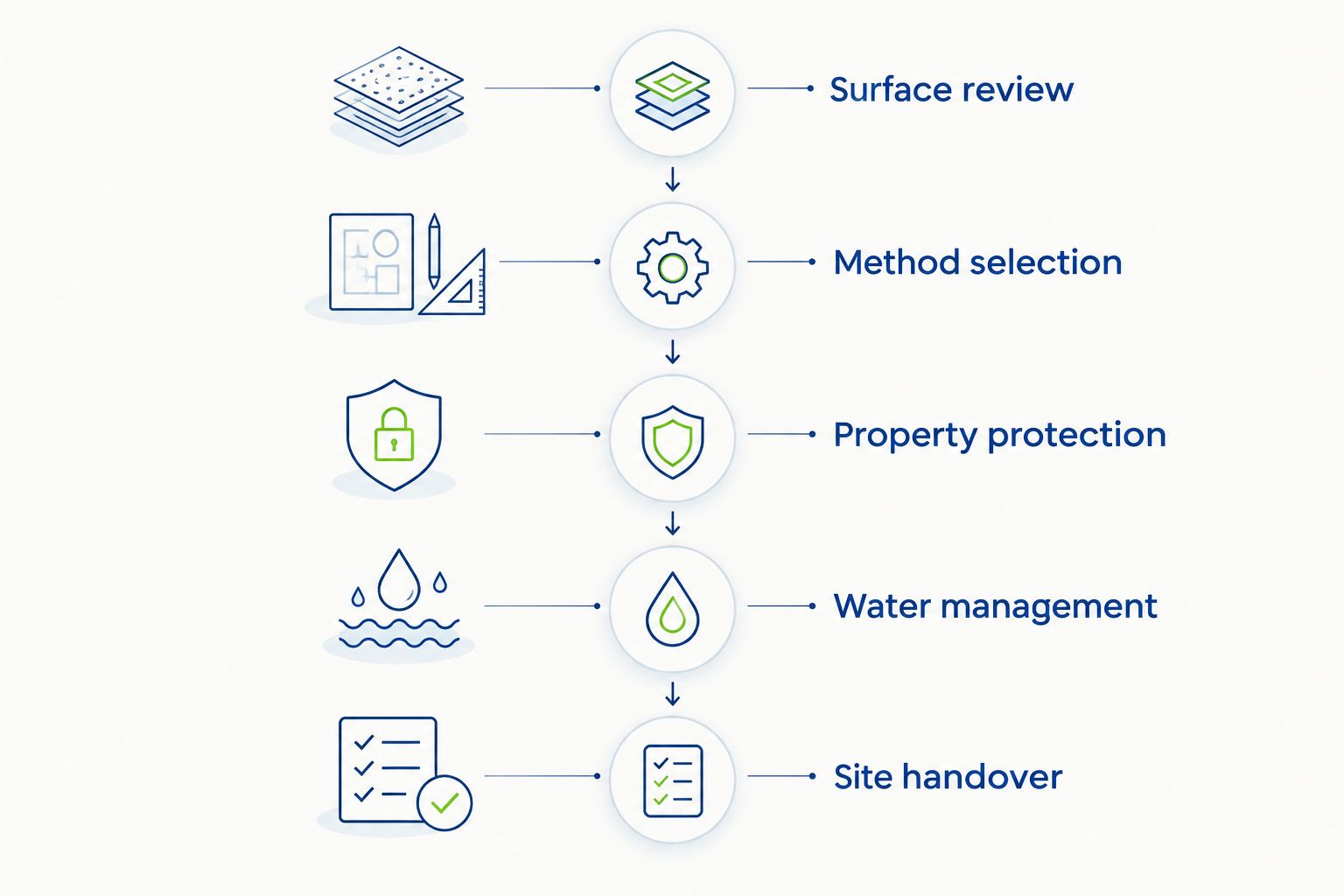
Use the same sequence with every bidder. This keeps an impressive machine from distracting your board from a missing protection step.
- Surface review: Identify materials, coatings, existing damage, and staining.
- Method selection: Match pressure, heat, chemistry, and tools to each area.
- Property protection: Identify plants, fixtures, vehicles, and nearby finishes needing protection.
- Water management: Trace drainage and confirm containment, collection, and disposal arrangements.
- Site handover: Agree on access restrictions, completion photos, and the final walkthrough.
How the ranking works
This equipment ranking prioritizes job fit, application control, water handling, access, and property protection. It does not award a higher position for a larger trailer, a stronger advertised pressure rating, or a longer list of attachments.
For a 2026 purchasing decision, require 1 written method for each distinct surface type. That is a procurement rule, not a universal equipment specification: it prevents a single vague line item from covering incompatible tasks.
Which commercial power washing company should you choose?
Start with the local provider whose written scope fits your property, then require specialist capabilities where the site demands them. For an undecided North County board, a walkthrough is the next move—not choosing the largest machine from a photograph.
Prioritize hot water for suitable greasy hardscape, recovery for collection requirements, soft washing for compatible delicate surfaces, and planned access for elevated work. Your 2026 shortlist should follow the building's needs rather than force the building into a contractor's standard setup.
Request a property-specific cleaning estimate
Discuss surfaces, staining, access, and runoff management for your North County property.
FAQ
What’s the best commercial power washing company by equipment?
The best choice is the contractor whose proposed equipment matches your surfaces, contamination, access, and water-handling requirements. Compare the written job setup rather than advertised fleet size.
Is a higher-pressure washer better for commercial properties?
Higher pressure is not automatically better for commercial properties. Surface compatibility, water flow, chemistry, heat, and operator control all affect whether the method suits the job.
Should a commercial pressure washing contractor have hot water?
Hot-water capability is useful for suitable greasy hardscape, but it is not necessary for every cleaning task. Ask why heat belongs in your specific scope and how nearby finishes will be protected.
Do commercial power washing companies need wastewater recovery equipment?
Recovery equipment is needed when the job’s collection requirements call for it. Require a plan covering drainage, containment, collection, and acceptable disposal rather than assuming a recovery unit resolves every issue.
Is soft washing better than pressure washing for an HOA?
Soft washing and pressure washing serve different surfaces and cleaning needs. An HOA property can require lower-pressure treatment for suitable building finishes and a different method for concrete walkways.
What should an HOA board request before hiring a contractor?
Request a written scope, evidence of insurance, and an access-and-runoff plan. The scope should distinguish surfaces, methods, protection measures, and completion expectations.
Can commercial power washing remove every stain?
Commercial power washing does not remove every stain. Rust, embedded oil, coating damage, and other discoloration need separate assessment before anyone promises a result.
One last thing
Ask what the contractor will leave alone. A clear answer about damaged coatings, incompatible materials, or areas needing specialist assessment tells you more about judgment than another equipment photo.
Put those exclusions in writing. A useful commercial cleaning scope defines both the work and its boundaries.
Related guides
- Commercial pressure washing for medical office buildings
- Pressure washing contracts for office park property managers
- Pressure washing for apartment and multi-family properties