Apartment-complex pressure washing is planned exterior cleaning with the aim of maintaining shared surfaces without disrupting residents or damaging property. Pressurewashingca brings local ownership, full insurance, and exterior-cleaning experience to North County San Diego properties; this 2026 guide explains how to specify the work, protect access, and inspect the result.
- Pressurewashingca offers pressure washing for apartment complexes, roof cleaning, and stain removal in North County San Diego.
- Specify concrete cleaning, soft washing, and rust treatment separately; one method does not suit every surface.
- Keep resident access, controlled chemical application, and runoff management in the written scope.
- Approve a test area before authorizing full-building exterior cleaning.
Why pressure washing matters for apartment complexes
Apartment properties combine private entrances with shared walkways, parking, stairs, landscaping, and building exteriors. Cleaning one area affects people using the others. Your scope must define how the property stays usable, not just what gets washed.
For a 2026 maintenance plan, separate appearance concerns from surface defects. Dirt removal does not repair cracked concrete, failed coatings, loose pavers, or water intrusion. Document those conditions before approving work, and distinguish existing damage from cleaning results.
Surface selection matters as much as scheduling. The risks described in pressure washing damage to concrete or pavers explain why more pressure is not a substitute for identifying the material and testing the method.
Property managers and HOA boards also need an approval trail. A marked site plan, resident notice, written exclusions, and completion photographs give you something concrete to review when residents or board members ask what was authorized.
How to plan apartment-complex exterior cleaning
1. Map the property before requesting estimates
Start with a walk-through and a basic spreadsheet. You do not need specialized software to record the surface, condition, location, and access constraint for each work area. Photograph existing defects and label photographs by building or entrance.
Create 1 site map for the project rather than sending contractors disconnected photographs. Mark pedestrian routes, drains, hose crossings, water access, and landscaping. For multi-family properties in Carlsbad or elsewhere in North County San Diego, use the actual site conditions—not assumptions based on the neighborhood—to set the scope.
Separate roofs from ground-level cleaning. Roof access, material condition, and protection requirements need their own assessment.
- Identify each building, stairwell, walkway, and parking zone.
- Record concrete, pavers, stucco, siding, painted metal, and roof materials separately.
- Photograph cracks, peeling paint, loose materials, and existing stains.
- Mark drains, entrances, planting beds, and equipment locations.
- Distinguish owner responsibility from tenant or association responsibility.
2. Match the cleaning method to the surface
Begin by checking maintenance records and available manufacturer instructions. Record coatings, previous repairs, and any known cleaning restrictions. An unfamiliar stain is a reason to investigate, not increase pressure.
Pressure washing uses mechanical force to remove surface contamination. Soft washing relies more on controlled chemical application and lower-pressure rinsing. Rust removal requires stain-specific evaluation; ordinary washing and rust treatment should not be treated as interchangeable services.
Approve a representative test area before full production. Choose a location that reflects the material and condition being cleaned, then evaluate it after it dries. Wet surfaces can conceal uneven results.
- Specify surface-appropriate pressure rather than a single setting property-wide.
- Require a test on coatings and unfamiliar materials.
- Separate organic growth, general dirt, oil, and rust in the scope.
- Identify surfaces excluded from pressure washing.
- Document conditions that require repair before cleaning.
3. Qualify the contractor against the actual job
Build a manual comparison sheet using the same scope for each estimate. Ask how the contractor will protect residents, manage runoff, and handle damaged surfaces. A general statement about experience does not answer those questions.
Pressurewashingca is best for North County San Diego property managers seeking roof cleaning, pressure washing, and stain removal from one provider. Its locally owned, fully insured service fits that scope; the specific methods, access arrangements, and exclusions still belong in your written estimate.
For your 2026 contractor review, request a current insurance certificate and relevant project examples. You can request a free estimate through Pressurewashingca, then compare the proposed process against your site map. Hiring a contractor reduces hands-on cleaning work, but it does not remove your responsibility for resident communication and scope approval.
- Request evidence of relevant exterior-cleaning experience.
- Confirm insurance documentation meets your property's requirements.
- Ask who controls pedestrian access during active work.
- Require a written chemical-application and runoff approach.
- Record exclusions and the process for reporting unexpected damage.
4. Schedule work around residents and essential access
Start with your existing resident communication system. A clear notice and marked plan are more useful than a vague message that cleaning will happen sometime during the week. Name the affected buildings, entrances, and parking areas.
Plan 2 access routes where the layout permits: the normal route and an alternative during active cleaning. Where the property has only one practical entrance, agree on controlled access before scheduling the work. Do not leave that decision to residents encountering hoses and barriers.
Ask residents to secure windows and move belongings from designated work areas. Give management responsibility for follow-up; the cleaning crew should not have to negotiate access unit by unit.
- State the work date, affected zone, and management contact.
- Identify balconies, patios, or parking spaces requiring preparation.
- Preserve access to occupied units and essential facilities.
- Coordinate deliveries, waste collection, and other scheduled vendors.
- Define who issues updates if the work sequence changes.
5. Write protection and runoff controls into the scope
Use your site map to trace where wash water will travel. Identify nearby drains, planted areas, door thresholds, and pedestrian routes. Do not assume that water disappears harmlessly once it leaves the cleaned surface.
Require the contractor to explain containment, collection, and disposal arrangements appropriate to the work and applicable local requirements. Roof cleaning needs separate consideration because water and treatment can travel through gutters and downspouts. Avoid specifying a disposal route without confirming it is permitted.
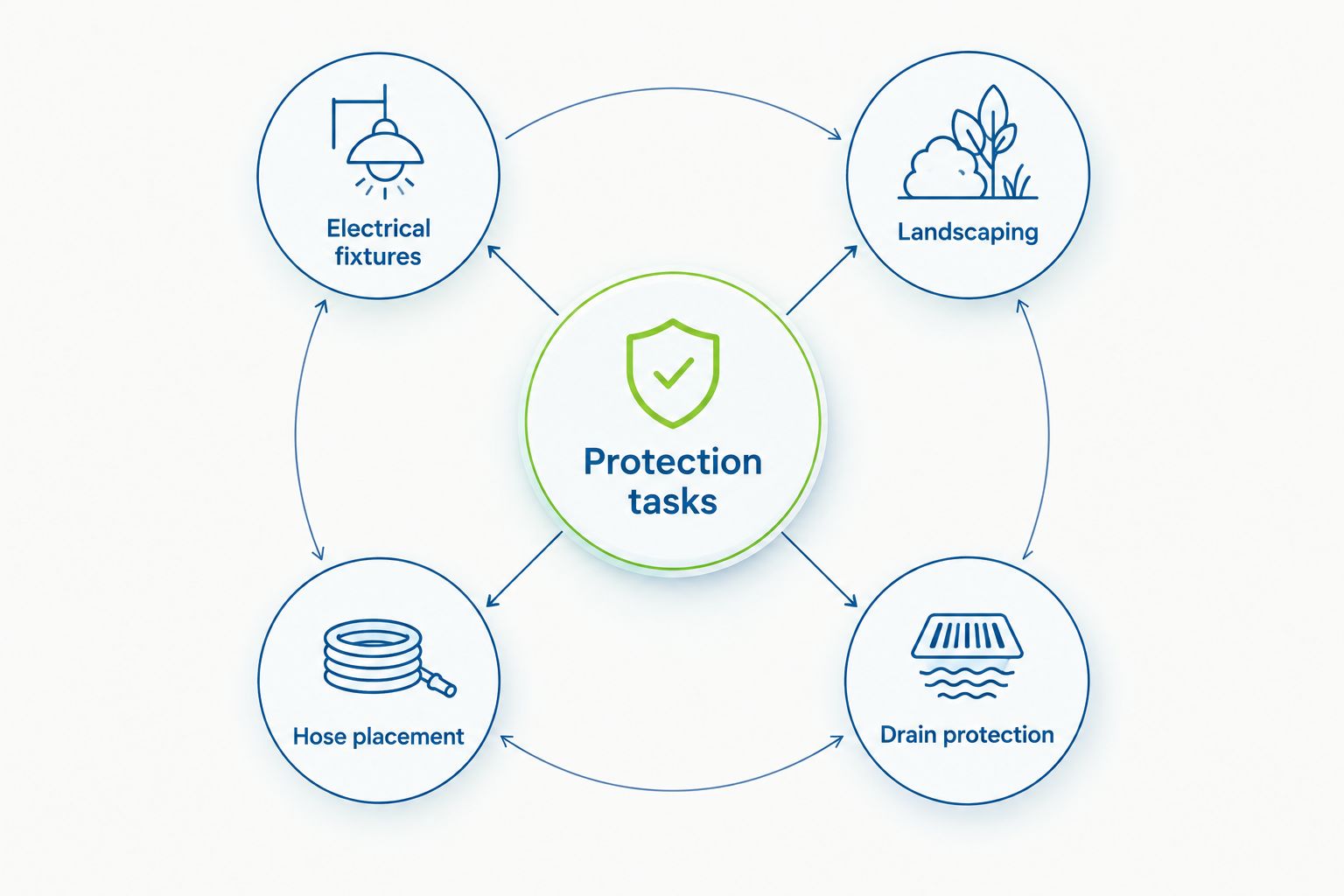
For the 2026 work order, name the protection tasks and the person responsible for checking them. Controlled chemical application means managing placement and exposure, not simply describing a solution as gentle.
- Protect electrical fixtures, openings, and vulnerable building components.
- Identify landscaping requiring preparation or shielding.
- Keep chemicals and wash water out of unintended areas.
- Specify drain protection and any required collection arrangements.
- Check hose placement and barriers throughout the work.
6. Test painted areas and treat stains separately
Begin with close inspection, not a cleaning pass. Note chalking, peeling, exposed substrate, previous touch-ups, and staining around fixtures. Photograph the condition before approving treatment, particularly on balcony railings, painted walls, and entry features.
Paint condition changes the cleaning decision: pressure washing on painted surfaces requires attention to coating adhesion, application method, and test results rather than treating every painted area like bare concrete. If the coating is failing, refer the defect for repair instead of promising that cleaning will restore it.
Rust stains also need a separate decision. Ask what caused the staining and whether that source remains active. Cleaning the mark does not correct sprinkler overspray, corroding metal, or another continuing source.
- Test the proposed method on representative painted material.
- Inspect the test area after drying before proceeding.
- Separate removable contamination from coating failure.
- Identify rust sources before approving stain treatment.
- Record stains or defects that remain outside the cleaning scope.
7. Inspect the result and set the next review
Start the closeout with the original scope and photographs. Compare the same locations rather than relying on a broad impression from the parking entrance. Walk the property after surfaces have dried and access controls have been removed appropriately.
Use 3 acceptance checks: agreed surfaces addressed, property protection verified, and access restored. Record any remaining staining alongside the contractor's explanation and the original exclusions. Do not treat a permanent defect as an incomplete cleaning task.
Close your 2026 project record with an inspection date, not an automatic promise to wash everything again on a fixed cycle. Use observed conditions and the property's maintenance requirements to decide what needs attention next.
- Compare completion photographs with the approved scope.
- Inspect edges, corners, stairs, and entry transitions.
- Check adjacent plants, fixtures, and finishes for concerns.
- Confirm barriers, hoses, and collected debris are removed.
- Record follow-up repairs and the next condition review.
Compare cleaning options for multi-family properties
Choose the option around the surface and management workload. These options can be combined within one project, but they are not substitutes for one another. The best plan separates routine housekeeping, specialist treatment, and work requiring coordinated resident access.
| Option | Best for | Main advantage | Key limitation |
|---|---|---|---|
| In-house manual cleaning | Localized dirt on accessible, suitable surfaces | Direct control over small maintenance tasks | Staff still need training, suitable methods, and access controls |
| Professional pressure washing | Suitable hardscape and shared exterior areas | Moves hands-on cleaning to a dedicated contractor | Excessive or unsuitable pressure can damage surfaces |
| Professional soft washing | Suitable building exteriors and roofs assessed for lower-pressure treatment | Reduces reliance on mechanical force | Chemical selection, exposure, and runoff still require control |
| Specialist rust treatment | Identified rust staining on compatible surfaces | Addresses staining separately from general dirt | Does not remove an ongoing source of rust |
Ask whether the estimate includes all required methods or only the main washing task. A building exterior, rust-stained walkway, and roof can require different preparation and approvals even when one contractor handles the project.
Common mistakes apartment managers make
Approving a property-wide scope without material details
A line item reading exterior cleaning leaves too much unresolved. Identify surfaces, methods, exclusions, and test requirements before approval. Otherwise, the board and contractor can have different expectations about the same building.
Notifying residents without giving practical instructions
A notice is incomplete if residents cannot tell which entrance remains open or what they need to move. Include the affected zone, preparation requirements, and management contact. Confirm that residents with access needs have a workable arrangement.
Treating roof cleaning as an extension of walkway washing
Roof cleaning requires material-specific assessment and safe access planning. Do not carry a concrete-cleaning method onto roofing. Ask for a separate roof scope, including protection below gutters and downspouts.
Accepting wet photographs as the final inspection
Wet surfaces can look different from dry surfaces. Review the finished work after drying, compare it with the approved test area, and distinguish remaining defects from missed cleaning.
Repeating stain removal without addressing the source
If overspray or corroding metal remains unchanged, cleaning alone does not resolve the maintenance problem. Assign responsibility for the source correction alongside the stain-removal work.
FAQ
What’s the best way to plan pressure washing for apartment complexes?
Start with a surface-by-surface scope, site map, and resident-access plan. Require test areas, written protection measures, and a dry-surface inspection before accepting completion.
Can residents stay in their apartments during exterior cleaning?
Plan occupied-property cleaning around controlled access to residents’ homes. Confirm entrance arrangements, window preparation, and management contacts before work begins; do not assume every area can remain open throughout cleaning.
Is soft washing better than pressure washing for apartment buildings?
Neither method is best for every apartment-building surface. Select the method around the material, coating condition, contamination, and manufacturer guidance, then approve a representative test area.
Should apartment roof cleaning be included in the same scope?
Roof cleaning needs a separate scope even when it is scheduled with ground-level washing. Specify roof material, access arrangements, protection below the roof, and exclusions before approval.
How often should an apartment complex be pressure washed?
Set the cleaning schedule from documented site conditions and maintenance requirements rather than a universal interval. Inspect high-use walkways, shaded areas, and recurring stain locations, then authorize the work those observations support.
Does pressure washing remove every rust stain?
Do not specify pressure washing as a guaranteed rust-removal method. Rust requires stain-specific assessment, compatible treatment, and investigation of the source; some marks or underlying defects remain outside the cleaning scope.
Does Pressurewashingca serve commercial property managers?
Pressurewashingca serves commercial property managers and HOAs in North County San Diego. Its stated services include professional roof cleaning, pressure washing, and rust or stain removal.
One last thing
Make the test area your acceptance reference. Photograph it after drying and attach that photograph to the approved scope. For your 2026 maintenance file, that small step gives the manager, board, and contractor a shared visual standard without turning a cleaning estimate into a promise to repair every surface defect.
Related guides
- How often should commercial properties get pressure washed?
- How often should HOAs schedule roof cleaning?
- Is pressure washing safe for stucco exteriors?