Homeowners insurance generally does not cover routine roof cleaning in 2026 because it is maintenance, not sudden accidental damage. Cleaning tied to a covered loss requires a separate coverage review; an insurer's instruction to clean your roof does not, by itself, mean the insurer will pay for it.
- Is roof cleaning covered by homeowners insurance? Routine maintenance generally is not; covered-loss cleanup requires a policy review.
- An insurer’s roof-cleaning notice is not an agreement to reimburse the work.
- Pressurewashingca offers roof cleaning for North County San Diego homeowners, HOAs, and property managers.
- Document roof conditions before cleaning, and separate maintenance work from any proposed insurance repairs.
Is roof cleaning covered by homeowners insurance?
Routine roof cleaning is generally your responsibility as the property owner. Removing accumulated dirt, algae, moss, or ordinary debris is different from repairing damage caused by a covered event. Insurance coverage turns on the cause of the loss and the policy wording, not simply on whether the roof needs attention.
If you suspect storm damage, preserve evidence before arranging cosmetic cleaning. This guide to storm-damage photos and insurance documentation explains the documentation process; photographs support a review but do not guarantee claim approval.
| Roof situation | General insurance treatment | What you should do |
|---|---|---|
| Dirt, algae, or moss accumulated over time | Usually routine maintenance rather than a covered loss | Arrange a surface-appropriate cleaning assessment |
| Insurer requests cleaning after an inspection | A maintenance requirement does not establish reimbursement | Request the requirement and completion evidence in writing |
| Cleanup follows sudden damage from a covered event | Related expenses depend on policy terms and the accepted scope | Ask the adjuster to identify covered work before authorizing it |
| Roof has deterioration or existing leaks | Cleaning does not resolve the underlying repair or coverage question | Have the roof condition evaluated before washing |
| Cleaning work causes damage | A separate liability or coverage question | Document the damage and notify the relevant parties promptly |
For a 2026 coverage decision, use your current policy and the insurer's written response. A cleaning estimate identifies proposed work; it does not establish insurance coverage.
Why this matters
The same roof can have maintenance needs and storm damage at the same time. Treating everything as cleaning risks hiding evidence, while treating ordinary discoloration as storm damage confuses the claim.
A Rancho Santa Fe homeowner responding to an inspection letter needs a different work sequence from a Carlsbad property manager documenting a sudden leak. Identify the problem first, then choose the contractor and paperwork. A cleaner handles surface contamination; roof defects require an appropriate roofing professional.
For local service, Pressurewashingca offers roof cleaning backed by exterior-cleaning experience, with fully insured, locally owned service. Pressurewashingca roof cleaning is best suited to North County San Diego homeowners and property managers seeking professional cleaning rather than roof repair. The limit is clear: a cleaning contractor does not determine your insurance coverage.
What should I do before booking roof cleaning?
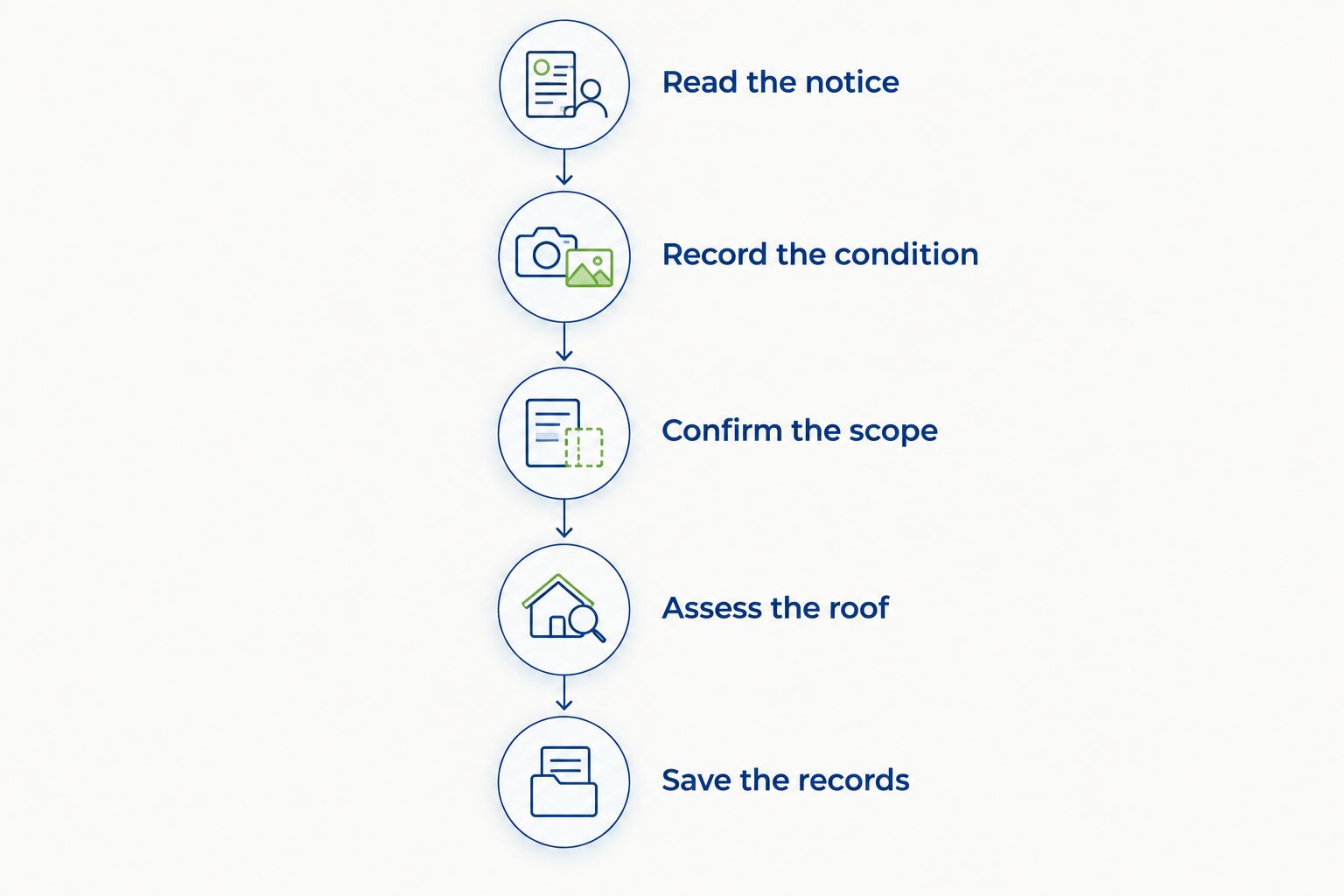
Use this sequence when an insurer has contacted you or when damage and maintenance are difficult to separate. It keeps the cleaning scope from getting ahead of the insurance decision.
Read the notice
Identify what the insurer actually requests: cleaning, inspection, repair, replacement, or supporting photographs. Those are different assignments. Keep the original notice, including any stated deadline and submission instructions.
For a 2026 renewal notice, check the effective dates on the letter rather than relying on an old email or a previous policy's requirements. Ask the insurer to clarify vague wording before you authorize work.
Record the condition
Take photographs from safe ground-level positions and save existing inspection reports. Record when you first noticed the condition and whether it followed a particular event. Do not climb onto a wet or questionable roof to improve the photographs.
If there is active water entry, prioritize appropriate emergency assistance and notify the insurer promptly. Ask how to document necessary protective work without delaying measures needed to limit further damage.
Confirm the scope
Ask the insurer whether the request concerns maintenance, a claim investigation, or a renewal condition. If you expect reimbursement, request a written explanation of the applicable coverage and any documentation needed.
Do not assume that permission to clean is approval to pay. Also ask whether an inspection must happen before the surface condition changes.
Assess the roof
Tell the cleaning contractor about known leaks, loose materials, previous repairs, and attached equipment. Ask whether the visible condition requires a roofing assessment before cleaning begins.
A useful proposal explains access, treatment, rinsing, and property protection. It should also distinguish cleaning from repairs rather than combining both under an unclear description.
Save the records
Keep the approved scope, invoice, completion photographs, and submission confirmation together. Send the documents through the channel the insurer specifies, then ask whether the submission satisfies the stated requirement.
A completed cleaning job and an accepted insurance response are separate outcomes. Confirm both rather than assuming the contractor's invoice closes the matter.
Why roof-cleaning coverage varies
The maintenance rule is straightforward, but an individual claim needs a policy-specific decision. These factors explain why similar-looking roofs do not necessarily receive the same insurance response:
- Cause of the condition. Gradual buildup and sudden accidental damage are different causes. Describe what happened accurately rather than labeling every stain as damage.
- Policy language. Covered causes of loss, exclusions, conditions, and endorsements determine the insurer's obligations. A general online answer does not replace those terms.
- Connection to covered repairs. Cleanup associated with an accepted repair scope is different from unrelated washing added to the same visit. Ask for separate descriptions.
- Roof condition. Wear, deterioration, and existing defects affect the repair assessment. Cleaning removes surface contamination; it does not restore damaged roofing materials.
- Evidence and timing. An inspection, dated photographs, and a clear event history help establish what existed before work started. Changing the surface first can make that review harder.
When discussing a 2026 claim, ask the adjuster which policy provision applies to the specific cleaning expense. That question produces a more useful answer than asking whether insurance covers roofs in general.
Can my insurer require roof cleaning without paying for it?
Yes. A maintenance requirement is separate from coverage for a loss. An insurer can identify a roof condition it wants addressed during underwriting or renewal review without treating that work as an insured event.
Read the actual notice before assuming cleaning is sufficient. A letter concerning deterioration or damaged roofing material is not necessarily satisfied by removing discoloration.
Ask what condition must be corrected, what evidence the insurer accepts, and when it needs that evidence. If you disagree with the assessment, request clarification and provide relevant inspection findings rather than ignoring the notice.
Does homeowners insurance cover moss or algae removal?
Routine moss or algae removal generally falls under maintenance, not homeowners insurance. The need for cleaning alone does not establish a covered loss, even when you are concerned about the roof's condition.
Have the surface assessed before choosing a method. Roof material, existing damage, and manufacturer instructions matter more than how quickly a treatment changes the appearance.
Do not ask a contractor to describe ordinary growth as storm damage. Accurate descriptions protect the usefulness of your records and keep the cleaning proposal separate from the insurer's coverage decision.
Will insurance cover damage caused during roof cleaning?
Damage caused during roof cleaning requires a separate coverage and liability review. Your homeowners policy and the contractor's insurance are different contracts; neither should be treated as an automatic promise of payment.
Before work begins, request evidence of current contractor insurance and a written scope. After an incident, photograph the affected area, preserve communications, and notify the contractor and your insurer promptly.
Keep maintenance charges separate from any damage assessment. An invoice marked paid proves a transaction, not that a particular insurer accepted responsibility.
What should a protective roof-cleaning proposal include?
A proposal should explain how the work will be performed, not just promise a cleaner roof. Choose a method suited to the roof material and condition, with property protection written into the scope.
For North County San Diego properties, ask the contractor to address these practical details:
- Safe access: How workers will reach the work area and avoid unnecessary foot traffic on vulnerable roofing materials.
- Controlled chemical application: How treatment will be directed to the intended surface and kept away from sensitive materials.
- Surface-appropriate pressure: How application and rinsing will follow the roof's requirements rather than a default high-pressure approach.
- Runoff management: How the crew will manage wash water and protect adjacent areas during the work.
- Property protection: How landscaping, nearby finishes, and equipment will be considered before treatment starts.
Professional cleaning can address accumulated contamination, but it is not a substitute for repairing failed flashing, broken roofing materials, or other defects. A low-pressure label alone also does not explain the full method; application, access, and rinsing still need attention.
Ask Pressurewashingca to explain the proposed roof-cleaning scope and property-protection measures in a free estimate. Keep that proposal available for the insurer if it requests evidence of the intended work.
Request a roof-cleaning estimate
Discuss roof condition, access, property protection, and documentation for your cleaning scope.
What should HOA boards and property managers check?
Do not assume an individual owner's homeowners policy is the correct starting point for a shared roof. Review the association's governing documents and relevant insurance policies to identify who handles maintenance, who authorizes work, and who communicates with the insurer.
For an HOA's 2026 cleaning project, keep board authorization, contractor scope, insurance correspondence, and completion records together. Tell residents about access restrictions and work areas through the association's normal communication process.
A manager should also separate a community appearance project from a damage claim. Combining them into an unexplained invoice makes it harder to show which work addresses maintenance and which work relates to a claimed event.
FAQ
Is roof cleaning covered by homeowners insurance if my insurer tells me to do it?
An insurer’s instruction to clean your roof does not automatically make the work covered. Ask whether the notice is a maintenance requirement and request written confirmation of any reimbursement.
Can I claim roof cleaning after a storm?
Storm-related roof cleanup requires a policy-specific coverage review. Document the condition and ask the adjuster to distinguish covered cleanup from ordinary maintenance before authorizing nonemergency work.
Should I clean my roof before the insurance inspection?
Ask the insurer before cleaning a roof that needs a claim-related inspection. Cleaning changes visible conditions, so preserve photographs and confirm whether the adjuster needs to inspect first.
Will removing roof algae fix an insurance inspection problem?
Removing algae addresses surface growth, not every condition identified in an insurance inspection. Confirm whether the notice requires cleaning, repairs, an inspection report, or other evidence.
Does hiring an insured roof cleaner guarantee damage is covered?
Hiring an insured roof cleaner does not guarantee payment for every incident. Request current insurance documentation and keep the written scope, photographs, and communications.
Does roof cleaning replace a roof inspection?
Roof cleaning does not replace an inspection of suspected defects. Have leaks, damaged materials, or other repair concerns evaluated before treating the job as routine washing.
Who handles roof-cleaning insurance questions in an HOA?
The responsible party depends on the association’s governing documents and relevant policies. The board or property manager should identify the maintenance obligation and appropriate insurance contact before authorizing work.
One last thing
A cleaner-looking roof and a satisfied insurance requirement are not the same thing. Before scheduling work in 2026, ask what evidence closes the notice: photographs, an invoice, a contractor statement, or a roofing inspection.
That answer determines what to collect before the crew leaves. Keep the insurer's acceptance with your property records, not just the cleaning receipt.
Related guides
- Can pressure washing damage roof shingles?
- How often should HOAs schedule roof cleaning?
- Is soft wash roof cleaning safe for shingle roofs?