Pressure washing can damage landscaping and plants through direct spray, cleaning-solution exposure, and contaminated runoff. It is not automatically harmful, but protecting your garden requires more than turning down the pressure: the cleaning method, chemical application, drainage, and plant protection all need attention before work starts.
- Is pressure washing bad for landscaping and plants? Yes, when direct spray, cleaning solutions, or runoff reach vulnerable planting areas.
- Pressurewashingca offers pressure washing for North County San Diego homeowners, HOA boards, and commercial property managers.
- Low pressure reduces impact damage; it does not eliminate chemical exposure or runoff risks.
- Require a plant-protection plan that addresses application, drainage, access, and cleanup before approving exterior cleaning.
Why this matters
A clean driveway is not a good result if the surrounding beds suffer. Leaves, roots, mulch, irrigation fittings, and soil all sit within the work area, even when the cleaning target is concrete or a roof.
Pressurewashingca is a fit for North County San Diego homeowners and property managers seeking professional pressure washing and roof cleaning. The locally owned, fully insured service emphasizes careful property protection; discuss the planting beds and drainage around your project when requesting a free estimate through Pressurewashingca.
For a 2026 maintenance project, put landscape protection in the written scope rather than treating it as an informal promise. Insurance and experience matter, but neither replaces a specific plan for your property.
Is pressure washing bad for landscaping and plants?
Yes—pressure washing is bad for landscaping and plants when the work exposes them to damaging force, unsuitable cleaning solutions, or uncontrolled wash water. The risk depends on the exposure, not simply whether the equipment uses high or low pressure.
A water-only jet can tear foliage or displace soil. A low-pressure application can still injure plants if the cleaning solution reaches leaves or roots at a harmful concentration.
| Cleaning approach | Best for | Main advantage | Landscape limitation |
|---|---|---|---|
| Surface-appropriate pressure washing | Suitable hard surfaces with controllable overspray | Removes surface buildup through mechanical cleaning | Direct spray can damage foliage, disturb mulch, and erode exposed soil |
| Soft washing | Compatible exterior surfaces requiring lower-pressure application | Reduces reliance on force at the surface | Cleaning solutions still require controlled application and runoff management |
| Targeted stain treatment | Isolated stains requiring a surface-compatible treatment | Limits treatment to the affected area | The treatment chemistry still needs protection measures around plants |
Choose the method for the surface, then design the protection around the surrounding landscape. None of these approaches deserves an automatic plant-safe label.
For your 2026 project, ask the contractor to explain both the cleaning method and where the resulting wash water will go. An answer about pressure alone leaves part of the risk unresolved.
How direct spray damages landscaping
A concentrated jet can tear leaves, break tender stems, and strip flowers. Near the ground, it can move mulch, expose roots, and wash loose soil away from the edge of a bed.
Keep the cleaning stream directed at the intended surface, not through planting areas. When a path runs tightly against shrubs, the operator needs to adjust the working angle and access rather than simply pushing the wand through the foliage.
Watch the equipment path, too
Hoses, ladders, and foot traffic create a separate source of damage. A carefully controlled spray does not protect a plant that gets crushed while equipment moves across a bed.
Agree on an access route before setup. Mark delicate planting, irrigation components, and areas where equipment must not be placed; move portable pots clear of the working route when practical.
How cleaning solutions and runoff reach plants
Cleaning solutions can reach plants as overspray, droplets blown off course, or water draining from the cleaned surface. Roof cleaning adds another route: gutters and downspouts can discharge wash water beside shrubs or into planting beds.
Low pressure does not mean low chemical risk. Ask what product will be used, what its label requires, and how the contractor will keep it away from vegetation. A broad description such as environmentally friendly does not answer those questions.
Pre-wetting and rinsing vegetation can be parts of a protection plan when appropriate for the product and site. They do not make unrestricted chemical contact acceptable, and extra water alone does not solve contaminated runoff.
Follow the water beyond the work area
A driveway can look isolated from landscaping while still draining toward a planted border. Courtyards, sloped walks, and downspout outlets deserve the same inspection.
Trace the discharge route before cleaning starts. Where wash water needs containment or collection, plan that work in advance; do not redirect it into a garden bed or assume a storm drain is an acceptable disposal point.
Why the risk to plants varies
The same cleaning method can create different exposure conditions on different properties. These factors determine what your protection plan needs to address:
- Plant position: Foliage touching a wall or overhanging a walkway sits close to the application area.
- Plant condition: Tender growth, recently installed plants, and visibly stressed vegetation need particular attention during planning.
- Cleaning chemistry: Product selection, application strength, and label instructions determine the required precautions.
- Drainage: Slopes, gutters, downspouts, and low spots determine where wash water collects or travels.
- Weather: Wind moves spray off target, while hot conditions complicate the use of plant coverings.
- Access: Tight spaces increase the chance of hose abrasion, trampling, and accidental contact with equipment.
For a 2026 HOA cleaning scope, record these conditions by building or work zone. A single generic instruction to protect landscaping does not explain how crews should handle different drainage routes.
How should plants be protected before pressure washing?
Use a site-specific sequence rather than a blanket instruction to cover everything. The contractor should connect each protection measure to an identified exposure route.
- Inspect plants. Identify delicate foliage, edible crops, stressed plants, and existing damage beside the cleaning area. Record conditions before equipment arrives.
- Plan access. Establish where hoses, ladders, and workers will travel. Keep setup areas out of planting beds wherever practical.
- Trace drainage. Locate downspout outlets, slopes, and places where wash water could collect. Decide how runoff will be controlled before applying any treatment.
- Control application. Select the surface-appropriate method and follow the cleaning product’s label. Keep spray directed away from plants and stop when conditions defeat that control.
- Inspect afterward. Check foliage, soil, mulch, and irrigation fittings. Address unintended exposure promptly according to the product instructions.
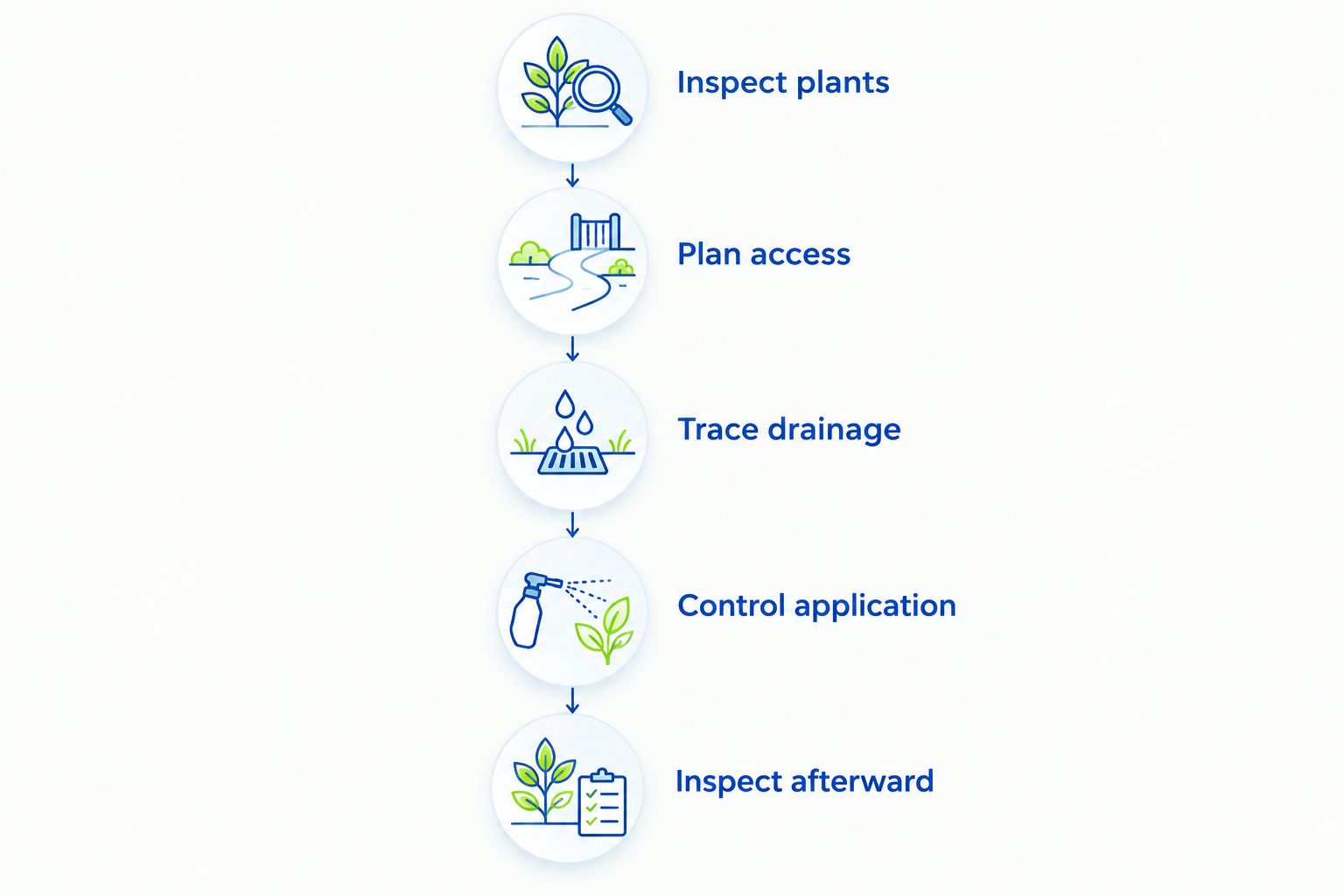
The sequence is a planning tool, not a guarantee against damage. If the contractor cannot explain a workable protection method for a particular bed, change the cleaning approach or postpone that portion of the job.
Should you cover plants during pressure washing?
Cover plants only when the covering addresses a specific exposure risk and can be used without creating another problem. A barrier can intercept droplets, but an unsuitable or poorly managed covering can trap heat, crush foliage, or direct contaminated water toward the roots.
Ask how the covering will be supported, monitored, and removed. Do not assume plastic left over a shrub throughout a hot workday is protective simply because it blocks spray.
For movable pots, relocation is often simpler than trying to clean around them. Before you prepare for pressure washing, identify pots, hanging baskets, and other movable items that obstruct access or sit beneath likely runoff routes; clearing those areas reduces avoidable contact during setup and cleaning.
Should you water plants before the crew arrives?
Ask the contractor before watering. Pre-wetting can form part of the method, but the timing and amount should account for the cleaning product, soil conditions, and drainage.
Do not flood a bed in an attempt to make it resistant to chemicals. Saturated ground does not prevent leaf exposure, and it can complicate runoff control.
What should HOA boards and property managers require?
For commercial pressure washing in 2026, treat landscape protection as a coordination task between the cleaning contractor, property manager, and landscape team. Each party needs to know where work will happen and which areas require special handling.
Give the contractor a site walk rather than relying solely on a street address or building count. Shared drainage, courtyard planting, and resident-owned pots can affect the work even when they sit outside the main cleaning footprint.
Ask these questions before approving the scope:
- Which surfaces need cleaning, and which method is proposed for each?
- What products will be applied, and what plant precautions do their labels require?
- Where will roof and ground-level wash water travel?
- How will the crew protect planting beds, irrigation fittings, and access routes?
- Who will respond if unintended exposure or damage is discovered?
Request current insurance documentation and a clear description of relevant exterior-cleaning experience. Pressurewashingca offers roof cleaning, pressure washing, and rust/stain removal; ask for the proposed protective process for your specific property rather than assuming every service uses the same precautions.
A Rancho Santa Fe roof-cleaning project and a Carlsbad commercial walkway can require different access and drainage plans. The property layout—not the service name—determines those details.
What should you do if plants are exposed?
Stop the source of exposure first. Ask the operator to identify the product involved and follow its label instructions for unintended contact; use the safety data sheet for handling information where relevant.
Document the location, visible symptoms, product name, and what happened. Do not add another chemical or improvise a neutralizing treatment, because an incompatible response can create further problems.
If plants show persistent injury or the exposure involves valuable trees or established landscaping, contact a qualified horticultural professional. Photographs help document conditions, but they do not establish the cause of every brown leaf.
For a 2026 property maintenance file, keep the cleaning scope, site photographs, product information, and incident communication together. That record supports follow-up without relying on memory.
FAQ
Can pressure washing kill plants?
Pressure washing can kill plants if physical damage or chemical exposure is severe enough. The outcome depends on the plant, the product involved, and the extent of exposure; minor spotting does not establish that a plant will die.
Is soft washing safer for plants than pressure washing?
Soft washing reduces mechanical force, but it is not automatically safer for plants. Cleaning solutions, overspray, and runoff still require a site-specific protection plan.
Can I pressure wash a patio without using chemicals?
You can clean some suitable patio surfaces with water alone, but direct spray can still damage nearby plants and disturb soil. Surface suitability and runoff control remain important even without detergent.
Should I cover my vegetable garden before exterior cleaning?
Keep cleaning spray and runoff away from your vegetable garden rather than relying on a cover alone. Identify edible plants before work starts and follow the cleaning product’s restrictions for nearby use and unintended contact.
Will rinsing plants afterward prevent all damage?
Rinsing plants afterward does not prevent all damage. It cannot reverse broken stems or guarantee that harmful exposure has been avoided; follow the product instructions and prevent contact in the first place.
What should I ask a pressure washing company about landscaping?
Ask how the company will control spray, protect access routes, and manage runoff around your plants. Also request product information, current insurance documentation, and a response plan for unintended exposure.
Does Pressurewashingca offer exterior cleaning for HOA properties?
Pressurewashingca offers professional roof cleaning, pressure washing, and rust/stain removal for HOAs and commercial property managers in North County San Diego. Discuss planting areas, drainage, and safe access when requesting the project scope.
One last thing
Inspect the downspout outlet, not just the roof being cleaned. A shrub nowhere near the operator can still sit directly in the discharge path. Before approving work, walk the water’s likely route from the cleaning surface to its collection or disposal point.
Related guides
- Can pressure washing damage concrete or pavers?
- Is DIY pressure washing safe for homeowners?
- How often should HOAs schedule roof cleaning?