Commercial properties should be pressure washed when inspections show buildup that routine maintenance cannot remove, with urgent spill response handled separately from scheduled cleaning. Set the interval by surface, traffic, contamination, and drainage—not by a single calendar rule for the whole property.
- How often should commercial properties get pressure washed? Use documented surface conditions, not a blanket property-wide interval.
- North Coast Exteriors serves North County San Diego property managers seeking commercial pressure washing and exterior stain removal.
- Separate urgent spill response from scheduled exterior cleaning; a cleaning contract does not replace daily maintenance.
- Specify surface-appropriate pressure, controlled chemical application, safe access, and runoff management before approving work.
How often should commercial properties get pressure washed?
Schedule commercial pressure washing by zone and condition, rather than assigning every exterior surface the same interval. An entrance exposed to tracked-in dirt needs a different maintenance decision from a sheltered wall or a service area with recurring spills.
For your 2026 maintenance plan, use the following comparison to decide what triggers work. These are scheduling approaches, not prescribed cleaning intervals.
| Scheduling approach | Best for | Advantage | Limitation |
|---|---|---|---|
| Condition-based cleaning | Properties with documented inspections | Connects cleaning to actual buildup | Requires someone to inspect and act |
| Recurring scheduled cleaning | Areas with a documented repeat pattern | Makes access and tenant coordination predictable | Needs adjustment when conditions change |
| Incident-driven response | Spills and isolated contamination | Addresses a specific problem promptly | Does not replace routine inspections |
North Coast Exteriors is locally owned and fully insured, with real exterior-cleaning experience serving North County San Diego. For property managers, that experience matters when choosing a method that fits the surface and planning work around occupied buildings.
Why this matters
A cleaning schedule is a property-protection decision, not just an appearance decision. You need to address dirty surfaces without exposing coatings, joints, landscaping, or building openings to an unsuitable cleaning method.
For an HOA board, the schedule also needs to explain why some areas receive attention before others. Documented conditions give you a clearer basis for approval than complaints alone. A stained service area and a lightly dusty wall do not require identical treatment.
Keep your 2026 cleaning scope separate from your inspection schedule. Inspecting a surface does not mean authorizing another wash; it means deciding whether cleaning, repair, source correction, or no action is appropriate.
How do you build a condition-based cleaning schedule?
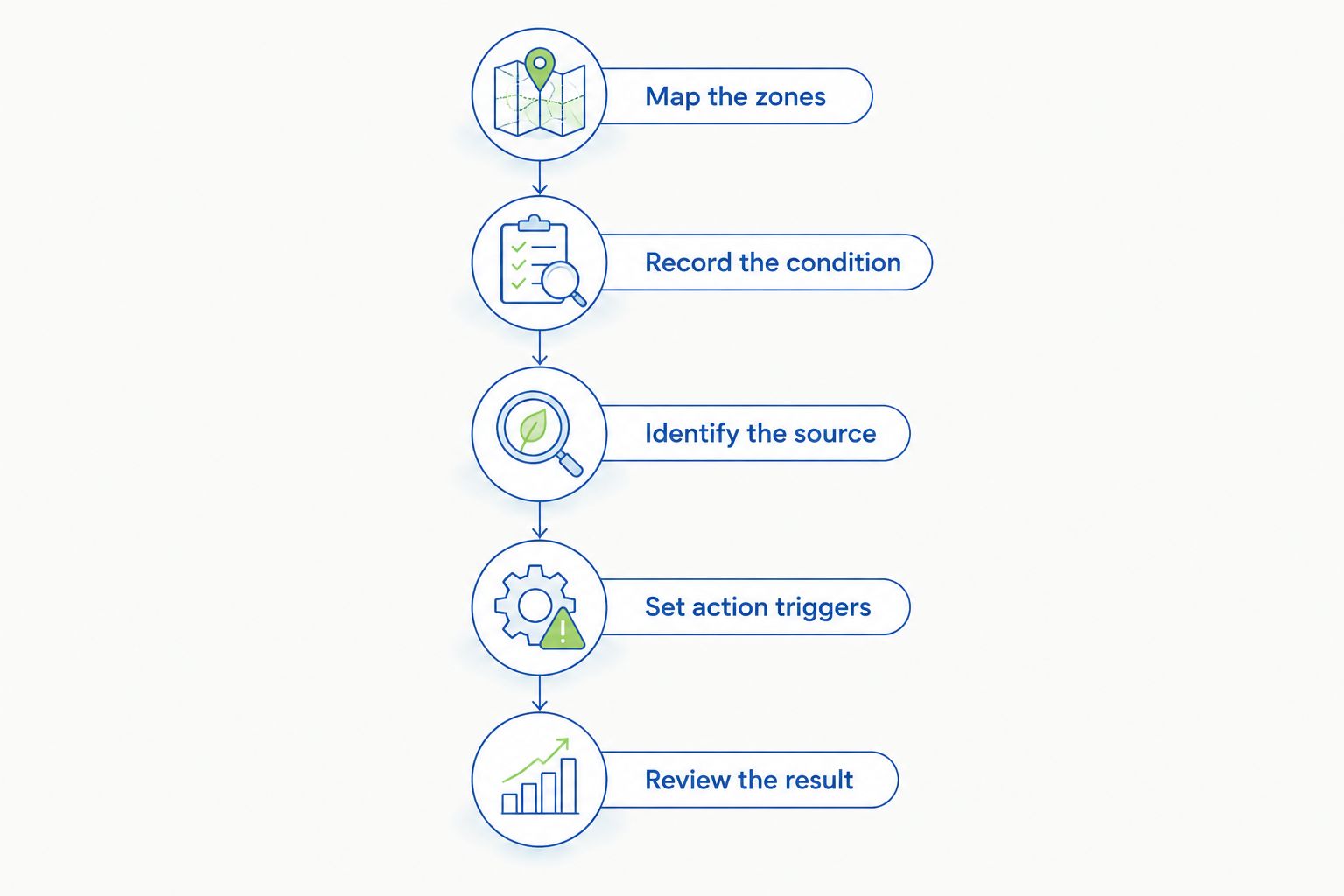
Start with a site walk and a simple record you can update. You do not need a complicated scoring system; you need consistent observations and a named person responsible for follow-through.
- Map the zones. Separate entrances, pedestrian routes, service areas, parking surfaces, walls, and roof areas. Record the material in each zone rather than treating every hard surface as concrete.
- Record the condition. Photograph dirt, organic growth, staining, standing water, damaged coatings, and open joints. Use consistent viewpoints so later inspections show what changed.
- Identify the source. Distinguish tracked-in soil from irrigation overspray, recurring spills, drainage problems, and staining beneath metal fixtures. Cleaning the mark does not necessarily remove its cause.
- Set action triggers. Describe the condition that calls for cleaning, specialist assessment, or repair. Keep urgent spill response outside the routine washing calendar.
- Review the result. After cleaning, compare photographs and record when buildup returns. Use that property-specific history to set the next service interval.
Keep the record useful for the next manager, not just the person who arranged the work. Include the location, photographs, observed issue, approved scope, and any areas excluded because they need repair or another cleaning method.
Entrances and pedestrian routes: inspect for recurring buildup
Entrances deserve close attention because they concentrate pedestrian movement. Look at the full route from the parking area to the door, including shaded sections, ramps, thresholds, and areas beneath landscaping.
Best for entrances: condition-based cleaning supported by routine housekeeping. Remove loose debris through ordinary maintenance, then assess attached buildup separately. Do not use a pressure-washing appointment as a substitute for responding to a spill or reporting a suspected slip hazard.
The limitation is coordination. Cleaning can temporarily interrupt an access route, so the scope needs barriers, alternate access where required, and a reopening decision based on site conditions. A quiet-looking entrance is not necessarily unused.
Service areas: separate recurring washing from spill response
Loading areas, refuse enclosures, and delivery routes need a different inspection checklist from public-facing walls. Identify what is on the surface before deciding how to remove it.
Best for service areas: scheduled cleaning informed by the contamination source. Where dirt repeatedly accumulates in the same location, document the pattern and coordinate cleaning with site operations. For an unidentified spill, follow the property's response procedure rather than washing it toward a drain.
The limitation is that washing alone does not correct leaking equipment, poor waste handling, or a drainage defect. Put source correction in the maintenance record alongside the cleaning task, with a responsible party for each action.
Walls, roofs, and coated surfaces: separate the cleaning methods
A commercial pressure-washing contract should not imply high-pressure cleaning across every building surface. Painted walls, stucco, roofing, concrete, and pavers require separate assessments.
Best for mixed-material properties: a surface-specific scope. Require the contractor to identify the proposed method, protect vulnerable openings, and follow applicable material or coating instructions. Roof work also requires a separate access plan; a ground-level walkway scope does not cover roof cleaning.
The limitation is that a less aggressive method still needs competent application. Chemical choice, concentration, contact time, and rinsing must suit the material. Before approving repeat cleaning on hardscape, review whether pressure washing can damage concrete or pavers.
Why commercial pressure-washing frequency varies
The useful question is not whether another property washes more often. It is what makes your own surfaces dirty again and whether the proposed cleaning addresses that cause.
- Traffic and use. Entrances, delivery routes, and gathering areas experience different patterns of tracked-in dirt and contamination. Match the scope to actual use.
- Shade and persistent moisture. Record where surfaces stay damp or develop recurring growth. Check irrigation and drainage rather than treating repeated washing as the only response.
- Contamination type. Loose soil, oily residue, rust staining, and organic growth are different cleaning problems. More pressure is not a universal solution.
- Surface condition. Loose coatings, deteriorated joints, damaged materials, and previous repairs affect the method. Flag defects before work begins.
- Access constraints. Tenant hours, deliveries, accessible routes, and vehicle movement determine how work can be phased. They should not disappear from the scope after the appointment is booked.
- Runoff management. Drain locations, surface slope, wash-water contents, and collection requirements affect the work plan. Identify the discharge destination before cleaning starts.
Use these factors when reviewing your 2026 schedule in Carlsbad, Rancho Santa Fe, or elsewhere in North County San Diego. The city name alone does not establish a cleaning interval; the property's recorded conditions do.
What should a commercial cleaning scope include?
Approve the protective process before approving the repeat schedule. A recurring appointment is only useful when the contractor and property manager agree on what will happen at the site.
Ask for a written scope covering:
- Surface-appropriate pressure: identify materials and sensitive areas, rather than specifying maximum equipment pressure as the quality standard.
- Controlled chemical application: identify treatment areas and precautions for adjacent finishes, planting, and occupied spaces.
- Safe access: explain how workers, equipment, residents, tenants, and visitors will move around the work area.
- Runoff management: identify nearby drains and the planned handling of wash water under applicable requirements.
- Property protection: record pre-existing damage and identify openings, fixtures, and equipment that need protection or exclusion.
- Completion documentation: provide photographs and flag stains, defects, or recurring sources that need separate attention.
Confirm current insurance documentation and the approved work boundaries before mobilization. Insurance supports contractor selection; it does not replace a suitable cleaning method or a clear site plan.
North Coast Exteriors is best for North County San Diego property managers seeking professional pressure washing and exterior stain removal. Its stated service scope fits those needs; your written estimate still needs to define the surfaces, methods, exclusions, and access arrangements for your property.
Request a commercial cleaning estimate
Get a free estimate and discuss surfaces, safe access, property protection, and runoff management.
Should every building in an HOA follow the same schedule?
Use the same inspection standard, not automatically the same cleaning date. An HOA can apply consistent decision criteria while treating buildings or common areas differently when conditions justify it.
For a 2026 board review, show photographs, affected surfaces, the reason for cleaning, and the proposed scope. Record why an area was deferred as clearly as why another was approved. That creates a maintenance record without presenting every cosmetic mark as an emergency.
Does recurring staining mean you need more frequent washing?
Recurring staining calls for a source check before a shorter washing interval. Irrigation overspray, corroding fixtures, drainage patterns, or repeated spills can keep marking a surface after cleaning.
Ask whether the stain requires a dedicated treatment and whether maintenance can address the source. Repeatedly washing the same mark without that assessment adds work without resolving the underlying issue.
Can pressure washing replace daily exterior maintenance?
Pressure washing does not replace sweeping, waste handling, spill response, or defect reporting. Those tasks address conditions between specialist cleaning visits and help you distinguish loose debris from buildup that needs treatment.
Give site staff a clear escalation route. They should know whom to notify about unidentified spills, damaged surfaces, blocked drains, or a pedestrian route that needs immediate attention.
FAQ
How often should commercial properties get pressure washed?
Commercial properties should be pressure washed when documented surface conditions call for it, with separate arrangements for urgent spills. Set recurring service from each zone’s buildup history, surface material, and operating conditions.
Should a commercial building be pressure washed on a fixed calendar?
A fixed calendar works best when it reflects a documented repeat pattern. Continue inspections between visits and adjust the scope when conditions or building use change.
Do busy entrances need the same cleaning schedule as exterior walls?
Busy entrances and exterior walls need separate assessments. Pedestrian traffic, surface material, contamination, and access requirements differ, so one property-wide interval is a poor substitute for a zone-specific plan.
Can an HOA schedule cleaning only when residents complain?
Resident complaints should trigger an inspection, not serve as the entire maintenance system. Use consistent photographs and written action criteria to decide which areas need work.
Should commercial roofs be included in routine pressure washing?
Commercial roofs need a separate cleaning assessment and access plan. Do not assume the method used on concrete is appropriate for roofing or that a ground-level contract includes roof work.
What should property managers ask about wash-water runoff?
Ask where wash water will travel and how it will be handled under applicable requirements. The plan should account for drains, slope, contamination, and any required containment or collection.
Does North Coast Exteriors offer commercial exterior cleaning?
North Coast Exteriors provides professional pressure washing and exterior stain removal for commercial property managers and HOAs in North County San Diego. Request a free estimate that defines the surfaces, protective methods, access arrangements, and exclusions.
One last thing
The most useful note after cleaning is what caused the buildup—not just that the surface looks cleaner. Add a source check to your 2026 completion record: irrigation, drainage, fixtures, deliveries, or routine housekeeping.
That note gives the next inspection a purpose. If the same mark returns, you can investigate the cause instead of automatically ordering another wash.
Related guides
- Commercial pressure washing for medical office buildings
- How often should HOAs schedule roof cleaning?
- Sprinkler overspray and rust-stain removal