Yes, pressure washing can damage siding by forcing water behind panels, stripping paint, gouging wood, or cracking brittle material. Damage also comes from unsuitable cleaning chemicals and poorly sealed openings, so lowering pressure alone does not make a wash appropriate for your home.
- Can pressure washing damage siding? Yes—excessive force, unsuitable chemicals, and water entering joints are the main concerns.
- Choose siding cleaning by material, coating condition, and manufacturer instructions—not the machine’s maximum pressure.
- Soft washing reduces reliance on force but still requires controlled chemical application and careful rinsing.
- North Coast Exteriors serves North County San Diego homeowners and property managers seeking professional exterior cleaning.
Why this matters
A clean-looking wall is not proof of an appropriate cleaning method. Water entering behind siding is less obvious than a stripped finish, and cleaning does not repair failed sealant, loose boards, or damaged flashing.
For your 2026 maintenance plan, separate siding cleaning from driveway cleaning. The equipment can look similar while the required approach differs; this guide to soft washing versus pressure washing explains that distinction.
North Coast Exteriors is a locally owned, fully insured exterior-cleaning service for North County San Diego homeowners, HOA boards, and commercial property managers. Its emphasis on real exterior-cleaning experience matters here: siding work calls for controlled chemical application, safe access, surface-appropriate pressure, and runoff management—not simply stronger spray.
Can pressure washing damage siding?
Yes. Pressure washing damages siding when the force, spray direction, cleaning solution, or access method is wrong for the wall. Existing defects make the job more demanding because an apparently intact surface can have vulnerable joints and openings.
The main distinction is between removing contamination and removing part of the building surface. If cleaning lifts paint, erodes wood fibers, or drives water through a joint, the method has crossed that line.
| Approach | Best for | Main advantage | Main limitation |
|---|---|---|---|
| Low-pressure cleaning with a compatible solution | Siding whose manufacturer permits that method | Reduces reliance on mechanical force | Chemicals still require surface checks, controlled application, and rinsing |
| Pressure-assisted cleaning | Sound surfaces expressly suited to the proposed method | Mechanical action helps release attached dirt | Excess force or poor spray direction can damage finishes and admit water |
| Gentle hand cleaning | Small, accessible areas and sensitive details | Gives you direct control around vulnerable features | Takes more hands-on work and does not solve difficult access |
Choose the method the siding manufacturer permits, then adjust for the actual condition of the wall. A method suitable for one material is not permission to use it on every exterior surface.
Vinyl siding: watch the joints and brittle panels
Vinyl siding has overlapping sections and openings that must remain functional. Directing a concentrated stream upward into laps or toward vulnerable joints can send water behind the cladding.
Inspect for cracks, loose sections, and damaged trim before washing. Avoid treating panel movement as something stronger spray will fix; loose material needs attention before cleaning proceeds.
Low-pressure cleaning with an approved solution is a practical starting point where the manufacturer permits it. Its limitation is that gentler water pressure does not correct brittle panels, poor installation, or unsuitable chemistry.
Wood siding: protect fibers and the finish
Aggressive washing can lift wood fibers, leave grooves, and remove coatings unevenly. The result can be a wall that looks cleaner from a distance but has a roughened surface up close.
Check for peeling paint, soft areas, open joints, and exposed end grain. Stop where the surface needs repair or coating assessment rather than treating stronger washing as preparation by default.
For wood siding, preserve the surface before chasing the stain. A persistent mark requires identification; repeatedly spraying the same spot risks turning a cleaning problem into a repair problem.
Fiber-cement siding: follow the manufacturer’s instructions
Fiber-cement siding is not a blanket exception to pressure-related damage. Its paint, joints, cut edges, and adjoining trim still determine how the exterior should be cleaned.
Check the instructions for the installed siding and coating rather than borrowing settings from another property. Where pressure washing is restricted, use the permitted cleaning method instead.
The practical advantage of a written cleaning specification is clarity. Its limitation is that the specification must match the installed product; a generic description of fiber cement is not enough.
Painted and mixed exteriors: assess each surface separately
A house can combine siding, painted trim, stucco, metal fixtures, and masonry. Each transition introduces different cleaning requirements, especially around windows, doors, vents, and electrical fittings.
Do not assume the siding method also suits the neighboring stucco. For mixed walls, review whether pressure washing is safe for stucco exteriors before approving a single treatment across the building.
On painted surfaces, existing peeling, chalking, or poor adhesion changes the scope. Cleaning can expose a failing coating; it cannot restore its bond to the underlying material.
Why siding damage risk varies
The machine’s pressure rating does not describe the whole job. These factors determine whether the proposed method fits your property:
- Material and condition: Sound siding and cracked, brittle, or deteriorated siding need different decisions. Identify defects before selecting the wash method.
- Coating condition: Loose paint and unstable finishes require assessment before washing. Do not promise an unchanged appearance where the coating is already failing.
- Spray direction and concentration: A concentrated stream aimed into a joint presents a different risk from a controlled rinse across the surface.
- Cleaning chemistry: Product compatibility, dilution, application, and rinsing all matter. Follow the cleaner’s label and the surface manufacturer’s instructions.
- Access and control: Difficult upper-wall access can compromise spray direction. Plan stable access rather than stretching from a ladder with a pressure wand.
- Openings and drainage: Damaged seals, vents, outlets, landscaping, and runoff routes need attention before water or chemicals reach the wall.
A 2026 exterior-cleaning scope should identify these conditions in writing. “Wash the building” leaves too much room for different assumptions about what will be cleaned and protected.
What should happen before siding cleaning starts?
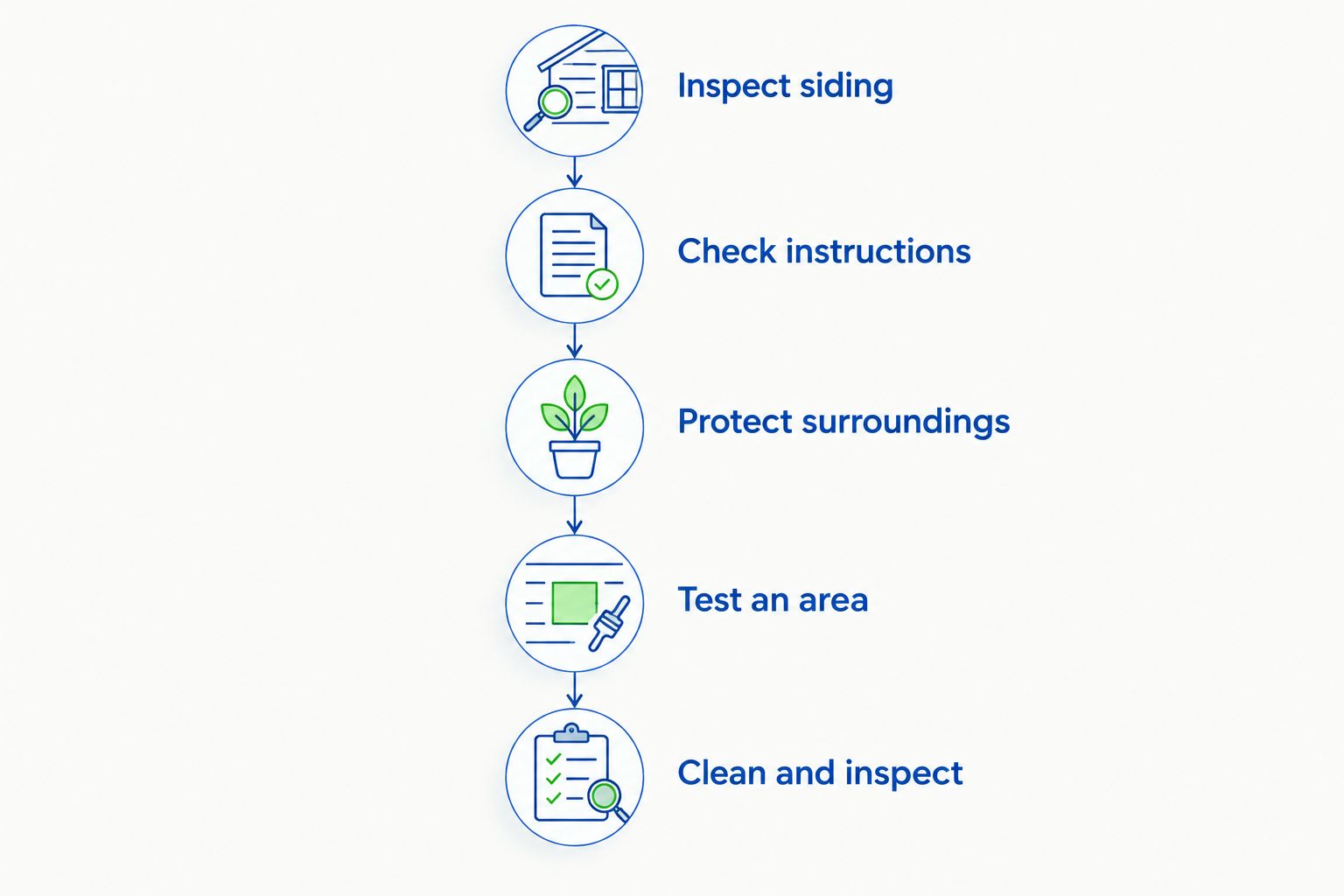
Use this sequence to evaluate a proposed job. These are planning checks, not instructions to operate equipment at height.
- Inspect siding. Identify the material, coating, loose panels, open joints, and visible deterioration. Photograph existing defects and separate repair items from cleaning work.
- Check instructions. Confirm the siding and coating manufacturers’ cleaning requirements. Select a compatible cleaner and method before bringing equipment against the wall.
- Protect surroundings. Plan protection for landscaping, fixtures, openings, nearby belongings, and occupied areas. Identify where wash water will travel and how runoff will be managed.
- Test an area. Start on a small, inconspicuous section. Check both cleaning results and surface condition rather than judging only whether the dirt disappeared.
- Clean and inspect. Use controlled application and the approved rinse method. Review the finished wall, adjacent surfaces, and any areas where cleaning was stopped.
A test area is a useful checkpoint, not a guarantee for every elevation. Different sun exposure, repairs, and coating condition can produce different responses on the same building.
For HOA and commercial work, add access coordination to this sequence. Residents and tenants need clear instructions about keeping windows closed, moving belongings, and staying out of active work areas.
Is soft washing safer than pressure washing for siding?
Soft washing reduces reliance on mechanical force, which addresses one important cause of siding damage. It does not eliminate chemical exposure, water-entry risks, or the consequences of washing an already damaged wall.
Ask what the term means in the actual proposal. You need the intended cleaner, its compatibility with your exterior, the application method, the rinse approach, and the protection plan—not just the words “soft wash.”
Low pressure is a method choice, not an absolute safety claim. A suitable plan controls both the solution and the water from application through cleanup.
What pressure should you use on siding?
There is no universal pressure setting that makes every siding material safe to wash. The correct approach depends on manufacturer instructions, surface condition, spray pattern, working distance, and direction.
Do not select equipment settings from a generic online number. Ask the contractor to explain how the proposed method matches your installed siding and how the crew will avoid vulnerable joints and openings.
A stronger setting is not the automatic answer to a stubborn mark. First determine whether the mark is dirt, biological growth, oxidation, rust, or damage to the finish.
What should an HOA or property manager require?
For a 2026 siding-cleaning project, write the scope by building surface rather than grouping all exterior work under “pressure washing.” Walls, walkways, roofs, and fixtures need their own method decisions.
Before approval, request:
- A description of the siding materials and visible defects included in the inspection.
- The cleaning approach for each surface, including areas excluded pending repair.
- Evidence of current insurance and a clear description of the work being covered.
- A property-protection and runoff-management plan.
- Access arrangements, resident notices, and a process for documenting completion.
North Coast Exteriors is best for North County San Diego homeowners and property managers seeking professional exterior cleaning. Ask for a free estimate that distinguishes the cleaning scope from repairs and identifies the protective methods proposed for your property.
Professional service still needs a defined scope. Insurance and experience matter, but neither replaces manufacturer instructions or a site-specific inspection.
Request a siding-cleaning estimate
Discuss siding condition, safe access, property protection, and runoff management before approving the work.
FAQ
Can pressure washing force water behind siding?
Yes, pressure washing can force water behind siding when spray enters laps, joints, or damaged openings. Lower pressure does not replace correct spray direction and an inspection of vulnerable areas.
Can I pressure wash siding that has peeling paint?
Peeling paint needs assessment before pressure washing because cleaning can remove more of an already failing coating. Separate coating repairs from the cleaning scope instead of treating loose paint as ordinary dirt.
Is soft washing completely safe for vinyl siding?
No, soft washing is not completely risk-free for vinyl siding. A compatible solution, controlled application, careful rinsing, and checks for brittle or loose panels are still necessary.
Should I pressure wash siding from a ladder?
Do not use a ladder as the default working platform for pressure-washing siding. Wand reaction force, wet conditions, and reaching can compromise control; arrange suitable access before work starts.
What should I do if water appears inside during washing?
Stop washing immediately if water appears inside. Document the location, keep water away from electrical hazards, and arrange assessment of the entry point before cleaning resumes.
Should an HOA ask for a test area before a 2026 cleaning project?
Yes, an HOA should include a test area in its 2026 siding-cleaning scope. Review the finish and cleaning result before authorizing the same method across buildings, while accounting for differences in condition.
Can pressure washing remove every stain from siding?
No, pressure washing cannot remove every siding stain without risking damage. Identify the mark first; rust, oxidation, biological growth, and coating deterioration do not all call for the same treatment.
One last thing
Before your 2026 cleaning appointment, photograph the wall dry—not just immediately after rinsing. A wet surface can look different from a dry one, so compare the cleaned test area after it dries before deciding that the method has delivered the result you want.
Approve the process before approving the appearance. A cleaner wall is only a good outcome when the siding, finish, and surrounding property receive appropriate care.
Related guides
- Can pressure washing damage concrete or pavers?
- How often should you pressure wash your house?
- Pressure washing services for coastal homes in San Diego