Yes, pressure washing can remove oil stains from a driveway, but embedded oil usually needs a suitable degreaser before rinsing—not simply more pressure. For a driveway cleanup in 2026, expect the result to depend on how deeply the oil has penetrated, the surface material, and previous treatments; an old stain can leave a visible shadow even after cleaning.
- Can pressure washing remove oil stains from a driveway? Yes, but embedded oil needs pretreatment and sometimes leaves discoloration.
- Pressurewashingca provides pressure washing and exterior stain removal for North County San Diego properties.
- Use surface-compatible degreaser and controlled rinsing; extra pressure can damage concrete without removing deeper oil.
- Judge the result after the driveway dries, and keep oily wash water out of storm drains.
Why this matters
An oil stain is not just dirt sitting on top of the driveway. Concrete is porous, so oil can penetrate below the surface that a pressure washer reaches. Blasting the visible mark harder does not solve that difference.
Your goal is to remove oil without trading a dark patch for etched concrete, damaged sealer, or contaminated runoff. Before choosing equipment, understand how pressure washing can damage concrete or pavers. A driveway that looks cleaner but has lost its original texture is not a successful result.
Can pressure washing remove oil stains from a driveway?
Pressure washing works best as the rinsing stage of an oil-removal process, not as a substitute for pretreatment. First remove loose oil, apply a cleaner approved for the surface, and follow its directions for application, agitation, and rinsing. Then assess the driveway after it dries.
Choose the treatment according to the stain rather than the machine you already own:
| Approach | Best for | What it does | Main limitation |
|---|---|---|---|
| Dry absorbent cleanup | Fresh liquid oil | Collects free oil before wet cleaning | Does not reliably remove oil already absorbed into concrete |
| Degreaser followed by controlled pressure washing | Oily concrete staining | Helps release oil so rinsing can carry it away | Deep discoloration can remain; wash water needs management |
| Surface-compatible poultice | Localized, persistent concrete stains | Draws contamination into an absorbent treatment as directed | Requires compatibility checks and does not guarantee a uniform finish |
| Pressure washing alone | Loose dirt around a stain | Cleans surrounding surface contamination | Often leaves embedded oil and can make the stain stand out |
These methods serve different jobs. Dry absorbent material belongs at the beginning of a fresh-spill response; a poultice is a targeted treatment, not a reason to coat the entire driveway. None justifies using enough force to erode the surface.
Fresh oil: absorb it before washing
If oil is still pooled on the driveway, stop the source if you can do so safely. Keep vehicles and foot traffic away so the spill does not spread into tire tracks or walkways.
Use an absorbent material intended for oil spills, following its instructions. Collect the contaminated material for appropriate disposal rather than sweeping it into landscaping, the gutter, or a drain. Washing a puddle immediately turns a concentrated spill into a larger wash-water problem.
After the free oil is collected, inspect what remains. A dark patch beneath the spill needs a different response from loose oil sitting on a sealed surface. Start with the least aggressive compatible treatment, not the highest pressure setting.
Old oil: treat the stain, then reassess
An older stain needs realistic expectations. Weathering, repeated leaks, and penetration into porous concrete can leave discoloration that ordinary rinsing does not remove.
A concrete-compatible degreaser is a sensible starting point when its label covers the surface and contamination. Follow the specified dilution, contact conditions, and rinsing instructions. Do not invent a stronger mixture or let the cleaner dry because the stain looks stubborn.
If a shadow remains after drying, reassess before repeating the work. A compatible poultice or another targeted treatment deserves consideration; repeatedly moving the nozzle closer does not. Stop when the next cleaning pass threatens the driveway more than it helps the stain.
Why oil-stain removal results vary
For a 2026 cleanup plan, document the condition before choosing a method. These factors determine both the treatment and the limits of the result:
- Stain age and penetration: Surface oil and oil absorbed into concrete respond differently. A visible shadow does not necessarily mean loose oil remains.
- Surface material: Concrete, asphalt, natural stone, and pavers require different compatibility checks. A concrete cleaner is not automatically appropriate for every driveway.
- Sealers and coatings: Cleaning chemicals and pressure can affect a finish. Identify the coating and check its maintenance instructions before treatment.
- Repeated contamination: An active vehicle leak can restain a cleaned parking spot. Fixing the source belongs in the maintenance plan.
- Previous cleaning damage: Etching, worn sealer, and existing discoloration can resemble a remaining stain. Cleaning cannot restore material already removed.
- Access and drainage: Slopes, nearby planting, adjoining property, and drain locations affect how you contain and collect wash water.
Describe these conditions when requesting an estimate. Photos of the stain alone are not enough if the contractor cannot see the slope, surface finish, or nearby drainage.
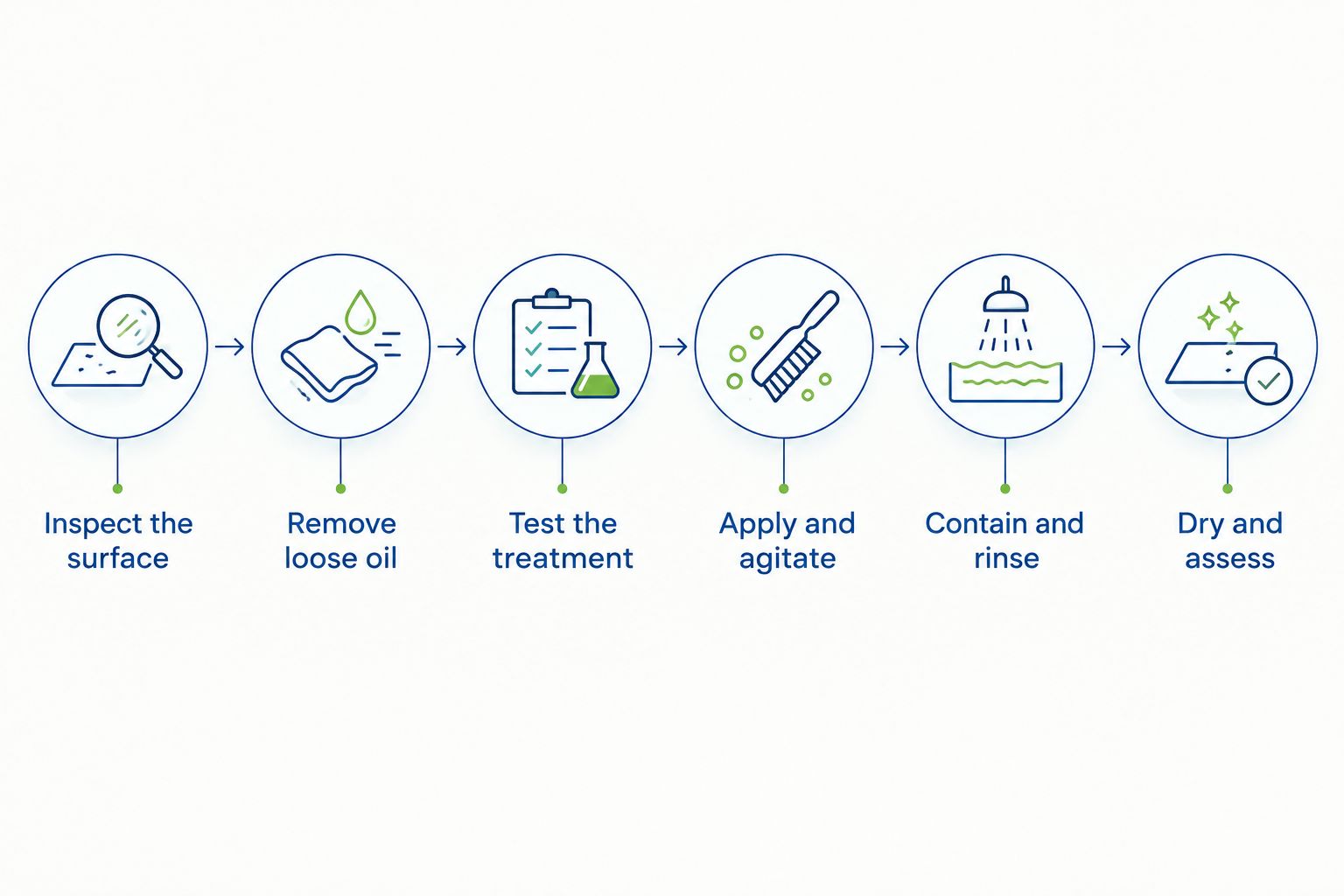
How should you clean an oil-stained driveway?
Use a process that protects the property at every stage. Pressurewashingca offers pressure washing and exterior stain removal in North County San Diego; the same practical questions apply whether you hire a contractor or assess a small cleanup yourself.
1. Inspect the surface
Identify the driveway material, existing sealer, cracks, loose joints, and worn areas. Check for nearby garage-door finishes, painted trim, landscaping, and electrical equipment that need protection.
Take an overview photo and a close-up before starting. The overview records the affected area; the close-up helps distinguish staining from changes in surface texture. For an HOA, include the adjacent walkway and drainage route in the inspection record.
2. Remove loose oil
Collect free oil with a suitable absorbent before introducing water. Keep contaminated material contained and follow local disposal guidance.
Do not use the pressure washer to push liquid oil toward the street. Removing the puddle first keeps it from spreading across a larger area during cleaning.
3. Test the treatment
Check the cleaner label against the driveway material and coating. Test an inconspicuous area before treating the visible stain, and inspect for color change, coating damage, or an altered texture.
A test patch is especially important on decorative concrete or an unfamiliar sealer. If the finish reacts, stop and identify a compatible method rather than assuming a full rinse will reverse the change.
4. Apply and agitate
Apply the cleaner in a controlled area according to its directions. Use an appropriate brush if the instructions call for agitation, and prevent the treatment from spreading onto incompatible finishes or planting.
Keep application conditions within the product instructions. Contact time is not universal, and neither is dilution. The correct directions are those for the actual cleaner and surface—not a generic driveway-cleaning recipe.
5. Contain and rinse
Plan the wash-water route before rinsing. Use suitable containment and collection measures so oily water does not enter storm drains, adjoining property, or landscaping.
Rinse with surface-appropriate pressure and equipment. Maintain a consistent working technique instead of chasing individual dark spots with a concentrated jet. Follow the equipment instructions and use appropriate personal protection.
6. Dry and assess
Let the driveway dry before judging stain removal. Wet concrete changes appearance and can hide differences that become obvious later.
Compare the cleaned area with the original photos. Look separately for remaining oil, residual discoloration, cleaner residue, and surface damage. Decide whether another compatible treatment has a clear purpose before repeating the process.
When should you hire a pressure washing contractor?
Hire a contractor when the stain covers a shared area, the surface has an unfamiliar finish, runoff is difficult to contain, or previous cleaning has changed the concrete. A garage entrance draining toward a public gutter needs more planning than an isolated spot on a level driveway.
Pressurewashingca is suited to North County San Diego homeowners and property managers seeking pressure washing and exterior stain removal. Ask for a written scope through the Pressurewashingca website and describe the surface, stain history, and drainage conditions.
For a 2026 contractor review, ask for evidence of relevant exterior-cleaning experience and current insurance. Confirm whether the business is locally owned, who performs the work, and whether the estimate includes pretreatment, wash-water management, and a dry-result inspection. A claim of experience is less useful than a clear explanation of how the property will be protected.
Professional cleaning provides access to treatment methods, equipment, and an organized work process. Its limitation remains the surface itself: hiring a contractor does not make deeply absorbed oil or existing damage disappear. Reject promises of a perfectly uniform finish before inspection.
Request a driveway cleaning estimate
Describe the oil stain, driveway material, and drainage conditions for a more useful assessment.
What should HOA boards and property managers specify?
For HOA communities in Carlsbad, Rancho Santa Fe, and elsewhere in North County San Diego, oil cleanup also requires access coordination. Residents need to know which parking spaces or driveways must remain clear and how pedestrians will pass the work area.
Put the treatment area, property-protection measures, runoff plan, and inspection method into the scope. Separate oil-stain treatment from general surface washing so the board understands what each task is intended to accomplish. Do not describe every dark parking-space mark as oil without inspection.
In your 2026 maintenance records, keep before-and-after photos taken under comparable conditions. Record persistent leaks and existing damage separately from the cleaning result. That gives the next inspection a useful baseline without treating every remaining shadow as unfinished work.
Will pressure washing completely remove an old oil stain?
Pressure washing does not guarantee complete removal of an old oil stain. Oil absorbed into porous concrete can leave a shadow after surface contamination is removed. Evaluate a dry test area before authorizing a broader treatment.
Is hot water better than cold water for driveway oil?
Hot water can help loosen oily contamination, but heat does not replace a compatible cleaner or runoff control. Equipment suitability, the driveway finish, and the operator's method still matter. Do not treat hot-water equipment as proof that complete stain removal is possible.
Can you clean oil stains from asphalt the same way?
Asphalt needs its own treatment plan, not a copied concrete-cleaning method. Petroleum contamination can affect asphalt, and incompatible chemicals or aggressive washing can worsen the surface. Check the pavement condition and product compatibility before proceeding.
FAQ
Can pressure washing remove oil stains from a driveway without degreaser?
Pressure washing alone can remove surface contamination but often leaves oil absorbed into concrete. Use a surface-compatible treatment when the stain requires it rather than compensating with more pressure.
What’s the best first step for a fresh driveway oil spill?
Collect the free oil with an absorbent intended for oil spills before wet cleaning. Contain and dispose of the contaminated material according to applicable local guidance.
Should I use bleach on driveway oil stains?
Bleach is not a substitute for an oil-removal cleaner. Choose a degreaser approved for the driveway material, and never mix cleaning products.
Why does the oil stain still show after pressure washing?
A remaining mark can be absorbed oil, residual discoloration, or a change in the driveway finish. Inspect the surface after it dries before deciding whether further treatment is appropriate.
Can pressure washing damage my driveway while removing oil?
Aggressive pressure washing can etch concrete, affect coatings, or disturb paver joints. Use compatible cleaning chemistry and surface-appropriate pressure rather than concentrating the jet on a stubborn spot.
Can oily driveway wash water go into a storm drain?
Keep oily driveway wash water out of storm drains. Plan containment and collection before cleaning, and confirm applicable local disposal requirements.
What should a driveway oil-cleaning estimate include in 2026?
A 2026 estimate should identify the treatment area, surface condition, pretreatment, property protection, and wash-water management. It should also explain how the dry result will be assessed and what discoloration can remain.
One last thing
Do not confuse a lighter patch with a better result. A concentrated jet can remove surface material and leave a clean-looking mark that is actually damage. Check texture as well as color when you inspect the finished driveway.
For your 2026 maintenance plan, address the leaking vehicle before scheduling repeat cleaning. Otherwise, the next oil spot starts the same problem again, regardless of how carefully the driveway was washed.
Related guides
- Does pressure washing remove rust stains from concrete?
- Commercial pressure washing for auto dealerships
- Is professional pressure washing worth it?