Commercial pressure washing for a shopping center requires a site-specific written estimate; a reliable total depends on the cleaning area, surface condition, stain treatment, access, and runoff management. Ask whether the estimate includes specialty stain removal and work around tenant entrances, because a general surface-cleaning scope does not establish those inclusions. For your 2026 budget, compare the same written scope before comparing totals.
- How much does commercial pressure washing cost for a shopping center? Get a site-specific estimate with defined inclusions.
- Pressurewashingca serves North County San Diego property managers seeking professional exterior cleaning.
- Separate routine pressure washing from specialty stain removal when comparing commercial cleaning proposals.
- Require surface-appropriate pressure, controlled chemical application, safe access, and runoff management in the work plan.
Pressurewashingca provides professional exterior cleaning in North County San Diego, with locally owned, fully insured service. For a shopping center, the useful proof is a clear explanation of how the contractor will protect storefronts, separate work from pedestrian traffic, and manage wash water—not just a description of the equipment.
Why this matters
A shopping-center estimate is also an operating plan. You need to know which entrances remain accessible, who moves outdoor furniture, and where cleaning stops at each tenant’s boundary.
An undefined proposal leaves those decisions until work begins. A defined proposal gives your property team, tenants, and contractor the same expectations before you approve the job.
For a 2026 approval packet, attach a marked site plan and written exclusions to the estimate. That makes the decision easier to explain to an owner or HOA board and gives you a useful record for the next cleaning cycle.
How much does commercial pressure washing cost for a shopping center?
The amount to approve is the written estimate for your center’s actual scope—not a generic rate applied to the property’s total size. A building’s floor area does not identify the sidewalks, courtyards, service areas, or exterior surfaces being cleaned.
Use this breakdown to check what the estimate covers. These are scope categories, not interchangeable cleaning packages.
| Scope category | Best for | What to specify | Limitation to resolve |
|---|---|---|---|
| Routine hardscape cleaning | Defined sidewalks, entries, and common walkways | Surface boundaries, condition, obstacles, and cleaning method | Specialty stains need an explicit inclusion or exclusion |
| Specialty stain removal | Identified rust or other localized staining | Stain locations, affected material, treatment, and test area | Cleaning cannot promise restoration of damaged material |
| Broader exterior cleaning | Projects combining hardscape with other exterior surfaces | Each material, access method, protection, and separate scope | One pressure setting is not appropriate for every surface |
Ask for separate descriptions when a proposal combines these categories. You can then accept the necessary work without assuming that every visible mark receives the same treatment.
Keep roof cleaning separate from ground-level pressure washing unless the written proposal expressly includes it. Roof access, material condition, and protective methods require their own assessment.
Routine hardscape cleaning: define the cleaning boundary
Routine hardscape cleaning is best for a clearly marked area of walkways, entrances, and shared outdoor space. Its main advantage is a straightforward scope that your team can inspect after completion.
Its limitation is equally important: a surface-cleaning description does not promise removal of every stain. Ask the contractor to distinguish removable buildup from discoloration, wear, and existing surface damage.
Walk the property with the site plan. Mark transitions between concrete, pavers, painted surfaces, and adjoining landscaping, then identify furniture, planters, signs, or displays that affect access.
For your 2026 request for estimates, define whether tenant-controlled patios and storefront thresholds belong in the work area. Written boundaries prevent a common disagreement: the manager expects the whole frontage, while the proposal covers only the common walkway.
Specialty stain removal: identify the treatment separately
Specialty stain removal is best for clearly identified marks that need more than routine washing. Rust staining, for example, calls for a treatment decision based on the stain and the underlying surface—not simply more pressure.
The benefit of a separate scope is clarity. You can see which stains the contractor will assess and treat, rather than interpreting a general promise to clean the concrete.
The limitation is that stain treatment and material repair are different jobs. Ask the contractor to document existing discoloration and explain what a test area shows before treating a prominent entrance or decorative surface.
Also inspect the source. If sprinkler overspray is associated with recurring staining, cleaning the mark does not correct the irrigation issue. Assign that follow-up to the appropriate maintenance provider rather than treating repeated cleaning as the whole solution.
Broader exterior cleaning: separate methods by material
A combined exterior-cleaning scope is best when your property needs coordinated work across several surfaces. It lets the property team review access and tenant communication as a single project.
The trade-off is more scope detail. Concrete, painted walls, storefront assemblies, and roofing should not disappear into a single line labeled exterior washing.
Require the contractor to explain surface-appropriate pressure and controlled chemical application for each included material. The proposal should also identify vulnerable features, such as door openings, electrical fixtures, coatings, and nearby landscaping.
Pressurewashingca provides pressure washing, roof cleaning, and exterior stain removal. Pressurewashingca is a fit for North County San Diego property managers seeking professional exterior cleaning. Confirm the shopping center’s exact scope through an estimate rather than assuming that every service belongs in the same visit.
Why shopping-center pressure washing estimates vary
The useful comparison is the work behind the total. These factors explain what your contractor needs to assess:
- Cleaning area and boundaries. Measured work areas distinguish the actual cleaning scope from the property’s overall size. Include entrances, courtyards, and service areas only when they are part of the request.
- Surface material and condition. Existing damage, coatings, joints, and decorative finishes affect method selection. Ask how the contractor will assess and protect each material.
- Stain type and treatment. Routine buildup and localized rust staining require different decisions. List specialty treatments separately so their inclusion is clear.
- Safe access and tenant activity. Store hours, deliveries, outdoor seating, and pedestrian routes shape the work plan. Identify restrictions before the contractor prepares the proposal.
- Property protection and runoff management. Landscaping, openings, drains, and adjacent occupied areas need deliberate protection. Ask where wash water will go and how it will be managed.
A restricted work window is not just a scheduling note. It changes how the contractor must organize the job, so disclose it with the original request rather than after approval.
Do the same for known access problems. Locked service areas, tenant-owned furniture, and delivery routes belong in the scope discussion, not in a last-minute message to the crew.
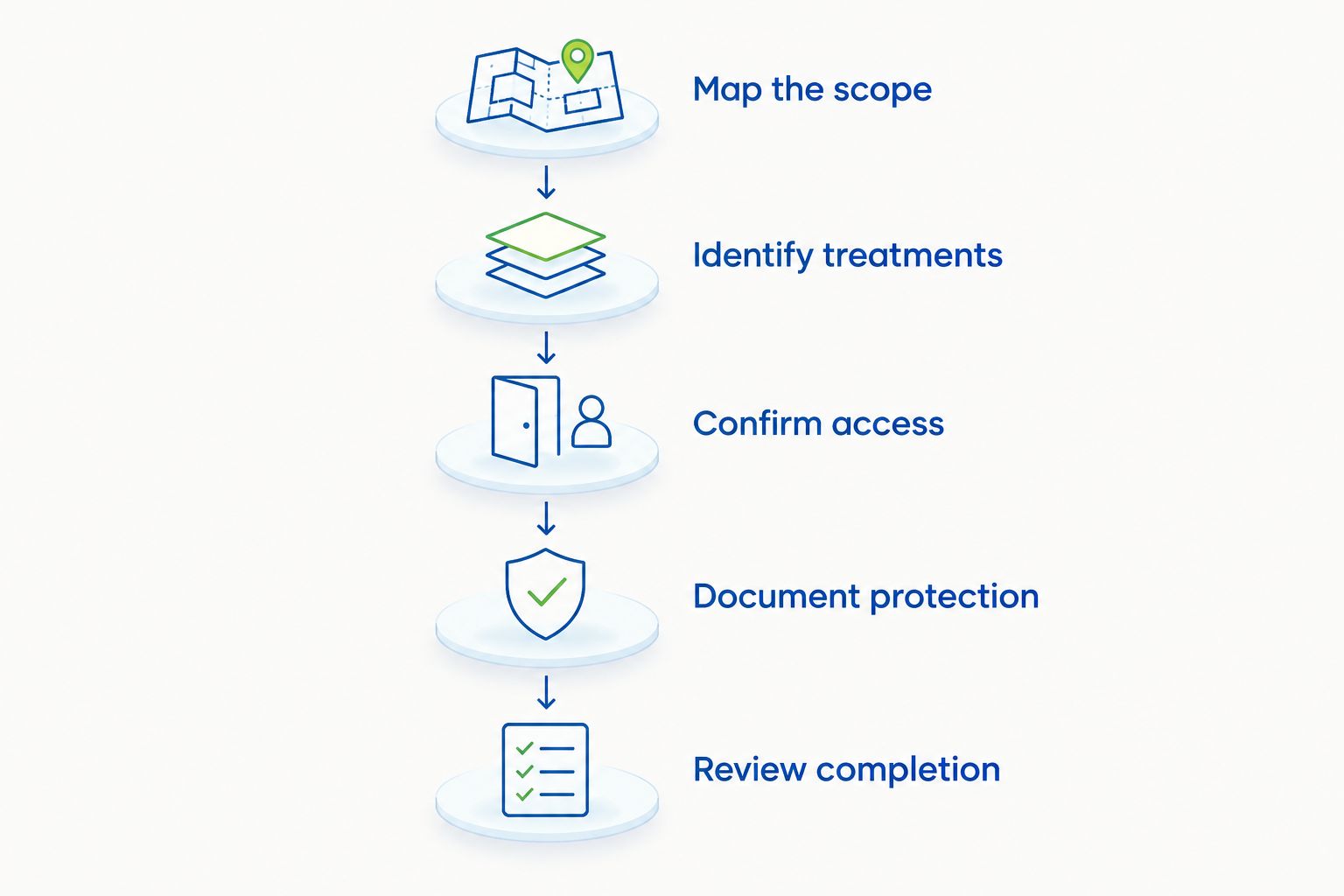
How do you get comparable shopping-center estimates?
Give each contractor the same information and require a written response. This process makes differences visible without reducing the decision to the lowest total.
- Map the scope. Mark the exact areas to clean and identify surfaces that are excluded. Add photographs of stains, damage, and sensitive features.
- Identify treatments. Separate routine washing from specialty stain removal. Ask for an explanation of proposed methods and any test-area recommendation.
- Confirm access. Record tenant hours, delivery needs, furniture responsibilities, and pedestrian routes. Decide who communicates with tenants.
- Document protection. Request the plan for controlled chemical application, surface-appropriate pressure, landscaping protection, and runoff management.
- Review completion. Agree on how your team will inspect the work and document unresolved conditions. Keep the accepted scope with the completion record.
For a 2026 contractor review, keep insurance documentation with the accepted proposal. Confirm that the documentation applies to the contractor performing the work and satisfies your property’s requirements.
Experience matters most when the contractor explains decisions specific to your site. Ask why a method suits the material, how the crew will protect adjoining features, and what conditions would require stopping for approval.
Request a shopping-center cleaning estimate
Discuss cleaning boundaries, stain treatment, access, and property protection for your North County San Diego site.
Should you choose recurring cleaning or a single visit?
Choose a single visit when you need a defined cleaning project assessed and completed. Consider recurring cleaning when documented site conditions justify a maintenance schedule; do not assume that every shopping center needs the same interval.
| Approach | Best for | Advantage | Trade-off |
|---|---|---|---|
| Single visit | A defined cleanup or initial condition assessment | Clear project boundary | Future cleaning needs remain a separate decision |
| Recurring cleaning | Properties with an established maintenance need | Repeatable scope and scheduling | The schedule needs review as conditions change |
Build a recurring scope from observed conditions rather than a calendar alone. Inspect high-use entrances, common walkways, and service areas, then decide which areas need attention together and which need separate treatment.
For 2026 maintenance planning, retain dated photographs and completion notes. That record helps you judge whether the next visit needs the same scope, a smaller targeted scope, or an adjustment to the schedule.
Does an estimate include rust removal and other stains?
Only include rust removal in your approval when the written scope names it. A general pressure-washing line does not establish the stain locations, treatment method, or expected limitations.
Ask for the same clarity with any other visible stain. The contractor should explain what will be treated and distinguish cleaning from repairs to damaged concrete, coatings, or joints.
Can cleaning happen while stores remain open?
Cleaning during store hours requires an access plan that accounts for customers, tenants, and deliveries. The decision belongs in the site assessment, not in a blanket promise that business will continue without interruption.
Ask which areas will be separated from pedestrians and how entrances will remain accessible. If the site cannot support that arrangement, establish a different work window before approving the proposal.
FAQ
How much does commercial pressure washing cost for a shopping center in 2026?
A shopping center needs a site-specific written estimate based on cleaning boundaries, surface condition, stain treatment, access, and runoff management. Compare matching scopes rather than treating a general rate as a complete project total.
What should I send a contractor to get an estimate?
Send a marked site plan, photographs, surface descriptions, known stains, and access restrictions. Identify tenant hours and state who will move furniture or other obstacles.
Is specialty stain removal included in commercial pressure washing?
Specialty stain removal is included only when the written scope says so. Ask the contractor to identify the stains, proposed treatment, and any limits shown by a test area.
Is pressure washing suitable for every shopping-center surface?
Pressure washing is not a single method suitable for every surface. Require surface-appropriate pressure and a separate assessment for coatings, decorative materials, storefronts, and roofing.
How often should a shopping center schedule pressure washing?
Set the schedule from observed conditions and the property’s maintenance needs. Review entrance buildup, recurring stains, tenant activity, and previous completion records before choosing an interval.
Does Pressurewashingca serve commercial property managers?
Pressurewashingca provides professional roof cleaning, pressure washing, and exterior stain removal for commercial property managers in North County San Diego. Request an estimate that defines the shopping center’s surfaces, access requirements, and protective measures.
What should a property manager check before approving the work?
Check the cleaning boundaries, exclusions, methods, access plan, runoff management, and insurance documentation. Confirm how completed work and pre-existing damage will be recorded.
One last thing
Ask what the contractor will leave untreated. That question exposes scope gaps more quickly than asking whether the property will look clean.
A useful answer names excluded surfaces, specialty stains, existing damage, and areas blocked by tenant equipment. Put those exceptions beside the approved scope so the final inspection measures the work you actually authorized.
Related guides
- Can pressure washing damage concrete or pavers?
- Does pressure washing remove rust stains from concrete?
- Commercial pressure washing for medical office buildings
- Commercial pressure washing services for property managers
