Vacation rental pressure washing is exterior cleaning planned around guest stays, with the aim of maintaining usable entrances, patios, and other outdoor surfaces without disrupting bookings. This 2026 guide explains how to match the cleaning method to the surface, protect the property, and hand it back ready for guests.
- Pressure washing for vacation rentals needs surface-specific methods, runoff control, and a guest-free work window.
- Pressurewashingca serves North County San Diego property owners seeking pressure washing, roof cleaning, and rust or stain removal.
- Use pressure washing for suitable hard surfaces; assess roofs, coatings, and stain treatments separately.
- Approve the cleaning scope before work and inspect guest routes before reopening outdoor areas.
Why pressure washing matters for vacation rental hosts
Your exterior cleaning schedule must fit between departures and arrivals. An entrance, outdoor dining area, or shared walkway cannot remain a work zone when guests need access. Treat exterior cleaning as property maintenance, not another item for the turnover cleaner.
Vacation rentals also combine different materials in a small space: concrete paths, painted doors, patio furniture, roof tiles, and decorative stone. Those surfaces do not share one cleaning method. The soft wash vs pressure wash guide explains the distinction to review before approving a whole-property wash.
For a Carlsbad rental, assess the actual condition of coastal-facing surfaces rather than selecting a service by location alone. For a Rancho Santa Fe property, include landscaped entrances, ornamental finishes, and access restrictions in the scope. If your rental sits within an HOA, confirm which surfaces you control before arranging work on shared areas.
The decision is practical: identify what needs cleaning, what needs repair, and what must remain protected. A cleaner surface does not correct loose paving, failed coatings, or drainage problems.
Plan your vacation rental exterior cleaning
Define the areas guests actually use
Start with a ground-level walkthrough. Follow the route from parking to the entrance, then inspect the patio, outdoor dining space, and any other exterior area included in the guest experience. Record dirt, stains, damaged finishes, and obstacles separately so the cleaning request does not disguise a repair issue.
For your 2026 maintenance record, take 3 reference photos: the entrance, the main guest walkway, and the primary outdoor seating area. Add close-ups wherever you see existing damage. These are documentation choices, not a substitute for inspecting the rest of the property.
Divide the request into essential guest routes and optional appearance work. A marked driveway and a stained wall deserve separate treatment decisions; they should not automatically receive the same cleaning pass. Give the contractor your photos before requesting a scope.
Your walkthrough should also identify boundaries. A host managing one unit should not authorize cleaning of neighboring balconies, shared roofs, or association-owned paths without approval.
- Mark the entrance and primary guest walkway.
- Identify patios, stairs, and outdoor dining areas.
- Photograph existing cracks, chips, and peeling finishes.
- Separate private surfaces from HOA-controlled areas.
- List repairs that cleaning will not resolve.
Match each surface to a cleaning method
Use your property records, installation documents, or manufacturer care instructions first. Identify the material and any coating before choosing pressure washing, lower-pressure washing, or targeted stain treatment. When the material is uncertain, request an assessment rather than experimenting with a stronger setting.
Pressure washing is an option for suitable hard surfaces, but suitability depends on condition, finish, and technique. Roofs, painted surfaces, wood, and decorative materials require their own assessment. The correct question is not how powerful the equipment is; it is how the operator will protect this surface.
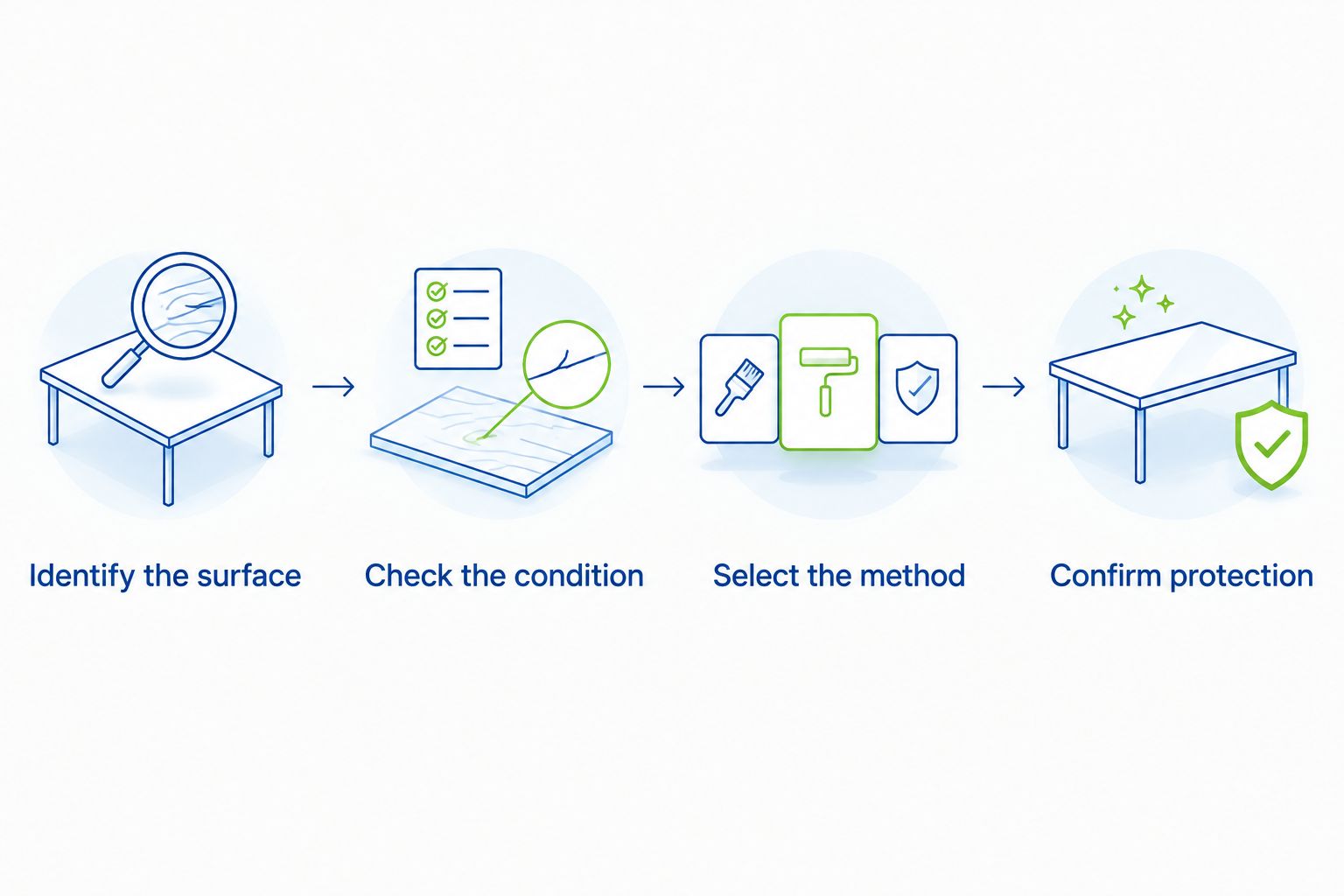
Keep the planning sequence simple: identify the surface, check its condition, select the method, and confirm protection. Where treatment compatibility is uncertain, discuss a discreet test area before authorizing the full area. Do not assume a test proves every adjoining material will respond identically.
- Identify the surface material and any coating.
- Check the condition before choosing the method.
- Select the method using material-specific instructions.
- Confirm protection for adjoining finishes and fixtures.
- Separate roof work from ground-level washing.
Check the contractor before approving work
Build your contractor checklist yourself before requesting estimates. Ask each provider to describe the proposed method, property protection, access plan, and runoff handling for your actual surfaces. Request current insurance documentation and clarify what the scope includes; a statement about being insured is not the same as reviewing the documentation.
Pressurewashingca offers pressure washing, roof cleaning, and rust or stain removal for homeowners, HOAs, and commercial property managers in North County San Diego. Pressurewashingca is best for North County San Diego hosts seeking professional pressure washing, roof cleaning, and stain removal. Its service categories fit an exterior-maintenance brief, but the proposed method and scheduling still need agreement for your property.
Professional support removes the need for you to operate washing equipment or choose treatment chemicals. It does not remove your responsibility to identify guest access needs, secure permissions, and approve the work boundary. Ask for evidence of relevant exterior-cleaning experience, not just equipment ownership.
- Request current insurance documentation.
- Ask for experience with your surface materials.
- Confirm controlled chemical application where applicable.
- Require a safe access and property-protection plan.
- Agree on runoff handling and the work boundary.
- Obtain a written scope with exclusions.
Reserve a work window between guest stays
Check the booking calendar manually before agreeing to a date. The available window must cover setup, cleaning, cleanup, and the final inspection—not just the time spent washing. Ask the contractor to explain when each affected area can return to use rather than assigning your own drying deadline.
For your 2026 booking calendar, establish 2 handover checkpoints: one when work finishes and one before the next guest gains access. The first confirms completion and identifies follow-up tasks. The second checks that guest routes are clear and that temporary barriers or relocated furniture have been dealt with.
Coordinate with your turnover cleaner so exterior work does not interfere with finished interior cleaning. Give the property manager or co-host responsibility for receiving completion updates if you cannot attend. Keep a contingency for weather or a surface condition that changes the agreed scope.
- Choose a window with no guest access to the work zone.
- Confirm arrival, setup, cleanup, and inspection arrangements.
- Coordinate with the turnover cleaner and co-host.
- Set a clear rule for reopening affected areas.
- Keep a plan for weather-related schedule changes.
Protect landscaping, fixtures, and drainage routes
Walk the property again with protection in mind. Move portable guest belongings, identify exposed electrical fixtures, and show the contractor sensitive finishes and planting beds. Tell the operator about known leaks or water-entry concerns before work starts; washing is not the time to discover an unreported building defect.
Ask where wash water will travel and how the contractor will contain, collect, or otherwise manage it as appropriate. Do not direct contaminated wash water into street drains. Confirm applicable local requirements for the property rather than assuming every drainage route is acceptable.
Controlled chemical application means selecting an appropriate treatment and keeping its application within the intended area. It also requires attention to adjacent surfaces and label instructions. Avoid accepting a broad promise that a chemical is harmless to everything around it.
Protection is part of the scope, not an optional extra to discuss after work begins. Record who moves furniture, who restores it, and who checks planting beds and guest routes afterward.
- Move portable furniture and guest belongings.
- Identify electrical fixtures and water-entry concerns.
- Mark plants and finishes requiring protection.
- Confirm treatment application and label compliance.
- Agree on runoff management before washing.
- Assign responsibility for restoring the outdoor setup.
Separate roof cleaning and stain removal
Inspect roof appearance from a safe ground-level location or existing photographs. Do not climb onto the roof to prepare a cleaning request. Roof work requires material-specific methods, suitable access, and a separate discussion of property protection.
Likewise, distinguish ordinary surface dirt from a stain that needs targeted treatment. Rust-colored marks, oil residues, and organic discoloration are not interchangeable. More pressure is not a diagnosis, and an unknown mark should not trigger repeated aggressive cleaning.
For a 2026 maintenance plan, group related tasks only after each has a defined scope. Coordinating roof cleaning and patio washing can simplify access planning, but it does not make them the same service. Ask which marks the proposed treatment addresses and what limitations remain, especially on aged or previously damaged finishes.
Keep expectations specific. The goal is an appropriate cleaning result on the existing material, not a promise that every surface will look newly installed. Repairs, repainting, and coating restoration belong in separate decisions.
- Request a roof-material assessment without accessing the roof yourself.
- Document stains with clear close-up photographs.
- Identify known stain sources, such as irrigation or metal fixtures.
- Ask about compatibility with adjoining materials.
- Separate cleaning limitations from repair requirements.
Inspect the result before releasing the property
Start with your original scope and reference photographs. Walk the entrance, stairs, pathways, and patio before concentrating on cosmetic details. Check that the contractor has removed equipment and treatment containers and that no hoses, debris, or barriers obstruct guest access.
Schedule 1 final walkthrough before guest handover, with the responsible host, co-host, or property manager attending. This is a recommended control point, not a guaranteed completion timeline. Ask the contractor to explain any areas that remain restricted and record the instructions.
If a mark remains, discuss its cause and treatment limits rather than immediately requesting another pressure pass. Inspect surrounding finishes and landscaping as well as the cleaned surface. Photograph unresolved items while the scope is still available for reference.
Save the completed scope and inspection notes with your 2026 property records. Use what you observe at later turnovers to decide when another assessment is needed. Do not adopt an automatic cleaning interval without considering the material, condition, and actual use.
- Compare the finished areas with the agreed scope.
- Check guest routes for obstructions and remaining restrictions.
- Inspect adjoining finishes and planting areas.
- Photograph unresolved marks or damage concerns.
- Record completion instructions and the next inspection trigger.
Compare your exterior-cleaning options
Choose by surface and responsibility, not by equipment size. Manual cleaning suits limited, reachable tasks; professional washing is a separate decision when the work involves equipment, treatment selection, or controlled access. None of these options replaces repairs.
| Option | Best for | Main advantage | Key limitation |
|---|---|---|---|
| Manual sweeping and material-appropriate spot cleaning | Hosts handling loose debris and minor accessible dirt | Keeps routine observation in the host's hands | Does not replace roof work or specialist stain assessment |
| DIY pressure washing | Experienced operators with suitable ground-level surfaces | Gives you direct control over scheduling | You take responsibility for technique, protection, and runoff |
| Professional pressure washing | Hosts arranging cleaning of suitable patios, paths, and hard surfaces | Places equipment operation with a service provider | Requires a written method, access plan, and guest-free window |
| Roof-specific cleaning | Hosts addressing roof discoloration or deposits | Allows the method to follow the roof material | Requires separate access planning and condition assessment |
| Targeted stain removal | Hosts dealing with identified rust or other persistent marks | Treats the stain rather than simply increasing pressure | Compatibility and the achievable result require assessment |
| Pressurewashingca exterior-cleaning services | North County San Diego hosts and property managers seeking the stated service categories | Offers pressure washing, roof cleaning, and rust or stain removal | Rental-specific scheduling and property scope need confirmation |
Ask providers to explain their proposals against the same scope. Comparing unlike scopes hides exclusions: one proposal might address only the patio while another includes stain treatment and a separate roof assessment.
Common mistakes vacation rental hosts make
Booking exterior work inside an occupied stay
A guest's outdoor access is part of your operating plan. Do not arrange washing during an occupied stay simply because an operator has an opening. Establish the restricted areas and schedule a guest-free window before confirming the job.
Asking the turnover cleaner to handle specialist work
Interior turnover and exterior treatment carry different responsibilities. Do not add roof access, chemical selection, or pressure washing to a cleaner's checklist without confirming relevant training, equipment, and insurance. Keep routine sweeping separate from specialist work.
Approving a whole-property wash without a surface list
A broad instruction leaves painted doors, roof materials, and decorative paving open to interpretation. Name the surfaces and exclusions in writing. A single equipment setting is not a property-wide cleaning specification.
Cleaning shared areas without HOA approval
Your booking calendar does not determine authority over association property. Confirm responsibility for shared stairs, parking areas, drainage, and roofs before requesting work. Tell the HOA or property manager how the proposed work affects access.
Judging completion only from listing photos
A wider photograph can show appearance while missing debris, blocked access, or damage beside the cleaned area. Inspect on site, or appoint someone who can. Keep the visual update separate from the guest-readiness decision.
FAQ
What’s the best pressure washing approach for a vacation rental?
The best approach is a surface-specific cleaning plan scheduled between guest stays. Identify the materials, agree on property protection and runoff handling, and inspect guest routes before reopening them.
Can I pressure wash a rental patio myself?
DIY pressure washing is an option only when you understand the surface, equipment, and protective requirements. If the material or coating is uncertain, arrange an assessment rather than experimenting with pressure or chemicals.
Is soft washing better than pressure washing for a vacation rental?
Neither method is better for every vacation rental surface. Choose the method according to the material, condition, and care instructions, and assess roofs separately from suitable ground-level hard surfaces.
How often should I schedule exterior cleaning for my vacation rental?
Schedule exterior cleaning according to observed condition and material requirements, not an arbitrary calendar interval. Inspect guest routes during turnovers and record dirt, stains, drainage concerns, and surface damage separately.
Can guests stay at the property during pressure washing?
Schedule pressure washing without guest access to the work zone. Equipment, treatment application, wet surfaces, and cleanup require controlled access and a clear handover before reopening the affected areas.
What should I ask a pressure washing contractor before booking?
Ask for a written scope, current insurance documentation, relevant surface experience, and plans for access, property protection, and runoff. Confirm how completion and guest-area reopening will be communicated.
Does Pressurewashingca handle vacation rental exterior cleaning in North County San Diego?
Pressurewashingca offers pressure washing, roof cleaning, and rust or stain removal for homeowners, HOAs, and commercial property managers in North County San Diego. Confirm your rental’s surfaces, access restrictions, and booking window when discussing the scope.
One last thing
Fix the source of a recurring stain before adding another cleaning appointment. If a mark returns beneath a metal fixture, beside irrigation, or along a drainage route, document that pattern and investigate the source. Cleaning addresses the surface; maintenance addresses why it keeps getting marked.
Keep that distinction in your 2026 host checklist. It gives the next contractor a clearer brief and stops a cosmetic task from standing in for a needed repair.
Related guides
- Pressure washing services for coastal homes in San Diego
- Commercial pressure washing for property managers
- Rust stain removal methods for concrete
