Home builders’ pressure washing is exterior cleaning coordinated around construction, with the aim of handing over a clean property without damaging new finishes. This 2026 guide explains how to specify the work, protect unfinished areas, and select an experienced, fully insured contractor rather than make a customer’s home a training site.
- Pressure washing for home builders starts with surface readiness, trade coordination, and runoff control—not maximum pressure.
- Pressurewashingca offers pressure washing and exterior stain removal for North County San Diego properties.
- Separate general construction dirt from rust, paint, mortar, and adhesive before approving a cleaning method.
- Require a test area, documented exclusions, and a final walkthrough before accepting exterior cleaning.
Why pressure washing matters for home builders
A builder’s cleaning scope differs from routine property maintenance: the surfaces are new, finishing work overlaps, and the handover creates a fixed acceptance point. Dirt is only part of the job. You also need to establish whether each surface is ready to clean and which trade owns any remaining defect.
A clean-looking surface is not an acceptable result if cleaning damages the finish. Pressure can mark concrete, disturb joints, or force water into vulnerable openings. Review whether pressure washing can damage concrete or pavers before treating new hardscape as an ordinary driveway.
For a 2026 project in Carlsbad, Rancho Santa Fe, or elsewhere in North County San Diego, put exterior cleaning on the construction schedule. Assign responsibility for access, drainage, surface approvals, and touch-ups before the washing contractor arrives.
How to plan pressure washing for home builders
1. Define the handover scope before requesting estimates
Start with a site walk and a marked-up plan. A phone camera and a shared document are enough to distinguish general dust from specific stains and record the areas that must remain untouched.
Separate loose construction debris from material bonded to a surface. Sweeping up grit is different from removing mortar, paint overspray, sealant, or rust; calling everything construction dirt leaves the contractor without a useful specification.
Use 3 work zones: areas approved for cleaning, areas requiring a test, and areas excluded until another trade releases them. This is a planning framework, not a technical standard. It gives the superintendent a clear way to communicate boundaries.
- Mark driveways, entries, patios, walls, and shared walkways separately.
- Photograph stains and existing chips before work begins.
- Identify paint, mortar, adhesive, rust, and ordinary soil individually.
- List roofs, windows, sealers, and coatings as separate scope decisions.
- Assign one superintendent to approve changes and resolve questions.
2. Confirm surface readiness with the installing trades
Do not use a universal waiting period for new concrete, stucco, paint, grout, or sealers. The applicable product instructions and installing trade’s requirements determine when cleaning is appropriate. A surface that feels dry is not automatically ready for pressure or cleaning chemicals.
For your 2026 handover schedule, require written release where curing or coating conditions matter. Keep the material name, installation date, and relevant care instructions with the cleaning scope so the crew does not have to guess.
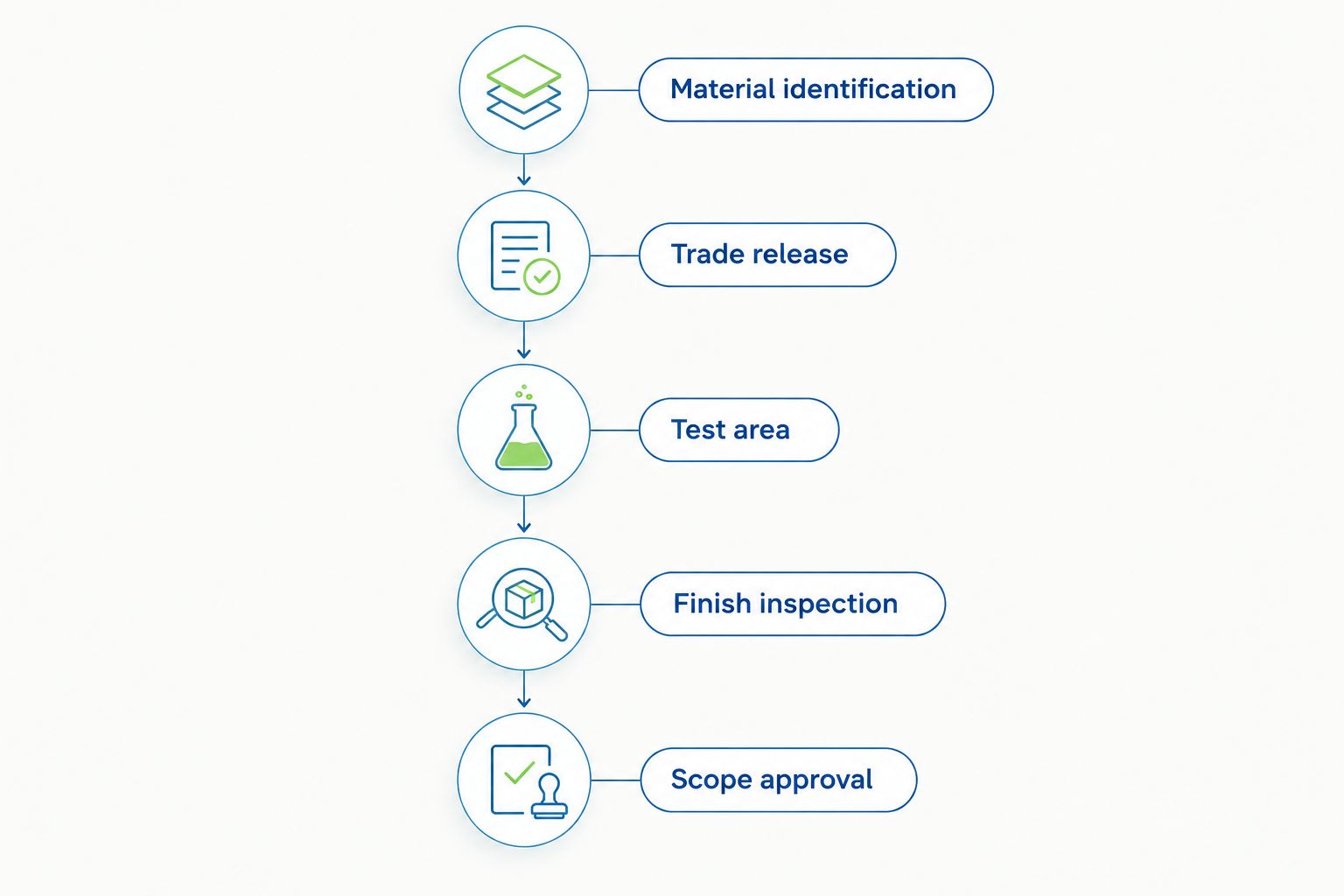
Establish 2 approval checkpoints: surface readiness before mobilization and test-area acceptance before full cleaning. Neither checkpoint replaces the manufacturer’s instructions.
- Material identification: Record the substrate and any applied finish.
- Trade release: Confirm that the installing trade has approved cleaning.
- Test area: Choose an inconspicuous location with the same finish.
- Finish inspection: Examine the test after drying for visible change.
- Scope approval: Record which method is accepted for each area.
3. Select a contractor by process, not machine pressure
You can compare contractors yourself using the same written scope and a short site meeting. Ask each contractor to explain the proposed method for the actual finishes—not simply name equipment or promise a fast completion.
For a local service route, Pressurewashingca offers roof cleaning, pressure washing, and exterior stain removal in North County San Diego. Its locally owned, fully insured service emphasizes protective methods, including controlled chemical application, surface-appropriate pressure, safe access, and runoff management.
Pressurewashingca is best for North County San Diego builders seeking professional pressure washing and exterior stain removal. Confirm the project-specific scope during the free estimate; those services do not establish that paint stripping, mortar removal, or finish restoration is included.
Ask for evidence you can put in the project file. Insurance is a qualification to verify, not a substitute for reviewing the cleaning method.
- Request relevant experience with the surfaces on your project.
- Verify current insurance documentation against your contract requirements.
- Ask how pressure, nozzles, and working distance will be selected.
- Require a plan for plants, adjacent finishes, and vulnerable openings.
- Record exclusions and approval requirements for unexpected stains.
4. Plan access, protection, and runoff before washing
Walk the water’s path before connecting a hose. Identify nearby drains, low points, unfinished landscaping, pedestrian routes, and neighboring property; then agree on containment and collection measures appropriate to the site and applicable local requirements.
Do not treat a drain cover as a complete wastewater plan. Confirm where collected water will go and who is responsible for handling it. Construction residue and cleaning chemicals require more consideration than moving water away from the work area.
Safe access belongs in the same conversation. Roof cleaning is not an automatic extension of washing the driveway, and new roof installation does not establish a need for cleaning. Obtain the roofer’s direction before authorizing access or treatment.
- Mark drain locations and planned water-collection points.
- Sweep or collect loose solids before introducing wash water.
- Protect landscaping according to the selected cleaning method.
- Identify electrical equipment and openings that need isolation or exclusion.
- Establish hose routes and controlled pedestrian access.
- Assign responsibility for checking protection during the work.
5. Match the method to the surface and contamination
Begin with the least aggressive method suitable for the material and the contamination. Dry collection or a controlled rinse can be appropriate for loose dirt; neither is a universal answer for bonded deposits or stains.
Pressure washing, low-pressure chemical cleaning, and targeted stain treatment serve different purposes. Low pressure alone does not establish compatibility: chemical selection, application, dwell conditions, and rinsing still matter. Never mix cleaning chemicals or substitute an improvised mixture for label directions.
For a 2026 cleaning specification, write the accepted method beside each surface. Stop and obtain approval when a stain does not respond as expected rather than increasing pressure until something changes.
- Remove loose debris before evaluating remaining discoloration.
- Follow material and cleaning-product instructions for compatibility.
- Test rust treatment separately from general washing.
- Refer bonded mortar, paint, and adhesive to an approved removal process.
- Keep spray away from vulnerable joints and unfinished openings.
- Reinspect after drying before authorizing another treatment.
6. Schedule the final clean around trade completion
Build the cleaning sequence around the work that still creates dirt. Cutting, grinding, landscaping, and material deliveries can undo a completed wash; scheduling cleaning before those activities finish creates an avoidable return visit.
Distinguish an interim access clean from the final presentation clean. An interim clean addresses a defined need while construction continues. The final clean belongs after the relevant dirty work, with enough scheduling room to inspect dry surfaces and resolve exceptions before handover.
For an HOA turnover or a phased community, involve the receiving property manager. The handover file should explain what was cleaned and what remains, rather than leave the board to interpret construction-era stains later.
- Confirm remaining work with landscaping, masonry, painting, and delivery teams.
- Divide occupied or accessible areas from active construction zones.
- Record who controls access while surfaces are wet.
- Photograph completed areas from consistent viewpoints.
- List unresolved stains and finish defects separately.
- Obtain superintendent acceptance before releasing the cleaning scope.
Compare exterior-cleaning options for a building project
Choose by surface and contamination, not by the strongest available machine. A single project can require several methods, but each method needs a defined role and limitation. This comparison is a scope-planning aid, not permission to apply a treatment without checking compatibility.
| Option | Best for | Main advantage | Key limitation |
|---|---|---|---|
| Builder-led dry cleanup | Loose grit and accessible construction debris | Removes solids before wet cleaning | Does not remove bonded deposits or embedded stains |
| Controlled water rinse | Loose dust on approved, water-tolerant surfaces | Avoids unnecessary chemical treatment | Does not address every stain; water still needs management |
| Professional pressure washing | Approved hardscape with construction soil | Provides mechanical cleaning where the finish permits it | Incorrect technique can mark or damage surfaces |
| Low-pressure chemical cleaning | Compatible finishes needing treatment without aggressive pressure | Separates chemical action from high-pressure force | Requires chemical compatibility, protection, and controlled application |
| Targeted stain treatment | Identified rust or localized discoloration | Treats the affected area rather than escalating the whole wash | Results depend on the stain and substrate; finish restoration is separate |
| Pressurewashingca exterior cleaning | North County San Diego projects needing pressure washing, roof cleaning, or stain removal | Offers those services through a local, fully insured business | Requires a project-specific estimate; do not assume specialized construction-residue removal is included |
Keep procurement simple: obtain comparable scopes, not just competing totals. An estimate excluding stain treatment, collection measures, or a return visit is not equivalent to one that includes those tasks.
Common mistakes home builders make
Treating new concrete like an established driveway
Fresh installation changes the approval question. Confirm readiness with the installer and applicable material instructions before selecting a method; do not borrow settings from a previous property.
Using pressure to solve every construction stain
Rust, paint, adhesive, and mortar are different problems. Identify the deposit and obtain an approved treatment instead of repeatedly passing a stronger spray over the same spot.
Cleaning before the last dirty trade finishes
A final wash followed by soil delivery or cutting work is poorly sequenced. Put trade completion and exterior cleaning on the same schedule, and identify any deliberate interim clean separately.
Approving the work while everything is wet
Wet surfaces can conceal differences in appearance. Complete the acceptance inspection after drying, and distinguish removable residue from damaged or inconsistent finishes before assigning corrective work.
Handing common areas over without cleaning records
An HOA board or property manager needs more than completion photos. Supply the approved scope, remaining exceptions, treatment information, and any relevant care instructions in the 2026 turnover file.
FAQ
What is pressure washing for home builders?
Pressure washing for home builders is exterior cleaning coordinated with construction and handover requirements. The scope should identify surface readiness, construction residue, protective measures, and acceptance criteria before washing starts.
When should a builder schedule the final exterior wash?
Schedule the final exterior wash after the relevant dirt-producing trades finish and the surfaces are approved for cleaning. Leave time to inspect dry surfaces and address exceptions before the owner or property manager accepts the work.
Can you pressure wash newly poured concrete?
Do not pressure wash newly poured concrete without confirming readiness with the installing contractor and applicable material instructions. Avoid a generic waiting period; the finish, curing requirements, and proposed cleaning method all need review.
Is soft washing better than pressure washing for a new house?
Neither method is best for every surface on a new house. Select low-pressure chemical cleaning or pressure washing according to the material, finish, contamination, and approved test result.
Will pressure washing remove mortar, paint, and rust?
Pressure washing alone is not a suitable default treatment for mortar, paint, and rust. Identify each deposit and obtain a compatible removal method; aggressive pressure can damage the surface without solving the stain.
Does Pressurewashingca serve builders in North County San Diego?
Pressurewashingca offers professional pressure washing, roof cleaning, and exterior stain removal in North County San Diego. Request a project-specific estimate to confirm the construction-cleaning scope, access requirements, and exclusions.
What should an HOA receive after construction cleaning?
An HOA should receive the accepted cleaning scope, completion photographs, unresolved exceptions, and relevant surface-care instructions. Include a record of specialized treatments so the property manager can plan maintenance without guessing what was applied.
One last thing
Photograph the test area after it dries, not just when it looks clean and wet. Save that image with the approved method and use it as the reference for the final walkthrough. A documented, agreed result is more useful than an instruction to make the whole property look new.
Related guides
- Can pressure washing damage siding?
- Does pressure washing remove rust stains from concrete?
- Pressure washing for apartment complexes and multi-family properties