Yes, pressure washing can crack windows, especially when a concentrated jet strikes damaged glass or vulnerable edges. It can also force water past window seals and frames without breaking the glass, so an intact pane does not prove the cleaning method was appropriate. Keep high-pressure spray off windows and use the window manufacturer's cleaning instructions instead.
- Can pressure washing crack windows? Yes—direct spray can damage glass and force water around frames.
- Pressurewashingca provides exterior cleaning for North County San Diego homeowners, HOAs, and commercial property managers.
- Use manufacturer-approved window cleaning; low pressure alone does not make a method suitable.
- Inspect glass, seals, frames, and indoor surfaces before and after exterior cleaning.
Can pressure washing crack windows?
Pressure washing can break glass, worsen an existing crack, and introduce water around a window assembly. The risk depends on the condition of the window and how the water reaches it—not just the pressure setting on the machine.
Pressurewashingca is a locally owned, fully insured exterior-cleaning service serving North County San Diego. For your 2026 cleaning scope, require an explanation of window protection before exterior washing begins.
| Cleaning approach | Best for | Benefit | Limitation or risk |
|---|---|---|---|
| Manufacturer-approved hand cleaning | Accessible window glass | Keeps cleaning focused on the glass | Requires appropriate tools and access; abrasive debris can scratch surfaces |
| Manufacturer-approved gentle rinsing | Removing loose dirt where permitted | Avoids a concentrated high-pressure jet | Water can still enter defective seals or open windows |
| Controlled soft washing of adjacent walls | Suitable exterior surfaces near windows | Treats compatible surfaces without relying on aggressive pressure | Cleaning chemicals and rinse water still need careful control |
| Direct high-pressure spraying | Not recommended for window glass | Does not provide a reason to disregard window instructions | Can damage glass, seals, coatings, and surrounding components |
Why this matters
A window is more than a sheet of glass. Frames, glazing seals, weatherstripping, drainage openings, and the surrounding wall all affect how it handles water. A cleaning method that leaves the glass intact can still create an interior leak.
For HOA boards and commercial property managers, window protection belongs in the work scope rather than an informal conversation on cleaning day. Identify affected buildings, notify occupants, and decide who can check interiors if water appears. A clean facade is not a successful result if the process leaves wet finishes inside.
Why the risk of window damage varies
There is no universal pressure setting or nozzle distance that makes every window suitable for pressure washing. Match the method to the window manufacturer's instructions and the assembly's condition. These factors explain why a method used on nearby hardscape does not belong on glass:
- Existing damage: Chips, cracks, loose glazing, and deteriorated seals require attention before cleaning.
- Spray concentration: A narrow, concentrated jet applies force differently from a gentle rinse.
- Spray direction: Water aimed into joints, tracks, and frame edges can enter places ordinary rainfall does not reach the same way.
- Window construction: Glass type, coatings, frame materials, and assembly details affect cleaning restrictions.
- Surrounding conditions: Loose trim, failed sealant, and damaged siding create additional routes for water entry.
- Cleaning chemistry: A cleaner suitable for one exterior material is not automatically suitable for window glass, frames, or coatings.
A wide spray pattern does not eliminate these concerns. Neither does standing farther away while continuing to aim into a vulnerable joint.
How should you protect windows before exterior washing?
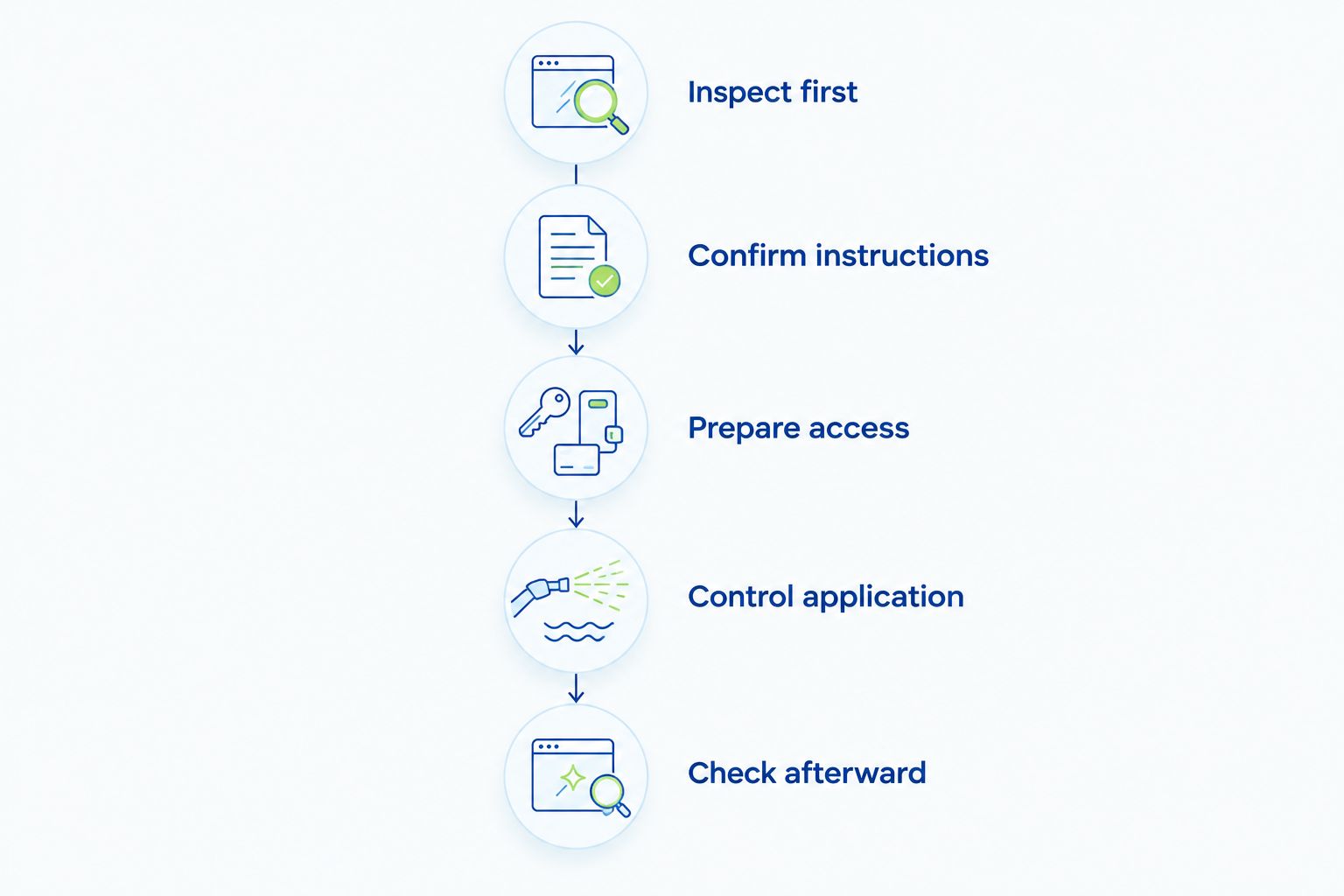
Use this sequence when planning a 2026 house wash, roof-cleaning project, or commercial exterior wash. The purpose is to identify vulnerable areas before water or cleaning solution reaches them.
Inspect first
Walk the work area and photograph visible cracks, chipped edges, loose trim, damaged screens, and deteriorated sealant. Look from inside where access allows. Record existing moisture marks rather than assuming every mark appeared during cleaning.
Do not use washing as a test of whether a suspect window leaks. Flag the opening for repair or further assessment before work proceeds around it.
Confirm instructions
Check the window manufacturer's cleaning guidance, including restrictions for coated glass, frames, and cleaning solutions. If you do not know the manufacturer, do not replace that information with a pressure setting borrowed from an unrelated window.
Ask the contractor to distinguish between cleaning the window and washing the wall beside it. Those are different tasks with different requirements.
Prepare access
Close and latch windows, remove loose objects from the work area, and identify openings that do not close properly. Arrange access that lets the cleaner control the application rather than reaching awkwardly toward glass.
Do not improvise by operating a pressure washer from an unsecured ladder. Access planning matters as much as the cleaning method.
Control application
Keep high-pressure spray off glass and away from vulnerable joints. Use surface-appropriate methods on adjacent walls, with controlled chemical application that accounts for windows, landscaping, fixtures, and runoff.
Do not tape over drainage openings or assume a temporary covering makes a damaged assembly waterproof. Protective measures must not interfere with the window's intended drainage.
Check afterward
Inspect the work area and accessible interiors after cleaning. Look for new cracks, water on sills, wet trim, and moisture along the bottom of frames.
If something has changed, document it before more cleaning obscures the conditions. A final exterior photograph alone does not establish that the interior stayed dry.
Is soft washing safer around windows than pressure washing?
Soft washing is not permission to spray windows indiscriminately. Lower-pressure application avoids the concentrated force associated with high-pressure cleaning, but chemical compatibility, spray direction, and existing leaks still matter.
A wall-cleaning solution must be appropriate for the surfaces it contacts. Follow product directions and window-manufacturer guidance rather than assuming the same treatment belongs on stucco, glass, metal frames, and painted trim.
For homes in Carlsbad or Rancho Santa Fe, the practical question is how the contractor will protect each opening while cleaning the adjacent surface. Ask about application control, rinsing, safe access, and runoff management. A method name by itself answers none of those questions.
Can pressure washing cause a window leak without cracking it?
Yes, pressure washing can force water around frames or through defective seals without leaving a visible crack. Water intrusion and glass breakage are separate problems, and you should check for both.
Watch for water collecting on interior sills, damp trim, or fresh moisture marks near the opening. Stop cleaning that area if water appears. Continuing with a different nozzle does not identify or repair the entry point.
The surrounding wall also needs attention. The same spray can reach siding joints and penetrations beside the window; see the guide to pressure washing damage to siding when defining the full work area.
What should you do if a window cracks during pressure washing?
Stop the cleaning operation and keep people away from the affected glass. Do not touch loose fragments, press on the pane, or continue spraying to see whether the crack grows. Contact a qualified glass professional to assess the opening and arrange appropriate protection or repair.
Photograph the damage from a safe position and record where the work was taking place. Tell the contractor and property manager promptly. Preserve the estimate, work scope, inspection photographs, and relevant communications.
Do not assume that a crack appearing during cleaning proves every detail of its cause. Existing damage, glass condition, and the cleaning operation need assessment. Likewise, do not accept an immediate claim that all damage was pre-existing without reviewing the available evidence.
What should an HOA or commercial cleaning scope include?
For a 2026 project, put window-protection requirements beside the cleaning areas—not in a general statement promising careful work. A useful scope tells the contractor where to work, what to avoid, and what happens if a problem appears.
Specify these points before approval:
- Affected openings: Identify windows beside walkways, courtyards, entrances, roof edges, and other cleaning areas.
- Condition records: Document visible damage and known leaks before mobilization.
- Occupant preparation: Tell residents or tenants to close windows and report openings that do not latch.
- Method restrictions: Exclude direct high-pressure cleaning of glass and require appropriate methods near frames.
- Access and runoff: Describe pedestrian controls, equipment placement, and management of cleaning water.
- Stop-work procedure: Name the contact for leaks, broken glass, unexpected access problems, and other damage.
Pressurewashingca is best for North County San Diego homeowners and property managers seeking roof cleaning and pressure washing with property protection as a priority. Its exterior-cleaning services do not replace a glazier's assessment of cracked glass or a building professional's investigation of recurring leaks.
Ask for current insurance documentation and confirm that the proposed work matches the scope. Insurance is a trust check, not a substitute for a suitable cleaning method.
Request an exterior-cleaning estimate
Discuss window condition, access, adjacent surfaces, and property protection before scheduling.
What should you ask before hiring a pressure-washing contractor?
Ask for an explanation of the work at your property, not a general assurance that windows are safe. Pressurewashingca offers free estimates, giving homeowners and property managers an opportunity to discuss roof cleaning, exterior washing, and areas needing extra care before approving work.
Use direct questions:
- How will you keep high-pressure spray off the windows?
- What changes around damaged seals, loose trim, or existing cracks?
- Which cleaner will contact the frames, and how will you confirm compatibility?
- How will you manage access and runoff near occupied spaces?
- Who stops the work if water appears indoors?
- What will the final inspection include?
A useful answer describes actions and limitations. A blanket statement that a particular nozzle, pressure setting, or service label prevents all damage does not address the condition of your windows.
For your 2026 estimate, separate window cleaning from adjacent exterior washing. That distinction helps you compare scopes without assuming every contractor includes the same work.
FAQ
Can pressure washing crack windows even if they are closed?
Yes, pressure washing can crack closed windows. Closing and latching an opening helps with preparation, but it does not make glass, frame joints, or damaged seals suitable for direct high-pressure spray.
What pressure is safe for washing windows?
There is no universal safe pressure setting for every window. Follow the window manufacturer’s cleaning instructions and keep high-pressure spray off glass rather than relying on a generic machine setting.
Can I use a pressure washer on second-story windows?
Do not direct high-pressure spray at second-story windows. Height adds access and application-control problems; use a suitable window-cleaning method with appropriate access instead.
Is a garden hose safe for every window?
A garden hose is not automatically suitable for every window. Follow manufacturer instructions, avoid directing water into joints, and address existing cracks or leaks before rinsing.
Can soft-wash chemicals damage window frames?
An incompatible cleaning solution can damage window frames or finishes. Confirm product compatibility and follow application and rinsing instructions rather than treating low pressure as the only precaution.
Should I pressure wash a window that already has a crack?
No, do not pressure wash a cracked window. Keep cleaning activity away from the damaged opening and arrange a qualified glass assessment before work resumes around it.
What should my HOA check before exterior washing in 2026?
For exterior washing in 2026, your HOA should check window condition, occupant preparation, method restrictions, access, and the stop-work procedure. Include those requirements in the written scope and verify insurance documentation before approving work.
One last thing
Check the inside, not just the shine outside. Glass can look clean and unbroken while water has entered around the frame. Arrange an interior check wherever access permits, especially at openings with a history of leaks.
If you cannot inspect an occupied unit, record that limitation in the completion notes. Do not turn an inaccessible interior into an unsupported claim that no water entered.
Related guides
- Soft wash vs. pressure wash: choosing a method for your home
- Is pressure washing safe for stucco exteriors?
- Can pressure washing damage roof shingles?