Self-storage pressure washing is exterior cleaning planned around occupied units, tenant traffic, and drainage, with the aim of maintaining usable common areas without exposing stored belongings to wash water. For your 2026 maintenance plan, prioritize real exterior-cleaning experience and property protection: locally owned, fully insured Pressurewashingca provides professional pressure washing and exterior stain removal in North County San Diego.
- Self-storage pressure washing starts with protecting unit thresholds, tenant access, and drainage—not choosing maximum pressure.
- Pressurewashingca offers commercial pressure washing for North County San Diego property managers who need professional exterior cleaning.
- Separate concrete cleaning, door washing, and stain treatment; each requires a surface-appropriate method.
- Approve a test area and runoff plan before authorizing full-site cleaning.
Why pressure washing matters for self-storage facilities
Self-storage properties put cleaning work directly beside customer belongings. A wash method that works on an open concrete apron does not automatically belong against a roll-up door, weather seal, keypad, or occupied unit threshold.
Your objective is not simply cleaner pavement. It is cleaner shared space with controlled water movement, protected building components, and a workable route for tenants loading furniture or backing up a rental truck.
Pressurewashingca pressure washing is best for North County San Diego property managers seeking professional exterior cleaning rather than an equipment-only rental. Match any proposed service to the actual facility: confirm access restrictions, surface conditions, insurance documentation, and responsibility for wash-water handling before approving work.
For a Carlsbad facility or another North County property, the useful starting point is a site inspection—not a blanket instruction to wash every surface the same way.
Plan self-storage pressure washing in 7 steps
1. Map the property before choosing equipment
Start with a printed site plan or a simple hand-drawn map. Walk the property with your maintenance lead and mark where water would travel, where tenants need access, and which surfaces already show damage.
Divide the inspection into 3 zones: tenant-facing access, building surfaces, and drainage. These are planning categories, not a required layout; a multistory facility needs different boundaries from a drive-up property.
Record loose coatings, damaged seals, open joints, and existing staining before discussing equipment. Photographs establish the starting condition and help separate cleaning work from repairs that require another trade.
Finish the walk with a practical scope:
- Mark occupied-unit thresholds and vulnerable door seals.
- Identify keypads, cameras, outlets, and electrical equipment.
- Locate drains, slopes, and low spots.
- Photograph existing damage and representative stains.
- Identify a tenant access route outside the work area.
2. Match the cleaning method to each surface
Begin with dry sweeping and debris collection wherever practical. Removing loose material first keeps it out of rinse water and makes the remaining cleaning problem easier to assess.
Then separate concrete, painted metal, siding, masonry, and any roof work. Pressure, nozzle choice, working distance, and cleaning chemistry must suit the material and its condition. Manufacturer instructions take priority over a contractor's usual settings.
Do not use stronger pressure to compensate for the wrong method. Review how pressure washing can damage concrete or pavers before authorizing work on deteriorated pavement, coatings, or decorative surfaces.
Require 2 acceptance checks before full production: inspect the test area after rinsing, then inspect it again when dry. Wet surfaces can obscure uneven cleaning or surface changes.
- Sweep loose grit before wet cleaning.
- Identify coatings and surface deterioration.
- Approve an inconspicuous test area.
- Keep roof cleaning separate from pavement cleaning.
- Record the accepted result before expanding the work.
3. Write a scope that a contractor can execute
You can create a workable scope with photographs, a marked site plan, and a written list of exclusions. Describe the surfaces and the result you want rather than prescribing a machine setting without inspecting the material.
A professional site assessment is the faster path when several surfaces, stains, and drainage conditions overlap. Pressurewashingca offers pressure washing and rust/stain removal; confirm which services belong in your facility's scope rather than assuming a general exterior wash includes every task.
Your 2026 scope should distinguish routine soil removal from targeted stain treatment. Rust, oil discoloration, loose paint, and failed coatings are different problems, and cleaning does not repair damaged materials.
Include these items in the written approval:
- Define included buildings, lanes, sidewalks, and loading areas.
- List excluded doors, equipment, and interior spaces.
- Identify stains requiring separate assessment.
- Specify property-protection responsibilities.
- Request current insurance documentation.
- Agree on completion photographs and acceptance criteria.
4. Phase the work around tenant access
Start with the facility's existing tenant communication process. Use notices, direct messages, and onsite signs to explain the affected area, access route, and staff contact. Avoid vague announcements that leave tenants guessing whether their unit is reachable.
For drive-up properties, schedule by lane or building face rather than treating the entire property as one uninterrupted work zone. For indoor-access facilities, pay particular attention to entrances and loading areas used by carts and moving crews.
Choose the sequence with your site manager. The cleaning crew needs a clear stop-work instruction when someone enters the work zone, and staff need authority to pause cleaning for an unexpected move-in or delivery.
- Identify the work area on the tenant notice.
- Keep emergency access outside blocked zones.
- Establish a route for carts and pedestrians.
- Assign a staff contact for access conflicts.
- Reopen each area only after an inspection.
5. Protect doors, utilities, and stored belongings
Walk the first work zone with the contractor before water starts flowing. Inspect door bottoms, seals, wall openings, and nearby electrical components; a closed roll-up door is not proof of a watertight boundary.
Controlled application matters near vulnerable openings. Directing water at door seams, vents, or electrical equipment creates a different risk from cleaning an open pavement area, even when the surface looks dirty enough to justify attention.
Agree on how the crew will isolate sensitive areas and what will trigger a stop. Interior water checks require an authorized access process; never assume a contractor can enter occupied units to inspect behind a door.
- Keep spray away from door seams and openings.
- Identify electrical components before washing nearby surfaces.
- Protect landscaping from application and rinse water.
- Keep hoses out of active tenant routes.
- Stop if water approaches a vulnerable threshold.
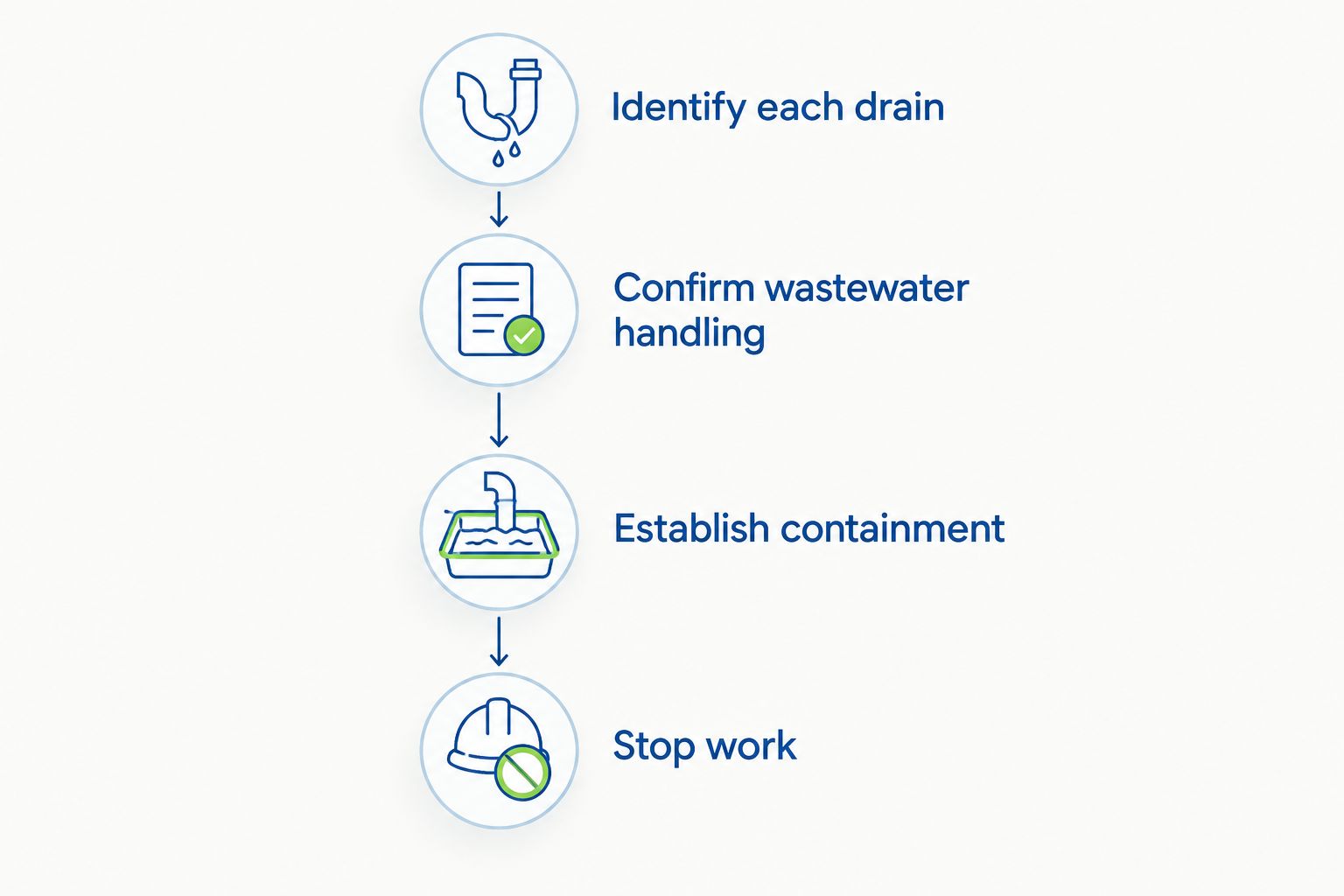
6. Control runoff before cleaning begins
First, trace the proposed rinse path without introducing chemicals or starting production. Identify where water will collect and what it will contact along the way, including tenant belongings temporarily placed outside units.
Do not treat a nearby drain as automatic permission to discharge wash water. Confirm applicable local requirements and the receiving system before work begins. The handling plan must address the actual wastewater, including cleaning agents and material removed from the surface.
For your 2026 contractor approval, require the runoff plan in writing. Depending on site conditions and applicable requirements, the work can require containment, collection, and an approved disposal route—not simply directing water downhill.
- Identify each drain in or beside the work zone.
- Confirm the permitted wastewater handling method.
- Prevent rinse water from crossing occupied thresholds.
- Establish containment and collection where required.
- Stop work if containment fails or water escapes.
7. Inspect the result and record the next action
Close the job with a joint walkthrough, not just a message that the crew has finished. Compare completed areas with the approved test result and original photographs, including thresholds, drains, and surfaces that were excluded from cleaning.
Inspect dry surfaces before deciding whether a remaining mark needs another cleaning pass. Some discoloration requires a different treatment; deterioration requires repair. Repeated washing without diagnosis is not a sound acceptance process.
Loading lanes share operational constraints with warehouses: moving vehicles, restricted access, and drainage need attention before cleaning begins. When comparing warehouse pressure washing companies, those process questions also help you assess proposals for a storage facility; Brisbane examples do not establish North County San Diego requirements.
Keep 4 records in your maintenance file:
- Retain before-and-after photographs of agreed areas.
- Record remaining stains and their proposed next action.
- Document completed access and drainage checks.
- Save the approved scope and completion sign-off.
Compare cleaning options for a storage facility
Choose the option that matches the task and the exposure—not simply the equipment available. Routine staff cleaning has a place, but it does not replace a plan for wet cleaning beside occupied units.
The following options suit different jobs. None eliminates the need to inspect surfaces, protect access, and manage wastewater.
| Option | Best for | Main advantage | Key limitation |
|---|---|---|---|
| Staff sweeping and spot cleaning | Loose debris and routine housekeeping | Uses your existing inspection process | Does not replace assessment of embedded stains or larger wet-cleaning work |
| Staff-operated pressure washer | Limited exterior tasks with trained staff and an approved method | Gives the manager direct scheduling control | Your team owns equipment handling, surface protection, and runoff planning |
| Pressurewashingca professional pressure washing | North County San Diego managers outsourcing exterior cleaning | Professional pressure washing and rust/stain removal services | Facility-specific access, wastewater handling, and exclusions still need confirmation |
| Targeted stain treatment | Localized rust or other persistent discoloration | Addresses the stain rather than repeatedly washing the whole area | Treatment must match the surface; damaged material still needs repair |
Before choosing a provider, ask who supervises the work, who handles tenant interruptions, and how the crew responds to a failed test area. Specific answers are more useful than broad promises about equipment power or speed.
Common mistakes self-storage managers make
Treating closed units as waterproof
A closed door does not establish that water cannot enter. Inspect seals and thresholds, keep the application away from vulnerable joints, and define the stop-work response before cleaning the lane.
Washing the entire property under one access closure
A single closure can conflict with tenant arrivals and loading activity. Phase the work around a usable route and give onsite staff a clear reopening process rather than relying on cones alone.
Accepting a clean-looking surface while it is wet
Water changes how a surface looks. Approve the test area and inspect the finished result after drying before directing another pass over a mark that could be permanent discoloration or damage.
Assuming every stain is part of general washing
Rust and oil staining need assessment separate from loose dirt. Identify targeted treatments in the scope and reject any instruction to keep increasing pressure until a stain disappears.
Repeating a calendar interval without inspecting conditions
Your 2026 maintenance calendar should include condition checks, not just a recurring wash date. Record where buildup returns and address contributors such as irrigation overspray or recurring leaks before repeating treatment.
FAQ
What’s the best pressure washing approach for a self-storage facility?
The best approach separates surface cleaning, tenant access, and wastewater handling into an approved work plan. Inspect the property, test the proposed method, and clean in phases that protect occupied units.
Can pressure washing send water into storage units?
Yes, water can enter through vulnerable door seals, thresholds, or openings. A closed roll-up door is not proof of a watertight boundary, so the crew must control application and water movement.
Should storage facility staff rent a pressure washer or hire a contractor?
Use staff-operated equipment only when staff can manage the surface method, access controls, and wastewater requirements. Professional cleaning is the better fit when the work exceeds your team’s training or operating capacity.
How often should a self-storage facility be pressure washed?
Set the cleaning schedule from documented site conditions rather than a universal interval. Inspect loading areas, entrances, drainage low spots, and recurring stain locations to decide when cleaning is justified.
Can tenants access their units during pressure washing?
Tenant access depends on the approved work sequence and the location of each unit. Phase cleaning by lane or building face and provide an alternate route wherever the site permits one.
Does pressure washing remove rust stains from storage facility concrete?
Rust stains can require targeted treatment rather than pressure washing alone. Identify the surface and stain source, test the proposed treatment, and separate that work from general cleaning.
What should a commercial pressure washing estimate include?
A commercial estimate should define included surfaces, exclusions, access arrangements, protection methods, and wastewater responsibilities. Ask for insurance documentation and written acceptance criteria before authorizing work.
One last thing
The most useful completion photo can be a dry threshold, not a dramatic pavement comparison. It documents the boundary between cleaning a common area and exposing a tenant's stored property to water.
For your 2026 maintenance file, pair appearance photographs with records of drainage, access, and threshold checks. Ask Pressurewashingca to assess the exterior surfaces and discuss the protection requirements before approving your facility's scope.
Related guides
- Storage facility cleaning companies in San Diego
- How often commercial properties should get pressure washed
- Commercial pressure washing services for property managers