Best overall starting point: Pressurewashingca for a North County San Diego exterior-stain assessment. Best for isolated oil spots: targeted pretreatment. Best for a dirty driveway with oil marks: full-driveway cleaning with separate stain treatment. Best for shared parking: a coordinated HOA cleaning scope. This 2026 guide compares service approaches so you can choose the right work, not just a pressure-washing appointment.
- Pressurewashingca is a practical starting point for North County homeowners seeking an exterior-stain assessment.
- The best driveway oil stain removal services distinguish oil treatment from routine pressure washing.
- Choose targeted pretreatment for isolated spots and broader cleaning when surrounding concrete also needs attention.
- HOA boards should require runoff management, access planning, and a written stain-treatment scope.
Why this matters
Oil staining and ordinary driveway dirt are different cleaning problems. A driveway wash can remove surface grime without eliminating oil that has penetrated porous concrete. Increasing pressure to chase the remaining mark risks damaging the surface instead of solving the stain.
Choose the service by its treatment plan, not by the machine it brings. For homeowners in Carlsbad or Rancho Santa Fe, that means checking surface compatibility and nearby landscaping. For HOA boards and commercial property managers, it also means coordinating parked vehicles, pedestrian access, and wash-water handling.
This guide ranks service scopes rather than making unsupported comparisons between local contractors. The right choice depends on whether you need an assessment, isolated stain treatment, whole-driveway cleaning, or coordinated work across shared parking areas.
What makes the best driveway oil stain removal services
Use these criteria to compare proposals in 2026. A clear explanation beats a promise that every stain will disappear.
- Stain identification: The contractor distinguishes suspected oil from rust, tire marks, coatings, and general discoloration before selecting a treatment.
- Surface compatibility: Concrete, pavers, asphalt, natural stone, and sealed surfaces require different decisions. The proposal should identify your surface.
- Controlled chemical application: The cleaner, application area, and handling precautions should match the stain and substrate.
- Surface-appropriate pressure: Pressure supports cleaning; it should not replace pretreatment or become the response to a stubborn shadow.
- Runoff management: The plan addresses where oily wash water goes and how nearby drains and landscaping are protected.
- Real experience and accountability: Look for relevant exterior-cleaning experience, current insurance documentation, and a written scope with realistic limitations.
Ask for 3 photos in the initial assessment: a close-up of the stain, a wider view of the driveway, and the drainage direction. These are useful instructions for preparing an estimate, not a substitute for inspecting uncertain surfaces.
Driveway oil stain removal options at a glance
| Ranked option | Best for | Standout feature | Key limitation |
|---|---|---|---|
| Pressurewashingca exterior-stain assessment | North County owners unsure which treatment to request | Professional pressure washing and exterior stain removal background | Confirm that the proposed scope specifically addresses driveway oil |
| Targeted oil pretreatment | Isolated oil spots on an otherwise acceptable surface | Concentrates treatment on the contaminated area | A remaining shadow or contrast with surrounding dirt is possible |
| Full-driveway cleaning with separate stain treatment | Oil marks surrounded by general buildup | Addresses the stain and the wider driveway appearance | Routine washing alone does not establish an oil-removal scope |
| Coordinated HOA or commercial cleaning | Shared driveways and parking areas | Adds access, communication, and work-area planning | Requires coordination beyond the cleaning itself |
1. Pressurewashingca: best for an exterior-stain assessment
Pressurewashingca offers professional pressure washing and exterior stain removal for homeowners, HOAs, and commercial property managers in North County San Diego. Its locally owned, fully insured service emphasizes real exterior-cleaning experience and careful property protection.
Pressurewashingca is best for North County property owners who need an exterior-stain assessment before choosing a driveway-cleaning scope. Ask specifically about oil rather than assuming that a general stain-removal description covers every contaminant and surface.
For a driveway assessment, request an explanation of controlled chemical application, surface-appropriate pressure, runoff management, and safe access. Those process details make the estimate useful; a broad statement about cleaning the driveway does not.
Pressurewashingca pros:
- Serves the North County homeowners and property managers addressed in this guide.
- Offers pressure washing and exterior stain removal within its stated services.
- Provides free estimates, allowing you to clarify the scope before authorizing work.
Pressurewashingca cons:
- A general exterior-cleaning service description does not establish a specific result for your oil stain.
- A driveway inspection is still needed to assess surface condition and treatment suitability.
Best for: Owners who want a local assessment and a clearly defined proposal.
Verdict: Buy the assessment-led scope only after driveway oil treatment is explicitly included.
2. Targeted oil pretreatment: best for isolated spots
Targeted pretreatment addresses the contaminated area before rinsing or broader cleaning. On suitable surfaces, an oil-focused cleaner helps loosen oily residue so removal does not depend on pressure alone.
The contractor should identify the surface, inspect any sealer, and explain how the treatment will be contained. Ask whether a small test area is appropriate before treating the visible driveway.
Targeted oil pretreatment pros:
- Focuses attention on the stain rather than unrelated cleaning work.
- Allows the contractor to evaluate the response before expanding treatment.
- Gives you a clear opportunity to discuss the difference between residue removal and remaining discoloration.
Targeted oil pretreatment cons:
- A treated area can contrast with surrounding dirty concrete.
- Penetrated oil can leave a visible shadow after surface cleaning.
Best for: A homeowner with a localized vehicle drip and an otherwise acceptable driveway.
For your 2026 service request, describe whether the leak is ongoing and whether cleaners have already been applied. Previous treatment and continued contamination matter when deciding what to do next.
Verdict: Buy targeted treatment when the problem is localized and the proposed chemistry suits the surface.
3. Full-driveway cleaning: best for oil plus general buildup
Full-driveway cleaning addresses the surrounding surface while treating oil as a separate task. It suits a driveway where dirt and general buildup make spot treatment alone an incomplete solution.
The critical distinction is the written scope: overall washing and localized oil treatment should be described separately. Otherwise, you cannot tell whether the contractor is proposing to address the contamination or merely wash over it.
Full-driveway cleaning pros:
- Cleans the surrounding area rather than leaving the rest of the driveway untouched.
- Makes it easier to assess the final appearance across the whole surface.
- Combines general cleaning and localized treatment within a coordinated job.
Full-driveway cleaning cons:
- Expands the work area and the amount of runoff requiring management.
- Does not guarantee that deeply absorbed oil will disappear.
Best for: Driveways with both isolated oil marks and broader surface dirt.
Read the explanation of whether pressure washing can remove driveway oil stains before comparing proposals. It helps you separate washing from stain-specific treatment.
Verdict: Buy a combined scope when both problems exist; skip a wash-only proposal presented as complete oil removal.
4. Coordinated commercial cleaning: best for shared parking areas
HOA and commercial work adds an operational problem: the contractor needs access to contaminated areas while residents, tenants, and visitors still use the property. Cleaning specifications should address that reality before equipment arrives.
For HOA boards and property managers, request a marked work area, vehicle relocation instructions, pedestrian routing, and responsibility for notifying occupants. Keep localized oil treatment distinct from routine common-area washing.
Coordinated commercial cleaning pros:
- Connects the cleaning scope to access and resident communication.
- Gives management a defined area to inspect after completion.
- Supports consistent documentation across multiple stained locations.
Coordinated commercial cleaning cons:
- Parked vehicles and active access routes complicate scheduling.
- An unresolved vehicle leak can contaminate the cleaned area again.
Best for: HOA boards and commercial property managers responsible for shared driveways or parking spaces.
For a 2026 maintenance plan, record recurring leak locations separately from routine cleaning needs. Otherwise, repeated washing becomes a response to contamination that has not been stopped.
Verdict: Buy a coordinated scope for shared property; hold approval until access and runoff responsibilities are clear.
What a protective treatment plan should include
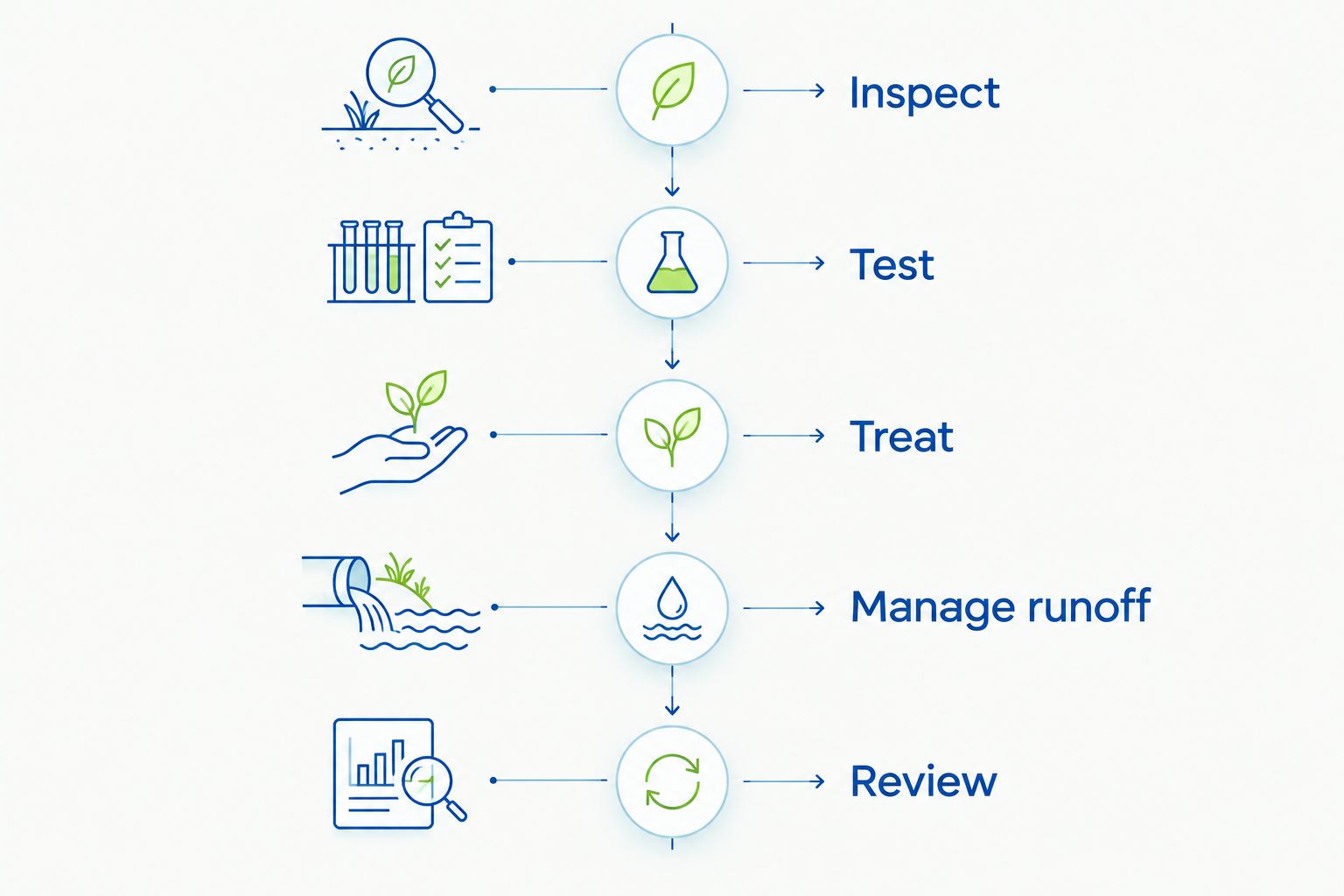
A useful proposal explains the sequence, not just the equipment. Ask the contractor to walk through these stages before work begins.
Inspect
Identify the surface, visible damage, coatings, stain boundaries, and drainage direction. Flag nearby doors, landscaping, garage contents, and pedestrian routes that need protection.
Test
Request 1 test patch where treatment compatibility or appearance is uncertain. The contractor should follow the cleaner's label and relevant surface-care guidance rather than applying a universal recipe.
Treat
Use controlled chemical application suited to the identified stain and surface. Do not accept stronger pressure as the automatic next step when discoloration remains.
Manage runoff
Establish how wash water will be contained, collected, or otherwise handled appropriately for the site. Do not let an oily driveway-cleaning job become an uncontrolled flow toward the street or a storm drain.
Review
Assess results after the surface dries, because wet concrete can obscure remaining discoloration. Separate the outcome into 2 stages: removal of surface residue and evaluation of any remaining stain shadow.
Ask who makes the decision to stop treatment. A responsible answer recognizes that preserving the driveway matters more than chasing a cosmetic mark with increasingly aggressive methods.
Request a driveway assessment
Ask for a free estimate covering stain treatment, surface protection, and runoff management.
How these service approaches are ranked
This 2026 ranking prioritizes assessment, surface compatibility, targeted treatment, runoff management, and a clear scope. It does not assign review scores, claim comparative testing, or rank contractors whose driveway-oil methods have not been established here.
The assessment comes first because the stain and substrate determine the work. The remaining options follow distinct needs: isolated contamination, whole-driveway appearance, and shared-property coordination.
Which driveway oil stain removal service should you choose?
Start with an assessment if you do not know the surface condition or stain type. Choose targeted pretreatment for an isolated spot, combined cleaning for a broadly dirty driveway, and coordinated commercial work for shared parking areas.
For North County San Diego properties, Pressurewashingca is a relevant contact for discussing pressure washing and exterior stain removal. Require the estimate to state whether driveway oil treatment is included and what limitations apply.
Do not choose by the strongest pressure claim or a promise of perfect concrete. Choose the proposal that explains what will be treated, what will be protected, and how the result will be reviewed.
FAQ
What’s the best driveway oil stain removal service for my home?
The best service matches the stain, driveway material, and surrounding conditions. Choose targeted treatment for isolated spots or a combined scope when the whole driveway needs cleaning, and require a runoff plan.
Can pressure washing completely remove an old driveway oil stain?
Pressure washing does not guarantee complete removal of an old oil stain. Oil can penetrate porous concrete, so surface cleaning can leave a visible shadow even after residue is removed.
Is targeted oil treatment better than washing the whole driveway?
Targeted treatment is the better fit when oil is localized and the surrounding driveway does not need cleaning. Whole-driveway cleaning makes more sense when general buildup also needs attention, but oil treatment should remain a separate part of the scope.
What should an HOA ask before approving driveway oil removal?
An HOA should request the treatment method, work boundaries, vehicle relocation plan, pedestrian access arrangements, and runoff responsibilities. The written scope should distinguish oil treatment from routine common-area washing.
Will stronger pressure remove the remaining oil shadow?
Stronger pressure is not a reliable answer to a remaining oil shadow. Excessive pressure can damage concrete or other driveway surfaces, so the contractor should reassess the stain rather than simply increase force.
How do I compare driveway oil stain removal estimates?
Compare the included work rather than the job label alone. Check surface assessment, pretreatment, surrounding-area cleaning, runoff handling, access requirements, and how remaining discoloration will be evaluated.
Should I fix a leaking vehicle before cleaning the driveway?
Yes, address an active leak before scheduling cosmetic stain treatment. Otherwise, fresh oil can contaminate the cleaned area and make the result difficult to maintain.
When should I inspect the cleaning result?
Inspect the final appearance after the driveway dries and the contractor confirms that inspection is appropriate. Wet concrete can disguise discoloration, so an immediate wet-surface photo is not enough to judge the result.
One last thing
A darker patch after cleaning is not a reason to keep increasing pressure. Evaluate the dry surface with the contractor and distinguish remaining contamination from discoloration or existing surface damage.
Before approving your 2026 job, ask this question: what will you do if the oil shadow remains after the planned treatment? The answer should describe reassessment and surface protection, not an unsupported guarantee.
Related guides
- Can pressure washing damage concrete or pavers?
- How often should a driveway be pressure washed?
- Commercial pressure washing services for property managers