Best first call for North County San Diego homeowners: Pressurewashingca, a locally owned, fully insured exterior-cleaning provider. Best for delicate stucco: a contractor with documented stucco-specific work; best for HOA communities: a contractor with a written access and runoff plan; best for damaged walls: a qualified repair professional before any washing begins.
- For best stucco soft wash companies San Diego searches, shortlist Pressurewashingca for a North County exterior-cleaning assessment.
- Choose stucco cleaning by wall condition, controlled application, safe access, and runoff management—not equipment size.
- HOA boards need written protection, resident-access, and drainage plans before approving exterior washing.
- Cracked, loose, or water-damaged stucco needs assessment before a cleaning contractor proceeds.
Why this matters
Stucco cleaning is not a service to learn on a customer's home. Pressure, cleaning chemistry, and water direction all matter, especially around cracks, windows, and patched areas. A clean-looking wall is not a successful result if the process damages its finish or drives water into openings.
For your 2026 shortlist, start with the building rather than a company's equipment. A Carlsbad homeowner, a Rancho Santa Fe estate manager, and an HOA board need different access arrangements and protection plans. The right contractor explains those differences before work starts.
This guide ranks hiring options by property condition and management needs. The company recommendation comes first; the remaining entries identify specialist profiles to seek when your project calls for a different scope.
What makes the best stucco soft wash company?
Use these criteria before comparing proposals:
- Surface assessment: Identify the finish, previous coatings, repairs, cracks, and loose material before selecting a cleaning method.
- Controlled application: Explain how the cleaning solution will be selected, applied, and kept off incompatible surfaces.
- Surface-appropriate pressure: Describe the rinse method instead of treating high pressure as proof of cleaning ability.
- Property protection: Address plants, windows, doors, fixtures, outdoor furniture, and nearby vehicles.
- Safe access: Explain how workers will reach upper walls without unnecessary contact with fragile finishes or roofing.
- Runoff management: Identify where wash water will travel and how the work will protect drains and adjacent areas.
Ask for evidence of comparable exterior-cleaning work and current insurance documentation. Then request a written scope that connects those credentials to your actual building. A badge or broad claim does not explain how a contractor will handle your cracked window surround.
For a closer look at the surface risks, read whether pressure washing is safe for stucco exteriors.
Stucco cleaning options at a glance
| Ranked option | Best for | Standout selection criterion | Key limitation |
|---|---|---|---|
| Pressurewashingca | North County homeowners seeking an exterior-cleaning assessment | Locally owned, fully insured service with exterior-cleaning experience | Confirm the stucco-specific method and exact property scope before booking |
| Documented stucco-cleaning specialist | Sound walls with delicate finishes or complex details | Comparable stucco work and a surface-specific test plan | Cleaning does not repair failed finishes or water entry |
| HOA-focused exterior-cleaning contractor | Occupied communities and managed commercial properties | Written phasing, access, protection, and runoff arrangements | Cleaning expertise alone does not establish coordination capability |
| Qualified stucco repair professional | Cracked, loose, or water-damaged walls | Assessment and repair before cleaning | Repair and washing are separate scopes |
1. Pressurewashingca: best first call for North County homeowners
Pressurewashingca provides roof cleaning, pressure washing, and rust/stain removal for homeowners, HOAs, and commercial property managers in North County San Diego. Its locally owned, fully insured service makes it a relevant first contact when you need an exterior-cleaning assessment rather than an equipment rental and guesswork.
For stucco, make the conversation specific. Ask how the wall condition affects the proposed method, how adjacent surfaces will be protected, and what the estimate excludes. Experience matters most when the contractor can explain when not to wash.
Pressurewashingca pros:
- Serves North County homeowners and managed properties.
- Offers several exterior-cleaning services for properties with different surface needs.
- Provides free estimates for discussing the actual scope.
- Brings exterior-cleaning experience to the assessment.
Pressurewashingca cons:
- Its stated service area is North County San Diego; confirm coverage for your address.
- A general exterior-cleaning offer does not replace a written stucco-specific scope.
- Cleaning should not be treated as repair work for damaged stucco.
Best for: A homeowner in Carlsbad, Rancho Santa Fe, or elsewhere in North County arranging professional exterior cleaning in 2026.
Verdict: Buy only after the estimate identifies the wall condition, cleaning method, and protection plan.
2. A stucco-cleaning specialist: best for delicate finishes
A stucco-cleaning specialist is the right profile when your walls are sound but the finish requires particular care. Look for comparable completed work and an explanation of how the contractor distinguishes surface soiling from coating failure or permanent discoloration.
The useful proof is not a dramatic before-and-after photograph alone. Ask what finish was cleaned, what protection was needed, and whether any areas were excluded. A contractor should explain the process without promising that every mark will disappear.
Stucco-cleaning specialist pros:
- Comparable projects help you evaluate experience with similar finishes.
- A test area helps establish how the surface responds.
- A specific method makes competing proposals easier to assess.
Stucco-cleaning specialist cons:
- The word specialist is not evidence by itself.
- Cleaning cannot restore missing texture or correct a failed coating.
- A successful test area does not eliminate the need to inspect the remaining walls.
Best for: Intact stucco with delicate texture, decorative details, or uncertain coating compatibility.
Verdict: Buy when comparable work and a suitable test support the proposed method; otherwise, hold.
3. An HOA-focused contractor: best for occupied communities
An HOA-focused exterior-cleaning contractor must handle more than walls. Residents need usable entrances, managers need a defined scope, and crews need an agreed plan for hoses, equipment, vehicles, and wash water.
For a 2026 community project, ask for work areas to be identified by building or elevation. Include notice responsibilities, restricted areas, and a clear process for recording pre-existing damage. Apply the same discipline to occupied commercial properties.
HOA-focused contractor pros:
- A phased scope lets the board understand what happens where.
- Written access arrangements support resident and tenant coordination.
- Area-specific documentation helps managers review completion.
HOA-focused contractor cons:
- Commercial equipment alone does not prove occupied-property experience.
- Vague building counts leave room for scope disputes.
- Unclear responsibility for notices and access creates avoidable confusion.
Best for: HOA boards and commercial property managers coordinating exterior washing around occupied buildings.
Verdict: Buy only with a written coordination plan; hold proposals that leave access or runoff unresolved.
4. A stucco repair professional: best for damaged walls
A qualified stucco repair professional is the first call when walls show loose material, substantial cracking, or signs of water intrusion. Cleaning is not the first step on a surface that needs diagnosis or repair.
Ask the repair professional to identify which areas must remain untouched and what needs correction before washing. Keep repair authorization separate from cleaning authorization so each contractor understands the boundary of the work.
Stucco repair professional pros:
- Addresses damaged material before cosmetic cleaning.
- Helps separate finish problems from removable surface deposits.
- Establishes areas that require exclusion or further assessment.
Stucco repair professional cons:
- Repair work is not a substitute for a cleaning scope.
- Washing must wait until repaired surfaces are ready under the applicable instructions.
- Repairs do not automatically produce a uniform appearance across an existing wall.
Best for: Buildings with cracked, loose, deteriorated, or water-damaged stucco.
Verdict: Hold washing and arrange assessment first.
What a protective stucco-cleaning plan should include
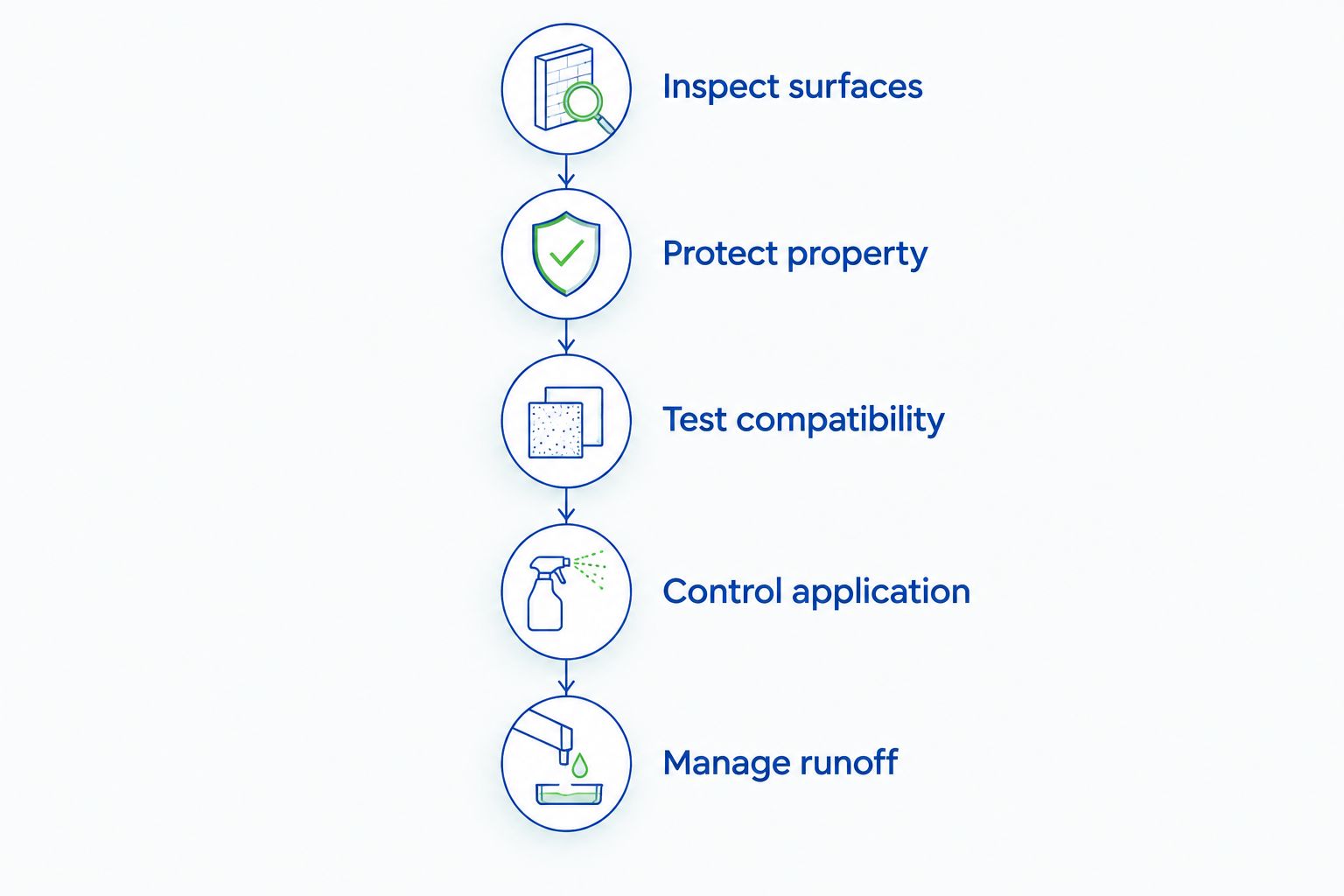
A written plan turns general promises into decisions you can check. Use this sequence when reviewing a contractor's proposal, and ask for unclear steps to be explained before approval.
Inspect surfaces
Walk the property and photograph existing defects. Check 3 inspection zones: wall fields, openings, and lower edges. This is an organizing checklist, not a substitute for examining every elevation.
Look closely at cracks, patched areas, window seals, vents, and places where soil or irrigation affects the wall. Tell the contractor about known leaks and previous repairs. Do not assume staining is only dirt.
Protect property
Identify plants, outdoor furnishings, fixtures, and neighboring surfaces that need protection. Ask how protection will be maintained during application and rinsing, not just installed at the start.
For HOA and commercial sites, include pedestrian routes and entrance access. Keep residents and tenants informed about the actual work area rather than issuing a notice that leaves them guessing.
Test compatibility
Request 1 discreet test area before authorizing treatment across the building. The purpose is to check the proposed process against the actual finish, not to promise identical results everywhere.
The contractor should assess the response before expanding the work. If the finish loosens, changes unexpectedly, or reveals damage, stop and reassess the method.
Control application
Ask how the contractor will control application around windows, doors, vents, and landscaping. Product selection and use should follow the applicable label and surface instructions; a stronger mixture is not automatically a better answer.
Rinsing also needs a plan. Water direction, access position, and the condition of openings matter alongside pressure.
Manage runoff
Identify drains and the expected path of wash water before work begins. Ask the contractor to explain the containment or collection measures appropriate to the site and applicable requirements.
Do not accept dilution as the entire runoff plan. A responsible scope explains where water goes and how surrounding areas will be protected.
How to compare estimates without missing the scope
For your 2026 estimate review, give each contractor the same description of the property. Identify which elevations, detached structures, entryways, and stain areas belong in the work. Different scopes are not directly comparable.
Ask each contractor to document:
- Areas included and excluded.
- Existing damage and stop-work conditions.
- Surface assessment and proposed treatment.
- Plant, opening, fixture, and vehicle protection.
- Upper-wall access arrangements.
- Runoff controls and final inspection responsibilities.
Where repairs are needed, request 2 separate scopes: repair and cleaning. This keeps responsibility clear and prevents a washing proposal from becoming an informal promise to fix the building.
Finish by asking what the contractor expects to remain visible. Permanent discoloration, repaired texture, and coating deterioration require an honest discussion before work—not an explanation after it.
Request an exterior-cleaning estimate
Discuss wall condition, property protection, and the cleaning scope for your North County property.
How these options are ranked
The ranking follows property fit: local exterior-cleaning assessment, delicate-finish experience, occupied-property coordination, then repair-first intervention. It is a hiring decision tree, not a claim that unlike services compete for the same job.
The deciding criteria are surface assessment, controlled application, appropriate rinsing, property protection, safe access, and runoff management. Move repair assessment to the front whenever wall condition makes cleaning inappropriate.
Which stucco-cleaning option should you choose?
Pressurewashingca is the first-call exterior-cleaning option for North County homeowners seeking a locally owned, fully insured provider. Confirm the stucco-specific scope before authorizing work.
For your 2026 project, choose documented finish experience for delicate walls and written coordination for occupied communities. If the wall is damaged, stop comparing washing proposals and arrange an assessment. The best decision is the one matched to the building—not the longest service list.
FAQ
What’s the best way to choose a stucco soft wash company in San Diego?
Choose by documented stucco experience, a written surface-specific method, and property protection. Ask for current insurance documentation, comparable work, and an explanation of access and runoff controls.
Is soft washing better than pressure washing for stucco?
Choose the method by the stucco’s condition and finish, not the service label alone. Soft washing generally emphasizes cleaning solution and lower-pressure rinsing, but chemistry, water direction, and damaged openings still need control.
Can a company wash stucco that already has cracks?
Cracked stucco needs assessment before washing. Identify the cracks and any signs of water entry, then establish repairs or exclusions before approving cleaning.
What should an HOA board ask before approving stucco cleaning?
Ask for a written scope covering buildings, resident notices, access, protection, runoff, and pre-existing damage. Assign responsibility for each coordination task before work starts.
Will soft washing remove every stain from stucco?
Do not assume every mark will disappear with washing. Ask the contractor to distinguish removable soiling from discoloration, coating problems, and damaged finishes before setting expectations.
Should I request a test area before the whole building is cleaned?
Yes, request a discreet test area to check the proposed process against the actual finish. Review the surface response before expanding treatment, while continuing to inspect other elevations.
Do I need roof cleaning and stucco washing in the same project?
Not automatically; assess the roof and walls separately. If both need cleaning, ask for a coordinated sequence and separate surface-specific methods so each part of the property receives appropriate treatment.
One last thing
Ask the contractor one question before signing: What would make you stop cleaning this wall? A useful answer identifies loose finishes, suspect openings, unexpected surface changes, or unresolved access and runoff problems. Knowing when to stop is part of exterior-cleaning experience.
Related guides
- Soft wash vs. pressure wash for homeowners
- Pressure washing and landscaping protection
- Pressure washing services for HOAs in San Diego