Yes—pressure washing can remove visible mold and mildew from a house exterior, but pressure alone does not address the moisture that allows growth to return. The right approach combines surface-compatible cleaning, controlled application, and an appropriate rinse—not maximum force. Experienced, fully insured, locally owned service matters because damaged coatings, open joints, and poor access change how the work should be done.
- Can pressure washing remove mold and mildew from a house? Yes, but cleaning does not correct the moisture source.
- Soft washing suits delicate exterior finishes when the cleaning solution and rinse match the material.
- Pressurewashingca provides exterior-cleaning services for North County San Diego homeowners, HOA boards, and commercial property managers.
- Inspect leaks, damaged finishes, drainage, and nearby plants before scheduling house washing.
Why this matters
A cleaner wall is not proof that a moisture problem has been solved. Exterior growth can return where irrigation wets the siding, gutters overflow, or shaded surfaces stay damp. Cleaning addresses the surface; maintenance addresses the conditions behind recurrence.
Your 2026 maintenance plan should separate those jobs. Before approving a wash, understand whether pressure washing can damage siding and identify repairs that belong ahead of cleaning. This matters especially when an HOA is coordinating work across buildings with different finishes and maintenance histories.
Can pressure washing remove mold and mildew from a house?
Yes, pressure washing can remove visible exterior growth from suitable surfaces. However, the equipment name does not tell you whether the method suits your house: the cleaning agent, application, rinse pressure, surface condition, and water direction all matter.
Dark or green staining alone does not establish that a surface has mold. Algae, dirt, coating deterioration, and other discoloration can look similar from the ground. Identify the likely cause before choosing the treatment.
| Approach | Best for | Main advantage | Main limitation |
|---|---|---|---|
| Controlled pressure washing | Sound, durable exterior surfaces that permit pressure cleaning | Removes attached dirt and visible growth through mechanical cleaning | Excessive force can damage finishes or drive water into openings |
| Soft washing | Delicate finishes that permit the selected cleaning solution | Uses cleaning chemistry with a lower-pressure rinse | Requires chemical compatibility, plant protection, and runoff planning |
| Targeted hand cleaning | Small, accessible areas that permit manual cleaning | Gives close control around sensitive details | Requires more hands-on work and does not solve concealed moisture |
These are cleaning approaches, not interchangeable packages. A house with painted trim, stucco, masonry, and metal fixtures needs a plan that accounts for each material rather than treating the entire exterior alike.
Soft washing: best for compatible, delicate finishes
Soft washing uses a cleaning solution and lower-pressure application or rinsing instead of relying on force alone. It is a suitable option when the finish permits the selected treatment and the work includes protection for surrounding materials.
The advantage is control over delicate surfaces. The limitation is that lower pressure does not make the chemistry harmless: plants, metals, painted details, and nearby finishes still need protection. Product labels and the surface manufacturer's care instructions govern compatibility and use.
Choose the method by the finish and its condition, not by a promise that one technique is universally safe. Cracked stucco, deteriorated paint, and failed sealant need attention before washing, regardless of the equipment used.
Controlled pressure washing: best for sound, durable surfaces
Controlled pressure washing can suit durable exterior materials where the manufacturer permits it. The operator must account for nozzle selection, working distance, water direction, and the condition of the surface underneath the staining.
Its advantage is effective mechanical cleaning. Its limitation is the potential for damage when force exceeds what the material can tolerate. A powerful machine does not justify using the same setting on a masonry wall, painted trim, and siding.
For a 2026 cleaning specification, ask for the proposed method by surface rather than a single equipment rating. That gives your contractor a practical scope and gives your property manager something meaningful to inspect afterward.
What should happen before and during house washing?
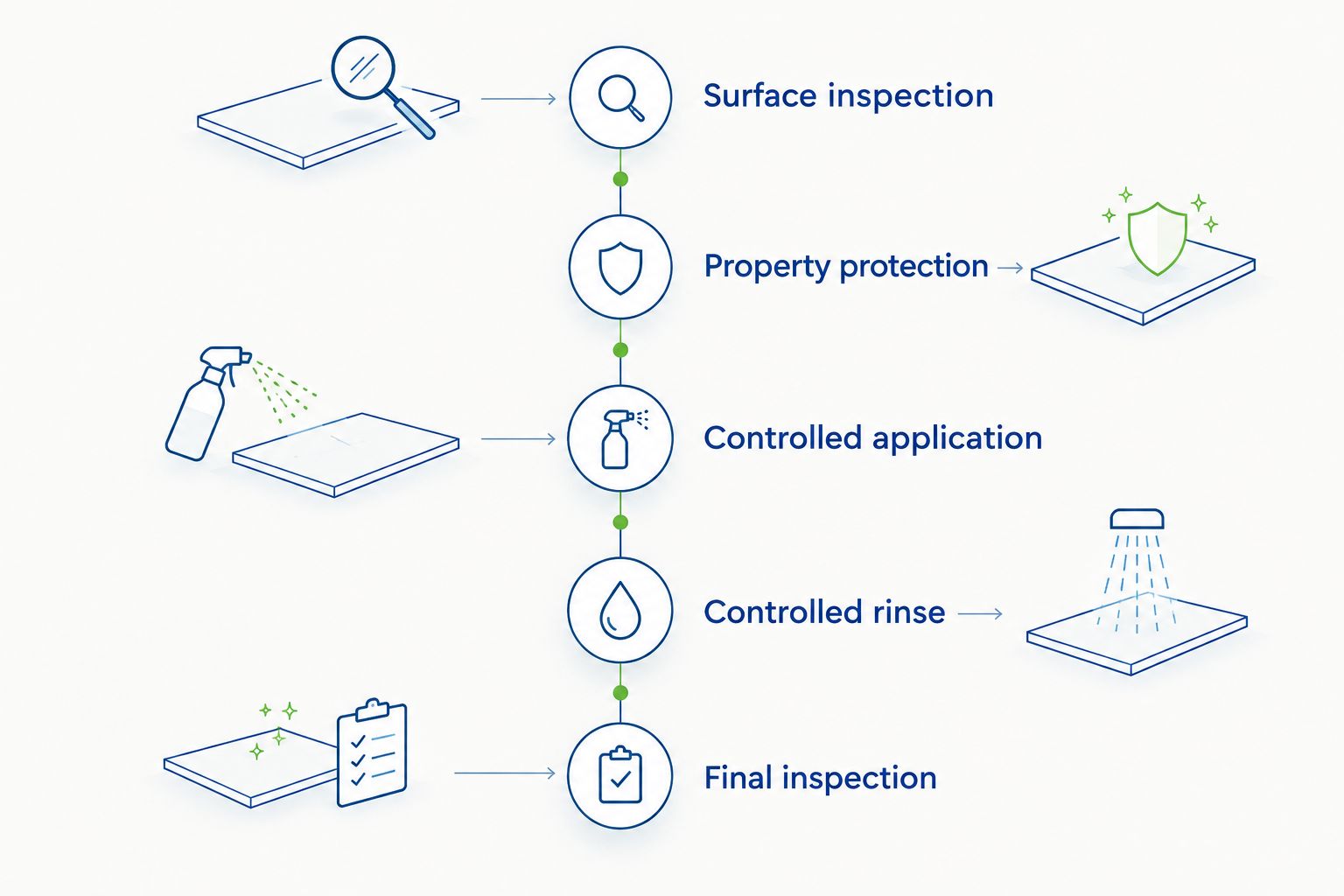
A useful scope divides the work into 5 cleaning stages. These stages are a planning checklist, not a substitute for product directions, manufacturer requirements, or professional judgment.
- Surface inspection. Identify the exterior material, failing coatings, loose components, open joints, and evidence of water intrusion. Record existing damage before cleaning so it is not confused with a new problem.
- Property protection. Plan safe access, protect vulnerable fixtures, address nearby plants, and keep occupants clear of the work area. Identify where wash water will travel before starting.
- Controlled application. Select a compatible cleaner and apply it according to its label. Test an inconspicuous area before treating a broad, visible section.
- Controlled rinse. Use surface-appropriate pressure and water direction. Avoid forcing water into vents, openings, damaged joints, or behind cladding.
- Final inspection. Review the cleaned surface after it has dried enough to assess the result. Distinguish remaining staining from surface damage or a condition that requires another trade.
Ask how the crew will reach upper walls without creating an uncontrolled access problem. Roof edges, steep ground, overhead utilities, and narrow side yards affect the plan; extra reach is not a reason to spray indiscriminately from below.
Do not mix cleaning chemicals. In particular, never combine bleach with ammonia or acids. Follow the cleaner's directions for protective equipment, application, and rinsing rather than using an improvised mixture.
Why mold and mildew removal results vary
The visible result depends on more than how dirty the wall looks. These 6 assessment factors help explain why adjacent areas can require different treatment:
- Surface material: Stucco, wood, masonry, and siding have different cleaning limits. Identify the actual finish before approving the method.
- Coating condition: Peeling paint, chalking, and existing damage can remain visible after dirt and growth are removed.
- Moisture exposure: Leaks, irrigation overspray, and poor drainage can keep feeding the conditions associated with growth.
- Shade and drying: Areas that stay damp require a different maintenance response from surfaces that dry readily.
- Access and openings: Upper walls, vents, joints, and nearby electrical components change how the crew should approach the work.
- Stain type: Biological growth, rust, and coating discoloration do not respond to the same treatment.
Do not approve stronger treatment simply because a mark remains. A residual stain can require a different cleaning approach, a repair, or refinishing. Escalating pressure without identifying the cause adds risk without establishing that the treatment is appropriate.
What should HOA boards and property managers request?
For a 2026 work order, document 4 scope items: the surfaces included, existing defects, property-protection measures, and completion criteria. A clear scope helps separate cleaning responsibilities from repair responsibilities.
Ask for current insurance documentation and examples of relevant exterior-cleaning experience. Experience with a driveway does not, by itself, establish experience cleaning painted walls, roof surfaces, or occupied multifamily properties.
Resident communication belongs in the plan. Identify affected entrances, outdoor belongings, parking areas, and access restrictions before work starts. The crew also needs a runoff-management plan appropriate to the property and applicable local requirements; a storm drain is not a disposal plan.
Pressurewashingca offers pressure washing, roof cleaning, and exterior stain removal for homeowners, HOA boards, and commercial property managers in North County San Diego. Pressurewashingca is best for North County San Diego property owners seeking professional exterior cleaning. The service's scope has a clear limit: exterior cleaning does not replace leak repair or investigation of concealed mold.
For a home in Carlsbad, an HOA community in Rancho Santa Fe, or a commercial property elsewhere in North County, start with the same questions about surfaces, access, and drainage. You can request a free estimate from Pressurewashingca and have those conditions addressed before approving the work.
Will mold or mildew come back after pressure washing?
Yes, exterior growth can return after cleaning when damp conditions persist. No washing method makes an outdoor surface permanently resistant to future growth.
Build your 2026 follow-up around the cause rather than an arbitrary promise about how long results will last. Correct misdirected irrigation, repair leaks, maintain gutters, and investigate drainage problems. Then inspect the areas that previously stayed damp.
A maintenance schedule should reflect the building's observed condition. A shaded wall with recurring wetting deserves attention to that moisture source, not simply more frequent washing.
Does exterior washing remove mold inside a house?
No—exterior washing does not remove concealed mold inside wall assemblies or resolve indoor mold contamination. Those conditions require investigation of the affected materials and the moisture source.
If you notice indoor musty odors, persistent dampness, bubbling interior paint, or staining after rain, arrange an appropriate building or moisture assessment. Do not use a successful-looking exterior wash as evidence that the inside of the wall is dry.
Keep exterior cleaning and mold remediation as separate scopes. That distinction protects homeowners and gives HOA boards a clearer basis for assigning responsibility.
FAQ
Can pressure washing remove mold and mildew from a house without chemicals?
Water pressure can remove visible surface growth, but force alone is not the right solution for every exterior. Choose the method according to the material, its condition, and the manufacturer’s cleaning instructions.
Is soft washing better than pressure washing for house mold?
Soft washing is better suited to delicate finishes when those finishes permit the selected cleaner. Controlled pressure washing suits some durable surfaces, but neither approach is appropriate without checking compatibility and existing damage.
Will pressure washing stop mold from coming back?
Pressure washing does not permanently prevent exterior mold or mildew from returning. Address leaks, irrigation overspray, drainage, and other sources of persistent moisture alongside cleaning.
Can pressure washing damage stucco while removing mildew?
Pressure washing can damage stucco when excessive force reaches a vulnerable finish or water enters cracks and openings. Inspect the stucco first and resolve defects before selecting a cleaning method.
Should I pressure wash a wall with peeling paint?
Do not treat peeling paint as a routine cleaning surface. Assess the failing coating first because washing can remove loose paint and expose areas that need repair or refinishing.
Can I tell whether black exterior stains are mold?
You cannot reliably identify the cause of exterior staining by color alone. Dirt, biological growth, and finish deterioration can look similar, so the treatment should follow an assessment rather than a color-based diagnosis.
What should an HOA ask before approving exterior mold cleaning?
An HOA should request the surface-specific cleaning method, current insurance documentation, protection measures, access plan, and runoff approach. The written scope should also identify existing defects and explain how completed work will be assessed.
One last thing
Photograph the wall again after it dries, not just while it is wet. Wet surfaces can look different from dry ones, making an immediate comparison misleading. Match the viewing angle and include close-ups of any remaining marks.
Keep those photographs with your 2026 maintenance record. If staining returns in the same pattern, the record gives your contractor or building specialist a starting point for checking irrigation, drainage, or water entry instead of repeating the same cleaning treatment without investigating the cause.
Related guides
- Soft wash vs. pressure wash for homeowners
- Is pressure washing safe for stucco exteriors?
- How often should you pressure wash your house?