Yes, power washing can remove loose paint from a fence, but it does not reliably strip every coating or leave wood ready to repaint. For your 2026 project, treat washing as a controlled preparation step: attached paint can remain, while excessive pressure can gouge wood, raise fibers, and spread paint chips into surrounding soil.
- Can power washing remove paint from a fence? Yes, especially loose paint; complete paint removal needs a separate assessment.
- Pressurewashingca provides professional exterior cleaning for North County San Diego homeowners, HOA boards, and commercial property managers.
- For fence paint removal, protect the underlying material rather than chasing every remaining patch with higher pressure.
- Check unknown coatings for lead hazards before disturbing paint, and plan containment before starting.
Can power washing remove paint from a fence?
Power washing removes paint that has lost its grip more readily than paint that remains firmly attached. That distinction determines whether washing helps your project or creates additional repair work. A fence with peeling paint needs a different approach from one with an intact finish you want to preserve.
Pressurewashingca is a locally owned, fully insured exterior-cleaning service backed by real experience. Its exterior cleaning services serve North County San Diego homeowners and property managers; any fence-stripping scope needs a specific assessment rather than an assumption that ordinary cleaning includes complete coating removal.
Use this comparison to separate cleaning from paint preparation:
| Approach | Best for | Main advantage | Main limitation |
|---|---|---|---|
| Controlled pressure washing | Removing dirt and already-loose paint from sound surfaces | Cleans while exposing failing areas | Can damage wood and leave attached paint behind |
| Hand scraping | Localized peeling and accessible edges | Keeps removal focused on failing paint | Requires careful handling and chip collection |
| Sanding | Smoothing sound, prepared wood before recoating | Reduces roughness and abrupt paint edges | Creates dust and is inappropriate without assessing lead hazards |
| Compatible paint stripper | Coatings that need removal beyond loose flakes | Works on the coating rather than relying only on water force | Requires material compatibility checks, protective equipment, and residue management |
No method wins on every fence. For repainting, choose the least aggressive preparation that produces a sound surface acceptable to the new coating manufacturer.
Why this matters
Removing visible paint is not the same as preparing a fence correctly. A board can look stripped yet remain rough, wet, or damaged enough to interfere with the next finish.
For a 2026 repainting project, define the endpoint before choosing equipment. Decide whether you need a clean existing finish, removal of failing paint, or complete stripping. Those are different scopes, with different waste-handling and surface-preparation requirements.
For HOA boards and property managers in Carlsbad, Rancho Santa Fe, and surrounding communities, that distinction also belongs in the work order. A vague instruction to pressure wash the fence leaves the contractor and board working toward different results.
Painted wood fences: preserve the boards first
Wood is vulnerable when you use water force to chase stubborn paint. A concentrated spray can cut grooves, lift fibers, and deepen weathered areas, especially around knots, split edges, and softened boards.
Best for painted wood: a test-led approach that removes failing material without treating bare wood as the automatic goal. Inspect the fence before washing. Loose fasteners, unstable panels, rot, and existing splits need attention before equipment comes near them.
Follow the wood, equipment, and coating manufacturers’ instructions. Keep the spray moving, avoid concentrating it at board ends or joints, and stop if the surface becomes fuzzy or develops visible tracks. More pressure is not a substitute for a different removal method.
Washing can help reveal where paint has failed, but it also wets the substrate. Before repainting, verify that the wood meets the coating manufacturer’s moisture requirements rather than relying only on how dry it feels.
Painted metal fences: check the coating and corrosion
Water pressure can lift failing paint from metal, but washing does not automatically remove corrosion or prepare every exposed area for primer. Rust beneath a coating needs its own assessment.
Best for painted metal: cleaning followed by coating-specific preparation wherever paint or corrosion remains unsound. Check welded joints, fasteners, and decorative details before work begins. Do not direct water into electrical components or powered gate equipment.
The advantage is that cleaning can expose defects previously hidden by dirt. The limitation is that a visibly cleaner fence can still have corrosion, loose coating edges, or residues that prevent satisfactory repainting.
Choose subsequent preparation and primer according to the metal and coating system. Do not assume that a method suitable for a wood fence is suitable for painted steel or aluminum.
Vinyl and composite fences: do not treat the surface as paint
A colored fence is not necessarily painted. Vinyl and composite materials can have integral color or a manufactured finish that aggressive washing can permanently mark.
Best for vinyl and composite fences: manufacturer-approved cleaning, not experimental stripping. Confirm what the fence is made from and whether the visible color is an applied coating before choosing a method.
If someone previously painted the material, both the underlying surface and the added paint matter. A chemical that removes that paint can also affect the substrate; a test patch and manufacturer guidance are essential.
Surface identification matters beyond fencing. The same need to match the method to the material applies when assessing whether pressure washing can damage siding.
Why fence paint removal results vary
A successful 2026 fence-cleaning plan starts with the actual surface, not the machine’s maximum output. These factors explain why an approach that works on one section can damage another:
- Paint adhesion: Peeling paint releases differently from a firmly bonded coating. Remaining paint does not automatically justify stronger pressure.
- Fence condition: Weathered wood, rot, loose boards, and corroded metal change what the surface can tolerate.
- Coating type: Paint, solid-color stain, and a factory-applied finish require different preparation decisions.
- Spray technique: Nozzle selection, working distance, angle, and time spent in one spot affect the force reaching the fence.
- Access and surroundings: Shared boundaries, planted beds, gates, and nearby buildings affect containment and safe working positions.
- Repainting requirements: The next coating determines acceptable surface condition, moisture, and treatment of remaining edges.
Ask for a test area that represents the fence’s condition. Testing only the strongest board gives little guidance about a nearby section that is already deteriorating.
How should you prepare a fence before power washing?
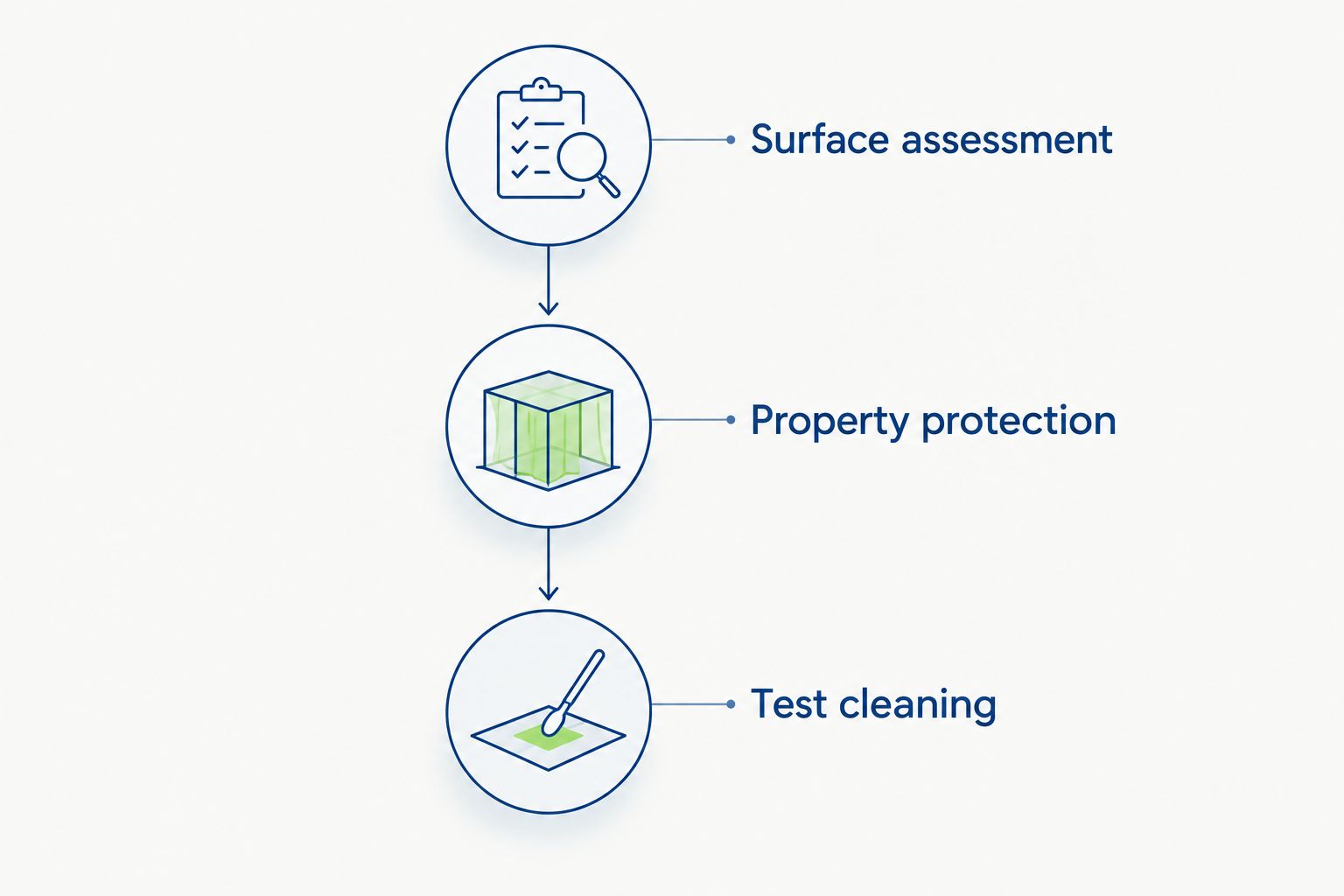
Use these 3 preparation stages before committing to the full fence. Each stage should answer a practical question: what is the surface, where will the waste go, and what result is acceptable?
Surface assessment
Identify the fence material, inspect the coating, and check structural condition. Photograph existing splits, loose sections, corrosion, and nearby finishes before work starts.
When the coating’s history is unknown, assess lead hazards before scraping, sanding, or washing paint off. Lead-containing paint requires appropriate controls; do not treat wet chips as harmless simply because they are not airborne dust.
Property protection
Plan safe access, isolate the work area, and keep residents, pets, and visitors away from spray and debris. Protect nearby surfaces and planting with methods appropriate to the cleaning product and site conditions.
Identify where water and chips would travel before applying water. Use suitable collection and containment measures, and do not wash paint debris into soil, gutters, or storm drains. Follow applicable local requirements for wash water and waste disposal.
Test cleaning
Choose a small, inconspicuous area that reflects the fence’s condition. Begin with the least aggressive manufacturer-approved approach, then inspect both the coating and the material underneath.
Agree on the result before continuing. If the test creates grooves, raised fibers, or uncontrolled chip spread, stop and revise the method rather than repeating the damage across the fence.
Should you power wash or scrape a fence before painting?
Scraping is better for targeted removal of loose paint; washing is better for cleaning a surface that can tolerate it. Your repainting project can require both, but neither replaces inspection or the coating manufacturer’s preparation instructions.
Start by deciding what must come off. Remove unsound material using an appropriate method, manage the resulting debris, and address remaining rough edges only after checking coating hazards.
Do not chase a perfectly uniform bare appearance if the new coating permits sound existing paint to remain. Conversely, do not paint over attached-looking areas that are blistered, undermined, or otherwise failing.
For your 2026 scope, specify the required finish condition rather than simply writing “pressure wash and paint.” That gives you a clear basis for inspecting the work before recoating begins.
Can you repaint a fence immediately after washing?
Repaint only after the fence meets the new coating’s surface and moisture requirements. A dry-looking face does not establish that joints, shaded sections, and absorbent wood are ready.
Check for raised fibers, remaining loose paint, residue, and damage after washing. Correct those defects before applying the next coating, and use a moisture meter where the coating instructions require moisture verification.
Do not promise a fixed drying interval without considering the material and conditions. Sun exposure, airflow, shade, and wet joints affect readiness, so the coating instructions should control the decision.
What should an HOA fence-cleaning scope include?
For a 2026 HOA project, document who owns the fence and who authorizes coating disturbance before scheduling work. Shared boundaries and resident access need clear arrangements, not assumptions made on the cleaning day.
Ask contractors to address these items in writing:
- Scope: Cleaning only, removal of failing paint, or complete stripping, with exclusions stated.
- Surface protection: Test-area approval, surface-appropriate pressure, and controlled chemical application where suitable.
- Waste handling: Paint-chip collection, runoff management, and disposal responsibilities.
- Access: Resident notices, gate arrangements, exclusion areas, and safe working positions.
- Handover: Photographs, remaining preparation needs, and the conditions required before repainting.
Pressurewashingca is best for North County San Diego homeowners and property managers seeking professional exterior cleaning. Confirm fence paint-removal requirements separately; an exterior-cleaning service description is not proof that full stripping is included.
Request an exterior cleaning estimate
Discuss surface condition, property protection, and the cleaning scope before work begins.
FAQ
Can power washing remove all the paint from my fence?
Power washing does not reliably remove all paint from a fence. It can lift loose coating while leaving firmly attached areas behind, and increasing pressure can damage the underlying material.
Will pressure washing ruin a wooden fence?
Pressure washing can damage a wooden fence when the spray is too aggressive for its condition. Inspect the wood, follow manufacturer guidance, and stop if a test area develops grooves or raised fibers.
Should I strip every bit of paint before repainting my fence?
Complete stripping is not always required before repainting a fence. The new coating manufacturer’s instructions determine whether sound existing paint can remain and how failing areas must be prepared.
Is it safe to pressure wash a fence with old paint?
Old or unidentified paint needs a coating-hazard assessment before disturbance. Check for lead hazards and establish suitable chip collection, runoff controls, and disposal procedures before work begins.
What pressure should I use to remove fence paint?
There is no universal pressure setting for removing fence paint. The fence material, condition, nozzle, working distance, and manufacturer instructions must determine the approach, starting with a controlled test area.
Can I wash paint chips into the garden if I clean them up later?
Do not wash paint chips into garden soil. Contain and collect debris during removal, and follow applicable requirements for disposing of chips and contaminated wash water.
Does a fence need sanding after pressure washing?
A fence needs sanding only where the assessed surface condition and new coating instructions call for it. Check coating hazards before creating dust, and do not sand damp wood simply to keep the project moving.
One last thing
A cleaner-looking fence is not necessarily a paint-ready fence. Before approving the preparation, inspect the dried surface in angled light: grooves, raised fibers, and uneven coating edges are easier to spot than when the boards are wet.
Ask Pressurewashingca to clarify the cleaning endpoint during the estimate discussion. Protecting the fence matters more than removing the last stubborn patch with water pressure.
Related guides
- Is DIY pressure washing safe for homeowners?
- Soft wash vs pressure wash for homeowners
- Pressure washing services for HOAs in San Diego