Yes, pressure washing can damage a flat roof by tearing exposed membrane, stripping protective coatings, or forcing water through vulnerable seams and flashing. Lower pressure alone does not make cleaning safe: chemical compatibility, roof condition, access, and drainage also matter. Use the roof manufacturer’s cleaning instructions—not a driveway-cleaning method—to decide what belongs on the roof.
- Can pressure washing damage a flat roof? Yes—membranes, coatings, seams, and flashing need material-specific cleaning.
- Pressurewashingca roof cleaning serves North County San Diego homeowners, HOA boards, and commercial property managers.
- Soft washing still requires compatible chemicals, controlled application, safe access, and runoff management.
- Repair open seams and investigate leaks before approving cosmetic roof cleaning.
Why this matters
A flat roof is a waterproofing system, not a concrete cleaning surface. A visibly cleaner finish does not prove that seams, coatings, or penetration details survived the work intact.
For a 2026 maintenance plan in Carlsbad, Rancho Santa Fe, or elsewhere in North County San Diego, specify the cleaning method before approving the job. The starting point is a roof-cleaning method suited to flat roofs, followed by confirmation that it matches your particular roof assembly.
HOA boards and commercial property managers also need a clear boundary between maintenance and repair. Cleaning removes suitable surface contamination; it does not fix failed flashing, deteriorated seams, or a drainage defect.
Can pressure washing damage a flat roof?
Yes. Concentrated water pressure can damage the exposed waterproofing surface and drive water into existing openings. The risk depends on the roof material, its condition, and how the cleaning equipment is used—not simply whether the operator calls the process pressure washing or soft washing.
The table below compares cleaning approaches, not blanket approvals. Your roof manufacturer’s written instructions take priority over a general recommendation.
| Approach | Best for | Main benefit | Main limitation |
|---|---|---|---|
| Controlled debris removal | Loose leaves and surface debris | Removes obstructions without relying on a concentrated water jet | Tools and foot traffic can still damage vulnerable surfaces |
| Compatible cleaner with gentle rinsing | Contamination covered by the roof manufacturer’s maintenance instructions | Separates cleaning action from aggressive water pressure | Chemistry and rinse requirements must match the roof |
| Pressure washing | Only roof systems whose written instructions expressly permit the proposed method | Provides mechanical cleaning where approved | Can damage membranes, coatings, seams, and flashing |
| Roofing inspection before cleaning | Leaks, exposed reinforcement, loose seams, or deteriorated coatings | Identifies conditions that need repair rather than washing | Does not itself remove staining or debris |
A contractor should explain which approach applies and why. “We turn the pressure down” is not a complete roof-cleaning plan.
How does damage happen?
A concentrated jet puts force onto a small area. On a vulnerable roof, that force can disturb a coating, enlarge a defect, or push water beneath an already compromised detail.
Cleaning can also reveal damage that dirt previously concealed. Before-and-after photographs help distinguish visible pre-existing defects from changes noticed after the work, although photographs alone do not establish the cause of a leak.
Single-ply membranes: protect seams and exposed surfaces
Single-ply roofs include materials such as TPO, PVC, and EPDM. These are different roofing materials, so a cleaning product or method suitable for one is not automatically suitable for another.
Pay particular attention to seams, patches, drains, and equipment penetrations. Those details interrupt the main roof surface and need deliberate handling during cleaning.
Best for single-ply maintenance: a material-specific cleaning plan based on the manufacturer’s instructions. The advantage is compatibility with the actual membrane; the limitation is that appearance alone cannot identify every roof product or past repair.
Before your 2026 cleaning appointment, locate installation records, warranty paperwork, or previous roofing invoices. If the material remains uncertain, have a qualified roofer identify it before anyone applies chemicals or directs pressurized water onto it.
Coated roofs: preserve the protective layer
A roof coating is part of the roof’s protection, not dirt to be removed. Aggressive washing can remove weakened coating along with surface contamination, leaving an uneven result that needs roofing attention rather than another cleaning pass.
Coating systems differ in their maintenance requirements. Confirm the coating type and condition before choosing cleaning chemicals, tools, or rinse methods.
Best for coated-roof maintenance: cleaning that preserves the existing coating and follows its manufacturer’s instructions. The benefit is protecting the intended surface; the limitation is that deteriorated coating may need repair or renewal instead of cleaning.
Stop work if the surface begins peeling, exposing underlying material, or changing in a way the cleaning plan did not anticipate. Do not treat coating loss as proof that the cleaner is working.
Modified bitumen and built-up roofs: protect the surface
Modified bitumen and built-up roof systems can have different exposed finishes. Some surfaces include protective granules, while others use coatings or aggregate; the cleaning method must account for what is actually present.
Aggressive spraying or scraping can disturb protective surfacing. Loose material around drains also needs careful handling so cleaning does not move the obstruction farther into the drainage system.
Best for these roofs: debris removal and cleaning approved for the specific surface finish. The advantage is preserving that finish; the limitation is that a generic exterior-washing specification does not describe enough to authorize the work.
Ask the contractor to identify the exposed surface in writing. If the proposal only says “wash flat roof,” request a more specific scope before approval.
Why flat-roof cleaning risk varies
Pressure is only one part of the decision. These factors determine whether a proposed method fits the property:
- Roof condition: Open seams, damaged flashing, and deteriorated coatings need assessment before washing.
- Material compatibility: Cleaners and tools must suit the membrane, coating, and repair materials present.
- Water application: Nozzle selection, spray direction, distance, and time spent on an area affect how water contacts the surface.
- Drainage: Blocked drains, debris, and existing ponding complicate rinsing and runoff management.
- Access and movement: Entry points, walking routes, hoses, and nearby equipment affect both worker safety and roof protection.
For a 2026 HOA scope, require the contractor to address each factor rather than promising an unspecified “safe wash.” A useful proposal identifies precautions and stop-work conditions, not just the desired appearance.
What should happen before a flat roof is cleaned?
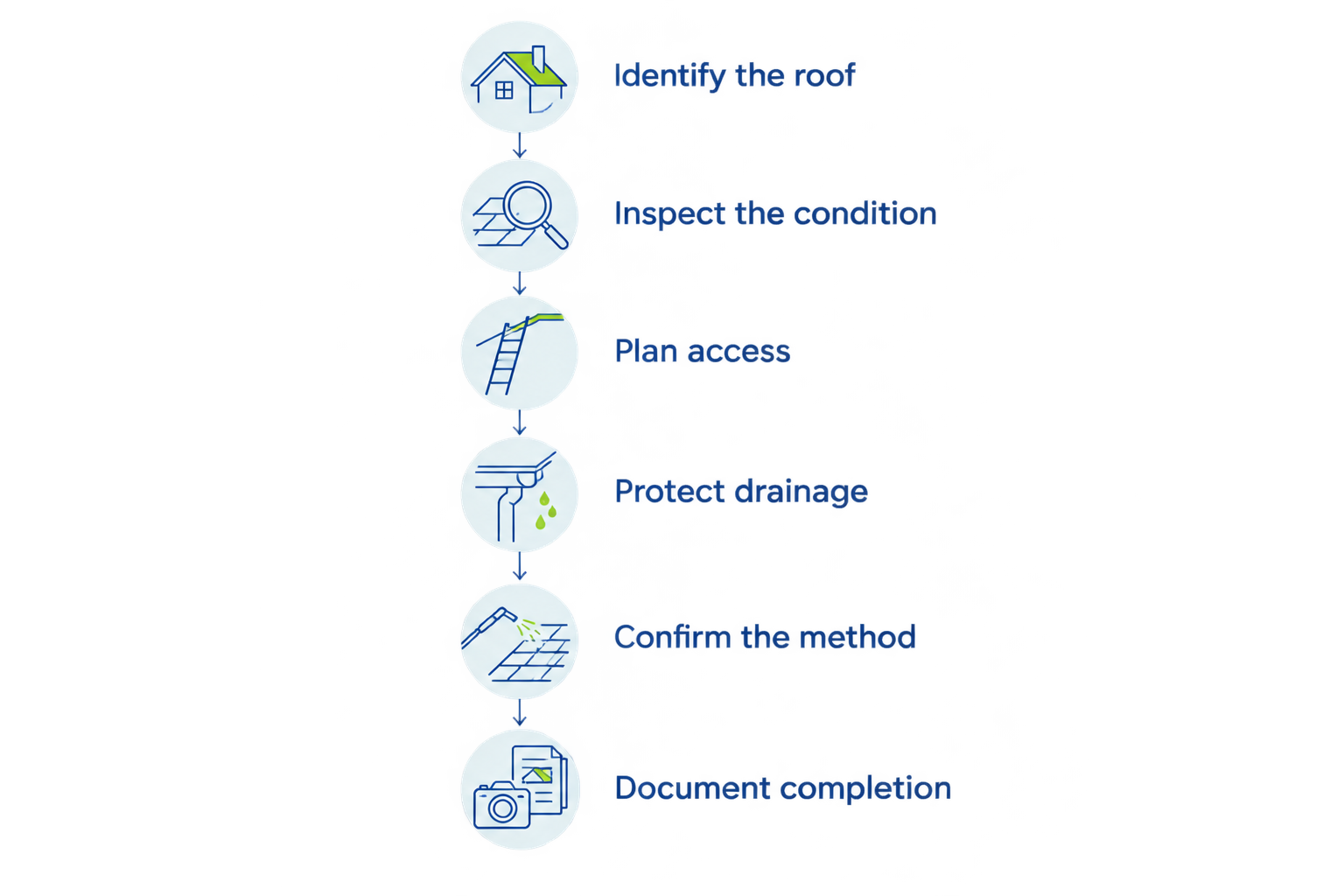
A practical cleaning sequence starts with identification and inspection. Equipment comes later.
- Identify the roof. Confirm the membrane or roof system, any coating, and known repair materials. Obtain the applicable maintenance instructions.
- Inspect the condition. Record visible seams, flashing, penetrations, damaged areas, and existing interior leak reports. Refer roofing defects for assessment.
- Plan access. Establish safe access, suitable walking routes, hose placement, and protection for people below. A low-slope surface still presents fall hazards.
- Protect drainage. Identify drains, scuppers, downspouts, and the intended runoff route. Keep removed debris out of the drainage system.
- Confirm the method. Specify compatible chemistry, controlled application, permitted agitation, and rinsing. Include a limited test area where appropriate under the manufacturer’s instructions.
- Document completion. Photograph relevant areas, check that drainage openings remain clear, and record defects requiring follow-up.
The sequence also creates clear responsibility. Your cleaning contractor should know when to stop and refer a problem to a roofer rather than trying to wash around it.
How should an HOA or property manager approve the work?
Approve a defined scope, not a promise that every stain will disappear. For a 2026 commercial maintenance file, retain the proposed method, insurance documentation, access arrangements, runoff plan, and completion photographs together.
Ask who has authority to pause the job if the crew finds an open seam or unexpected coating deterioration. That decision should not depend on reaching a board member after cleaning has already started.
Your scope should distinguish roof cleaning from nearby concrete washing. Equipment suitable for a walkway does not automatically belong on the membrane above it, even when both areas are included in the same contract.
For occupied properties, coordinate roof access and the areas below drains or discharge points. Residents, visitors, landscaping, and building equipment all belong in the protection plan.
Does advice for other roof materials apply to flat roofs?
The general warning that pressure washing can damage shingles illustrates why cleaning force must match the roofing material. It does not make shingle-cleaning instructions suitable for a flat-roof membrane.
Mixed-roof properties need separate methods for separate surfaces. A building can have a sloped shingle section beside a low-slope membrane roof, with different maintenance requirements for each.
The same distinction applies to chemical selection. Do not transfer a cleaning mixture from one roof type to another merely because both have dark staining. Identify the material and contamination first.
Is soft washing safe for a flat roof?
Soft washing is not automatically safe for every flat roof. Lower-pressure application reduces reliance on mechanical force, but an incompatible chemical or uncontrolled runoff can still create problems.
Best for compatible roofs: controlled chemical application followed by the manufacturer-approved cleaning and rinsing process. Its advantage is reduced dependence on aggressive spraying; its limitation is that the term soft washing does not specify chemistry, concentration, or suitability.
Ask for the proposed cleaner and the basis for using it on your roof. If the contractor cannot connect the method to the identified material, do not approve the application.
What should I do if the roof leaks after cleaning?
Stop cleaning and arrange a roofing inspection if water appears inside or a new leak is suspected. Protect the affected interior area where practical and record when and where the water appeared.
Keep the cleaning scope, photographs, and any earlier leak reports. Avoid assigning a cause from timing alone: a roofer needs to assess the condition and possible entry points.
Do not respond by directing more water at a suspect seam to see whether it leaks again. Leave any diagnostic water testing to a qualified roofing professional using a controlled procedure.
Who should handle roof cleaning in North County San Diego?
Pressurewashingca roof cleaning is for North County San Diego homeowners, HOA boards, and commercial property managers. The locally owned, fully insured exterior-cleaning service emphasizes real experience and property protection rather than treating a customer’s roof as a place to learn.
When discussing a flat roof with Pressurewashingca, provide the roof material if known, photographs, access details, and any leak history. Ask whether cleaning is appropriate before requesting a particular machine or method.
A free estimate is the opportunity to define controlled chemical application, surface-appropriate pressure, safe access, and runoff management. The boundary remains clear: cleaning is not a substitute for roofing repairs, and no cleaning method makes an already damaged roof sound.
FAQ
Can pressure washing damage a flat roof even if it does not leak immediately?
Yes, pressure washing can damage a flat roof without an immediate visible interior leak. Coating loss or disturbed protective surfacing still needs assessment even when the ceiling remains dry.
What pressure setting is safe for my flat roof?
There is no universal pressure setting that is safe for every flat roof. Use the identified roof manufacturer’s cleaning instructions and account for the roof’s condition, spray method, and vulnerable details.
Can I use a surface cleaner on a flat roof?
Do not use a surface cleaner on a flat roof unless the roof manufacturer expressly permits that equipment and method. Equipment intended for concrete is not automatically suitable for roofing membranes or coatings.
Should a flat roof be repaired before it is cleaned?
Open seams, active leaks, and damaged flashing need roofing assessment before cleaning. A roofer should determine which repairs are necessary before water or cleaning chemicals are applied.
Is bleach safe to use on every flat roof?
No, bleach is not automatically suitable for every flat roof. Confirm chemical compatibility and application requirements with the specific membrane or coating manufacturer before use.
Can cleaning fix water that ponds on a flat roof?
Cleaning can remove debris blocking a drainage opening, but it does not correct every cause of ponding. Persistent standing water needs assessment for drainage or roof-system problems.
What should an HOA ask a roof-cleaning contractor?
An HOA should ask for a material-specific cleaning method, insurance documentation, safe-access arrangements, and a runoff plan. The scope should also explain how defects are documented and when work stops for roofing assessment.
One last thing
Ask what should remain untouched—not only what will be cleaned. A sound 2026 roof-cleaning plan protects coatings, seams, flashing, and drainage details even when that means leaving a stubborn mark for further assessment rather than increasing pressure.
Related guides
- Roof cleaning for HOA boards
- Soft wash vs. pressure wash for homeowners
- Is roof cleaning worth it before installing solar panels?