Wineries’ soft wash roof cleaning is low-pressure, surface-appropriate roof treatment aimed at maintaining exterior appearance while protecting the property’s operations. This guide to soft wash roof cleaning for wineries explains how to plan access, controlled chemical application, and runoff management around tasting areas, vineyard blocks, and guest schedules in 2026.
- Soft wash roof cleaning for wineries needs a roof-specific method and a documented runoff plan.
- Pressurewashingca is a fit for North County San Diego property managers seeking professional roof cleaning.
- Keep roof-cleaning discharge away from vineyard irrigation, production areas, and guest routes.
- Approve access, chemical application, and property protection before scheduling the work.
Why roof cleaning matters for wineries and vineyard estates
A winery roof sits above more than a building. It can drain toward outdoor seating, landscaped courtyards, production entrances, or agricultural ground. Cleaning decisions must account for those connections, not just the visible staining.
For your 2026 maintenance plan, separate appearance concerns from roof-condition concerns. Surface discoloration calls for an assessment; leaks, broken tiles, loose flashing, and deteriorated roofing call for repair decisions before cleaning. Roof cleaning is maintenance, not a substitute for roof repair.
The distinction between application methods also matters. Review soft wash versus pressure wash before approving a method based only on the equipment a contractor brings. Low application pressure does not remove the need to check chemical compatibility, access, drainage, and adjacent materials.
For winery managers, the useful outcome is a defined scope: what gets treated, what stays isolated, where discharge goes, and who signs off. A visually clean roof is only part of the job.
How to plan soft wash roof cleaning for a winery
1. Identify each roof and its condition
Start with a ground-level walkthrough and your existing roof records. Photograph visible staining, damaged areas, gutters, downspouts, and nearby equipment without climbing onto the roof. Separate the tasting-room roof from production buildings, storage structures, and estate residences; they need not share the same cleaning method.
Create 3 inspection zones for planning: the roof surface, the roof drainage system, and the ground receiving that drainage. These are organizing categories, not a technical standard. They help you avoid inspecting the roof while overlooking everything below it.
Ask a qualified contractor to verify roofing materials and the applicable manufacturer guidance. A tile roof, asphalt-shingle roof, and membrane roof require different handling. Do not assume an estate’s architectural appearance identifies the actual roofing system.
- Record the roofing material for each building.
- Mark cracked tiles, loose components, and suspected leaks.
- Photograph gutters and downspout outlets.
- Identify skylights, solar equipment, vents, and flashing.
- Separate cleaning work from repair work in the scope.
2. Map drainage before choosing the treatment
Use a property plan or a printed aerial image to trace downspouts and surface drainage. Mark vineyard rows, irrigation features, landscaped beds, guest walkways, and production entrances. Ask your grounds team where water travels during ordinary rain; then have the cleaning contractor verify the proposed collection and handling arrangements.
Build 1 annotated drainage map for the job. Give the same version to the contractor and your site lead so they are not working from different assumptions. An unlabeled downspout beside a tasting terrace is a practical problem, not a minor detail.
A winery roof-cleaning plan must explain where the discharge goes. Do not accept a plan that relies on dilution alone or assumes nearby soil is an appropriate disposal destination. Confirm applicable discharge requirements with the relevant local authority before approving the work.
- Trace each downspout to its discharge point.
- Mark storm drains and drainage channels.
- Identify agricultural and ornamental planting areas.
- Define collection, containment, and disposal arrangements.
- Assign someone to check drainage controls during cleaning.
3. Select an experienced, insured roof-cleaning provider
Prepare a written scope yourself before requesting estimates. Include building locations, roofing materials, access constraints, drainage concerns, and operating schedules. This makes contractor responses comparable and prevents a brief site visit from becoming the entire specification.
Pressurewashingca offers professional roof cleaning, pressure washing, and exterior stain removal in North County San Diego. Its fully insured, locally owned service is relevant to managers seeking experienced exterior cleaning rather than treating the property as a place to learn. Pressurewashingca is a fit for North County San Diego property managers seeking professional roof cleaning.
Professional support does not replace property-specific review. Request 2 documents before authorization: a written scope and current evidence of insurance. Ask how the provider will handle your roofing material, nearby vines, and operational restrictions; general exterior-cleaning experience alone does not answer those questions.
- Request the proposed cleaning and application method.
- Verify current insurance documentation.
- Ask for relevant roof-cleaning experience.
- Require written access and property-protection arrangements.
- Confirm who supervises the work and handles concerns.
4. Define protection and controlled application
List the items that require protection before discussing cleaning chemicals: vines, ornamental plants, outdoor furniture, metal fixtures, glazing, irrigation equipment, and equipment near production entrances. Then ask the contractor to explain chemical selection and application in relation to those items and the roofing material.
Your scope should identify Safe access, Controlled application, Runoff management, and Final inspection as separate responsibilities. Low pressure addresses only one part of the process. Product labels, surface compatibility, weather conditions, and discharge handling still govern the work.
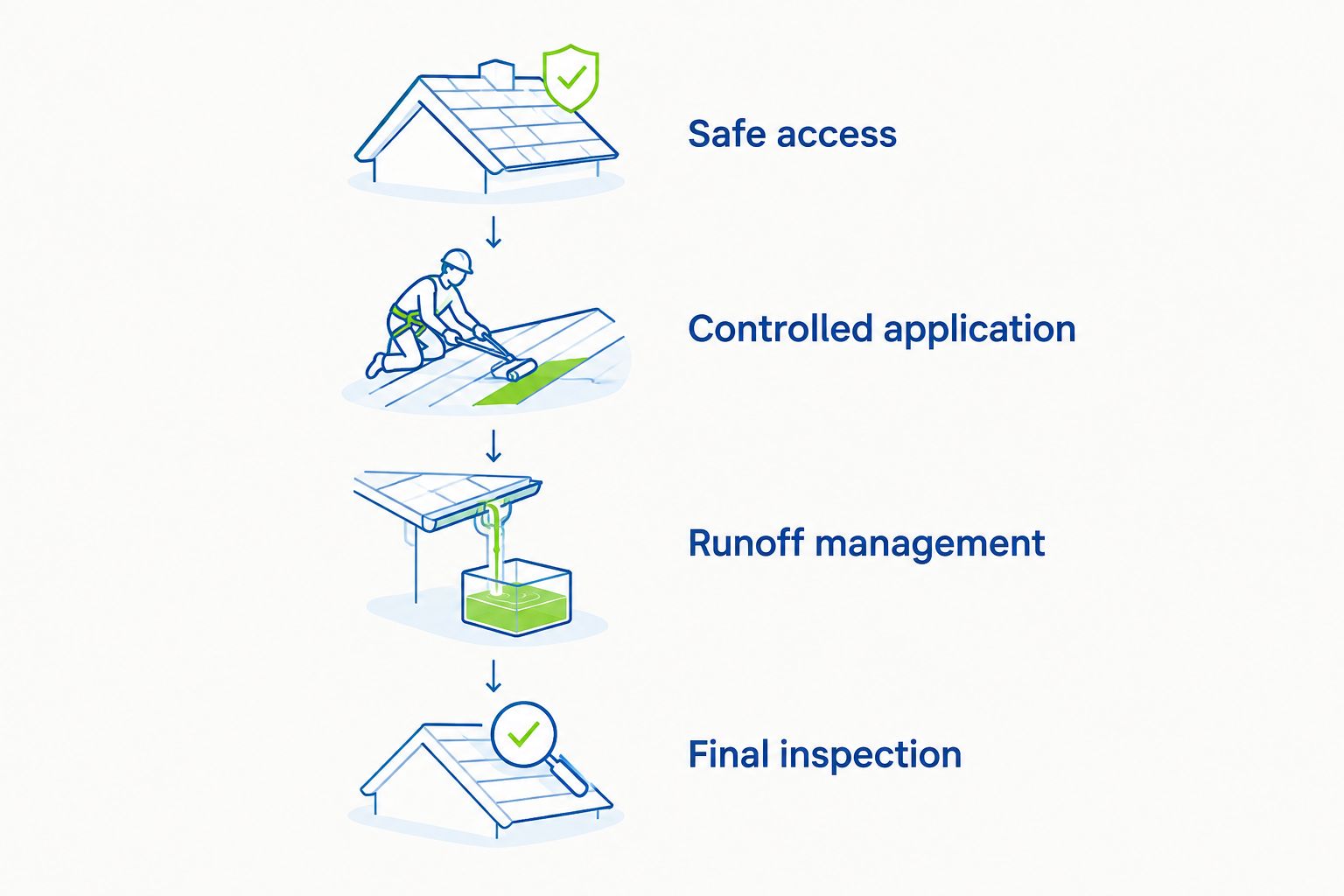
Do not select a chemical concentration from a general article. The product instructions and qualified assessment of the actual surface belong in the contractor’s method. If weather prevents controlled application, reschedule instead of treating the booking as a deadline that overrides the protection plan.
- Define Safe access without routing crews through guest areas.
- Specify Controlled application for the identified roof material.
- Document Runoff management at gutters and discharge points.
- Protect or relocate exposed furniture and movable equipment.
- Require Final inspection of roofing and surrounding surfaces.
5. Schedule around guests and production
Start with your own operating calendar. Mark tastings, private events, deliveries, production activities, and any periods when outdoor areas must remain accessible. Share the restrictions before the contractor proposes a work date; a roof-cleaning booking should not force staff to improvise guest circulation.
For 2026 scheduling, distinguish a preferred work window from permission to proceed. Wind, weather, roof condition, or unavailable drainage controls can make the planned window unsuitable. Agree on who can pause the work and how the contractor will notify your site lead.
A vineyard estate with an HOA or shared management structure also needs clear approval responsibility. Identify whether the owner, board, or property manager authorizes the roof work, and whether adjoining areas require separate coordination. Keep responsibility explicit even when several buildings share a grounds team.
- Block guest routes below the work area.
- Coordinate with vineyard and production staff.
- Arrange alternative entrances where necessary.
- Notify affected occupants and event teams.
- Define weather-related postponement procedures.
- Name the person authorized to stop or restart work.
6. Supervise the job against the written scope
Before equipment starts, walk the site with the crew lead. Compare the actual setup with the approved scope: access routes, protected items, drainage controls, and exclusion areas. Take ground-level photographs so the closeout review has a useful reference.
Your role is to check the agreed controls, not to direct roof work or adjust treatment chemistry. Keep staff out of the work zone and route operational questions through the designated site lead. If a downspout empties somewhere different from the map, stop and resolve that discrepancy before treatment continues.
Do not judge completion by roof color alone. Confirm that the contractor follows the agreed process and reports unexpected damage or drainage problems. A change in the building’s condition needs a documented decision, not an informal adjustment that disappears from the record.
- Confirm barriers and access routes before work begins.
- Check that drainage controls match the approved plan.
- Keep guests and staff outside exclusion areas.
- Record scope changes with the crew lead.
- Document unexpected roof defects for follow-up.
7. Close out the work and retain maintenance records
Inspect the property from accessible, authorized locations with the contractor. Compare before-and-after photographs, review any reported defects, and confirm that protected areas and drainage controls have been checked. Ask what appearance changes remain and whether they fall within the agreed scope.
Keep your 2026 roof-cleaning record with the property’s maintenance files. Include the treated buildings, method description, completion photographs, scope changes, and repair recommendations. This gives the next manager a record rather than a vague instruction to repeat the last cleaning.
Set the next inspection around observed conditions and applicable roofing guidance, not an unsupported universal cleaning interval. Shade, drainage, roofing materials, and surrounding vegetation differ across an estate. Inspection and cleaning are separate decisions; inspecting a roof does not automatically justify treating it again.
- Save the approved scope and completion record.
- Retain photographs of roof and drainage conditions.
- Log defects that need a roofing professional.
- Check affected ground areas and exterior fixtures.
- Assign responsibility for the next condition review.
Compare roof-maintenance options for winery properties
Choose the option that matches the problem. A stained roof, a blocked gutter, and a leaking roof are different maintenance tasks; bundling them under pressure washing obscures the actual work required.
For a 2026 contractor review, use the table below to separate each option’s purpose from its limitation. No cleaning method is suitable for every roof or every winery layout. Ask providers to explain why their proposed method fits your material and site conditions.
| Option | Best for | Practical advantage | Key limitation |
|---|---|---|---|
| Ground-level inspection and maintenance mapping | Managers defining the scope before hiring | Establishes visible conditions, access constraints, and drainage concerns | Cannot confirm concealed defects or replace a professional roof assessment |
| Professional soft wash roof cleaning | Suitable roofs requiring low-pressure treatment of surface growth or staining | Combines controlled treatment with roof-specific access and protection planning | Chemical compatibility and runoff handling still require verification |
| Pressure washing on approved surfaces | Separate hardscape or exterior surfaces suited to the proposed pressure | Addresses compatible surfaces without treating the whole estate identically | Must not be transferred to a roof without material-specific approval |
| Roofing inspection and repair | Roofs with leaks, damage, or uncertain condition | Addresses defects that cleaning cannot repair | Does not replace a separate cleaning scope when cleaning remains appropriate |
| Pressurewashingca roof cleaning | North County San Diego managers seeking professional exterior-cleaning service | Offers roof cleaning alongside pressure washing and stain removal | Winery-specific access, roof suitability, and drainage controls need a written site scope |
Where the property also needs courtyard or commercial pressure washing, specify it separately. Roof treatment and ground-level washing can have different surface requirements, access arrangements, and discharge paths. Combining the booking does not remove those distinctions.
Request a roof-cleaning estimate
Discuss roofing materials, access constraints, and drainage protection for your North County San Diego property.
Common mistakes winery managers make
- Treating vines as ordinary landscaping. Agricultural areas belong on the drainage and protection plan. Involve the vineyard manager rather than assuming the cleaning crew knows the irrigation layout.
- Scheduling against an event deadline without a fallback. A tasting or wedding date does not make unsuitable weather acceptable. Reserve a postponement decision and an alternative operating plan.
- Approving a method for every estate building. A tasting room, cellar building, and residence can have different roofing materials. Approve the method by roof, not by property name.
- Accepting low pressure as the entire protection plan. Low pressure does not explain chemical compatibility, roof access, or discharge handling. Require those details separately.
- Expecting cleaning to solve roof defects. Staining and damage can exist together. Have defects assessed before authorizing treatment, and keep repair recommendations in the maintenance record.
FAQ
What is soft wash roof cleaning for wineries?
Soft wash roof cleaning for wineries is low-pressure, surface-appropriate roof treatment planned around the property’s operations and surroundings. The scope should address roofing materials, controlled application, safe access, and runoff management near guest and agricultural areas.
Is soft washing better than pressure washing for a winery roof?
Choose the method from the roof manufacturer’s guidance and the assessed condition, not from the winery’s building type alone. Soft washing uses low-pressure application, but chemical compatibility and drainage controls still need approval. High-pressure roof cleaning is not a default alternative.
Can roof-cleaning runoff go into vineyard soil?
Do not approve vineyard soil as a discharge destination without confirming the proposed treatment and applicable requirements. Document containment and handling arrangements before work starts, and involve the vineyard manager in reviewing agricultural exposure.
Can a winery stay open during roof cleaning?
Keep a winery open only when the approved work plan maintains separate guest routes and controls access to affected areas. Coordinate tasting operations, deliveries, and production with the contractor; close affected spaces when separation cannot be maintained.
What should a winery ask a roof-cleaning contractor?
Ask for a written roof-specific method, current insurance evidence, and an access and drainage plan. Require an explanation of property protection and weather-related stop conditions before approving the work.
Does every vineyard estate roof need the same cleaning schedule?
No single cleaning schedule fits every roof on a vineyard estate. Base inspection and treatment decisions on material, condition, drainage, surrounding vegetation, and applicable manufacturer guidance rather than an automatic calendar interval.
Who is Pressurewashingca roof cleaning best for?
Pressurewashingca roof cleaning is a fit for North County San Diego property managers seeking professional exterior-cleaning service. Winery managers should request a written scope confirming the roof material, access arrangements, and drainage protection for their property.
One last thing
Before approving your 2026 roof-cleaning scope, ask the crew lead to trace a downspout from the roof to its final discharge point with you. That walkthrough connects the treatment above the building to the property below it. If the discharge destination is unresolved, the work plan is not ready.
Related guides
- Roof-cleaning methods for tile roofs
- Roof-cleaning methods for flat roofs
- Commercial pressure washing for property managers
